“In my house it’s been five days since we’ve seen the main course. I have two chicken sandwiches for the weekend when the girl from the scholarship comes, and that’s it. Next week, we’ll see if a miracle happens.”
A unique conversation in a queue
“End of the year without pork “It’s not the end of the year,” is how a woman concludes the conversation with people who, like her, were waiting for their turns in a line. And, perhaps because they knew that meat, as well as rice, beans, root vegetables and vegetables would be absent again another December on the tables of many Cubans, everyone laughed with the certainty that, despite such absences, 2025 will end, and 2026 will undoubtedly begin.
“December has long ceased to be a month of happiness for Cubans, with meat and without meat,” someone responded. And although everyone agreed, that time there was no laughter, only gestures of resignation, sadness, anger, even exhaustion and indifference, followed by a long silence in which no one said anything.
There is a lot of talk in lines in Cuba. From the trial and conviction of the former Minister of Economyof donations that do not reach the East and the unbearable blackouts, the illnesses and deaths, but the issue of pork, the prices that make it inaccessible, the time they have spent without tasting it, even without smelling it and even without hearing the screams that were previously so common in our neighborhoods at these final dates, is hardly even whispered about. Perhaps because some have assumed that they will possibly die without trying it again, because they have already forgotten it as they do with worse things, or because those conversations, even if we laugh, make December much sadder.
The pork, the chicharrones, the ceremonies of sacrifice and roasting, even the raising of the animal for an entire year, thinking about that one day of celebration or the extra money or the many meals that we can get from a “little pig”, are like another symbol, another custom, a ritual that we Cubans have had to renounce or that have been taken from us by the implacable machinery of dispossessions and prohibitions that has been the hoax of the “construction of socialism”, with the Castro as architects.
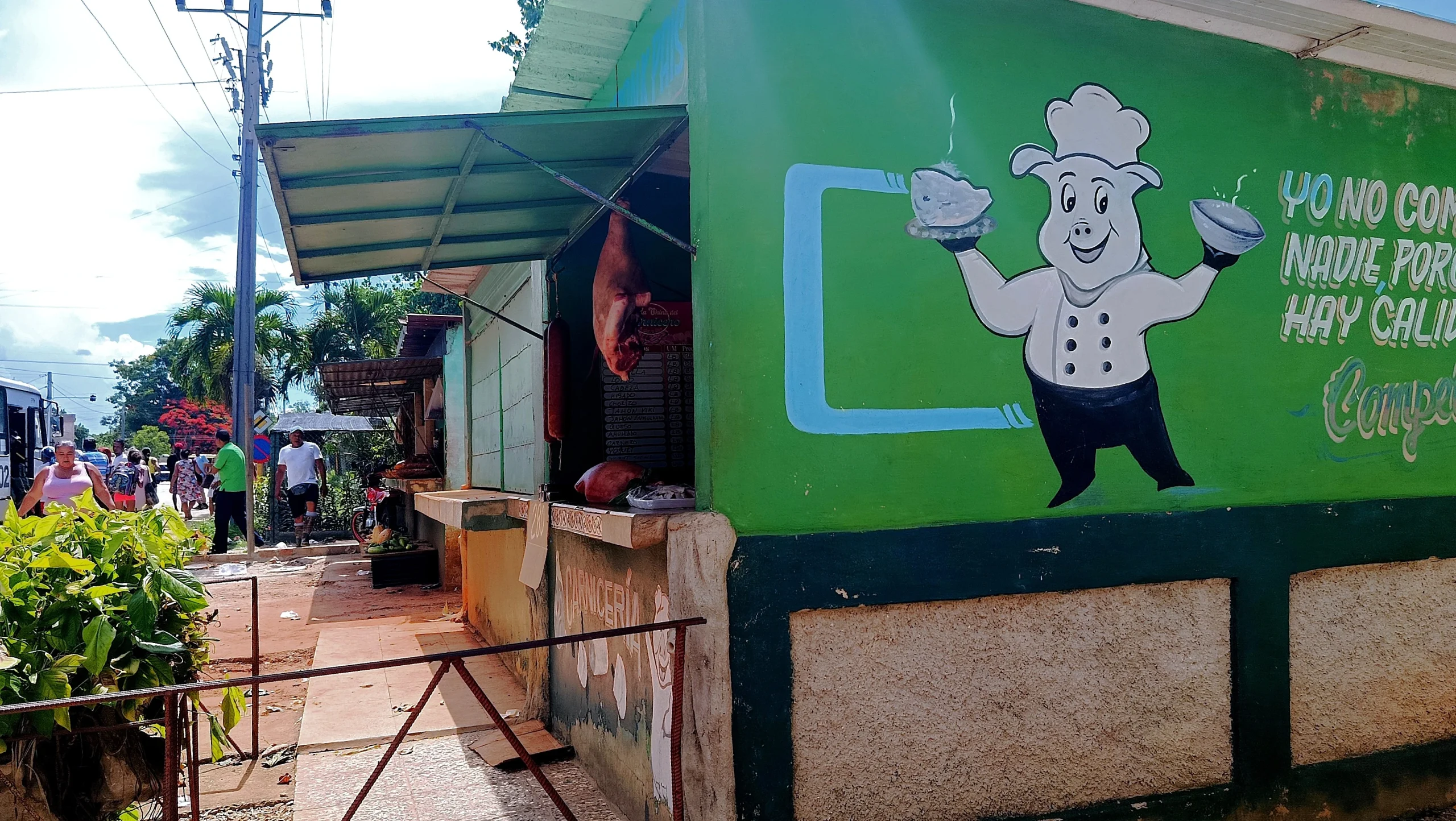
Pork, which years ago, even amid hardships, was synonymous with joy and celebrations, and which is also an indispensable ingredient of the most traditional Cuban cuisine, today is the reflection of a disaster when many have stopped producing it because they do not even have sancocho to feed their babies; and to eat it, when due to scarcity and the ways in which the markets are supplied, the pound does not go below 1,000 pesos, which is like a quarter of an average monthly salary or half of a retiree’s pension.
Without dollars there is no pork
In physical stalls, as well as in online sales groups, in state markets and in the “MSMEs”Unlike years ago, pork prices rise as the last days of December approach. Those who waited by chance or the miracle of a discount now know, with so much bad news, that nothing will happen that will benefit them. The regime, once again, has chosen December for its “witch hunts,” to make the atmosphere more suffocating.
Many private businesses have been forced to close when access to dollars in the informal market is blocked, because they cannot pay for imported goods, when they are forced to accept online payments, thus turning profits into useless money. The plans of many entrepreneurs were shattered. Dozens of containers of food, which would have already been arriving in Cuba these days, will not arrive due to lack of payment, because they were cancelled, or because they have been confiscated or held in ports pending some ongoing police investigation, related to what the regime calls “currency trafficking” and “theft of remittances”, which are simple alternatives that people have sought to avoid the regime’s obstacles to individual prosperity.
“Those who can import and sell wholesale do not want to sell to us if we do not pay in dollars,” says José Luis, a self-employed worker (TCP) who has his business on Calzada de 10 de Octubre, in Havana. According to him, even with the challenge of finding foreign currency, buying imported pork is much easier than going out to look for it from national producers, who in addition to being very few, sell even more expensively due to the high cost of producing a pound of pork.
The kilogram of feed imported from Panama or the United States is between one and two dollars. Once placed in Cuba, and in the hands of intermediaries, that cost begins to rise from 500 Cuban pesos. From Europe, these prices, initial and final, are multiplied by two and up to five times.
When the producer, who cannot import it, buys it wholesale, its price rises by up to 150 percent. Only sometimes, very rarely, according to the opinion of several producers interviewed by Cubanet, do they manage to buy it for over 300 pesos per kilo, directly from a non-state importer, although this type of supply is scarce, it is not stable. The MSMEs that do so are no longer many, and they also do not want to accept the national currency, only dollars and in cash.
“It’s almost impossible,” says Jaime Rodríguez, a small producer from Alquízar, and adds: “a pig needs about two kilos of feed a day. Even mixing (the feed) with sancocho doesn’t count, because a can of sancocho costs between 400 and 1,000 pesos, depending on how it is. If I later charge a pound of meat for less than 600 pesos, I’m almost paying for them to buy from me,” he says.
Imported meat, even from Panama and the United States, is much cheaper. About two dollars per kilogram, sometimes much less, so much so that several pork producers have changed their old business of producing meat to buying what is imported by a few MSMEs and several state companies, or those with foreign capital. In addition to avoiding maintaining the farms—at a cost that is sometimes much higher than that of feeding the animals—and the obligation to give a part of the production to the State—at prices that are too low and with payment terms that are rarely met—their work becomes easier, as well as the profits more juicy and quick.
“Before I invested two thousand dollars and with a lot of sacrifice, selling illegally, I obtained at most a profit of 500 dollars, in a whole year,” Julio Leyva, a producer turned seller of imported pork, among other equally imported products, tells us: “Now I invest the same two thousand, to tell you an amount, and I obtain another two thousand profit in a couple of months, all legally, without breaking a sweat, looking for some problems but solving them much faster and easier than when raised, that is a headache. Not because of the work, which I like, but because of how difficult the government makes it for you,” says the man who affirms that, like him, forced by the difficulties and obstacles, many other small producers have decided to stop producing meat.
Back to the bread line
The 10 thousand pesos (a little more than 20 dollars) that Alicia saved for December, “sacrificing her stomach” for a year, was spent on medicines, she says while referring more with gestures and moans than with words, the joint pain that chikungunya left her: “Another year that I will not eat pork, because last year, when I was able to save more, it still went on (buying) a gas bullet,” the woman explains while, on the counter of the neighborhood bakery, slowly counts the few 10 Cuban peso bills that remain in her purse.
“It’s the only thing, and with that I will have to get through December. For me, 2025 is over,” he tells the saleswoman who, perhaps as if to give him some encouragement, briefly tells him a personal story, very similar.
“I will also be left without a pig at the end of the year. chikungunyathe blackouts and Tía Tata tells stories (Miguel Díaz-Canel and, by extension, the regime) if I manage to eat croquettes on the 31st, it is a miracle,” he complains with a sigh and adds: “In my house it has been five days since we have seen the main course. I have two chicken posts for the weekend when the scholarship girl comes, and that’s it. Next week, we will see if a miracle happens.”
There have been too many years accumulating misery and competing to be last as the worst of all. Hurricanes, viruses, hunger and blackouts; forced dollarization and banking; packages and fares, “information notes” all bad, none good, circus, distractions and repression exacerbated. An economy supported by remittances, external aid and donations. Possibly we Cubans will arrive at the new year, once again with those feelings of frustration and defeat that we feel when, in December, our tables are missing the little piece of meat that before, even though we were very poor, was never missing.