The increasing sophistication of artificial intelligence applied to cybercrime It can only be faced through a global network of specialists who share information, evolve their methods and act in coordination.
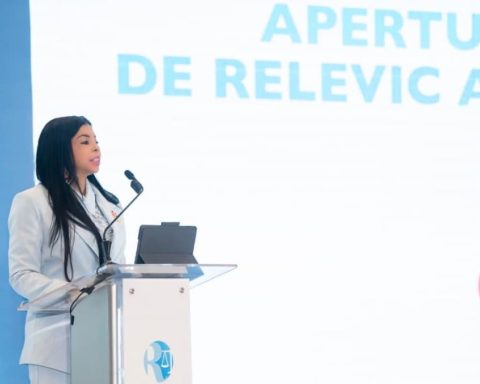
This was stated by international experts during the opening of the forum CyberWeek@LAC4 2025held in Santo Domingo, where they identified the ransomwarestealers, botnets and modular malware as the most dangerous threats to global digital security, the organizers indicated in a press release.
The event was led by Melvin Asindirector of Cooperation of the European Union in the country; Lina Arengdirector of LAC4; Michael Seguracommander of the French Police Division and senior official of EL PACCTO 2.0; and Guido Gómez Mazarapresident of the Dominican Telecommunications Institute (Indotel).
A regional meeting
Specialists from 30 countries from Europe, the United States and Latin America, including the Dominican mathematician Juan Luis Vargas Molinafounder of FACTOR and responsible for workshop on continuous alerts against attacks on e-ID and digital certificates.
Lina Areng highlighted that close to 600 experts of the European Union make up a defensive network that constitutes a “collective human brain“capable,” he said, “of continuing to outperform criminal AI.
He stated that, in crisis situations, the intuitionconfidence and human experience continue to be irreplaceable, especially in a global context marked by geopolitical tensions, cyber attacks diaries and hybrid scenarios that have intensified since the Russian invasion of Ukraine.
For its part, it was highlighted in the statement, Michael Segura warned that the cyber attacks Today they represent one of the most complex and costly challenges for States, institutions and the private sector.
These actions, he explained, are no longer isolated incidents but rather a criminal industry global with high adaptive capacity, directed against hospitals, energy systems, universities, judicial platforms and public services. Its effects, he stressed, transcend the technological: they have economic, social and political impacts.
Segura insisted that the contemporary malware is, by definition, transnational: It can be developed in one country, hosted on servers in another, marketed in international clandestine markets and end up affecting victims on various continents. Given this, he said, no nation can respond alone.
The cooperationthe exchange of intelligence and collective strengthening are the only way to stop the expansion of the cybercrime powered by artificial intelligence.