In the Catholic world, the end of the Christmas season is marked by the festival of Bajada de Reyes, and in places like Cusco, the adoration of Niño Manuelito. Both activities are highly anticipated among the believing people, emphasizing Andean religious syncretism.
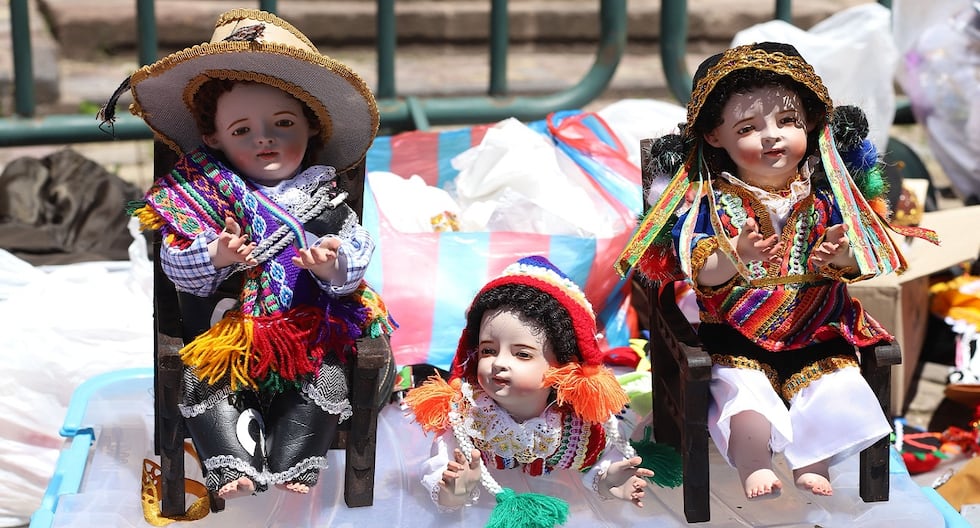
El Niño Manuelito is an emblematic figure in Andean culture, especially in the Cusco region, this representation of the Infant Jesus is deeply rooted in local traditions and beliefs, fusing elements of the Catholic religion with precolonial practices. Over the years, For believers, Manuelito has come to symbolize hope, protection and spiritual renewal for many communities.
“My Boy Manuelito receives new clothes and shoes every year, we don’t miss the opportunity to buy him new clothes at the Santurantikuy fair, he blesses us and brings us luck, My father gave it to me more than 50 years ago, when I am older I will pass it on to my children, that is the tradition in Cusco families,” says Juan Quintana, a Cusco father.
The figure of Niño Manuelito has its origins in colonial times, when Spanish missionaries introduced Christianity to the Andean lands. During this process, religious images were adapted to local cultures, giving rise to syncretic interpretations. Manuelito is one of these interpretations, where the Child Jesus is venerated with characteristics and customs typical of the region.
The name Manuelito is a diminutive and affectionate form of Emanuel, which means ‘God with us’. This name reflects the closeness and familiarity that the communities feel with this divine figure, seeing him as a close and accessible protector.

BELIEF AND FUSION
In Cusco, Niño Manuelito is the protagonist of various celebrations, especially during Christmas and Three Kings’ Day. The festivities are full of color, music and traditional dances that reflect the rich cultural heritage of the region.
One of the most notable traditions is the Santurantikuy’, a Christmas market that takes place on December 24 in the Plaza Mayor of Cusco. During this event, artisans from across the Cusco region gather to sell images of Niño Manuelito, among other religious figures. Cusco families buy these figures to place at their births, accompanied by offerings and typical decorations.
“We have had this Niño Manuelito for five generations, it is very old and one day they even tried to steal it from us. In addition to its religious value, it has a lot of aesthetic and cultural value, an antique child can be worth thousands of soles, its price is incalculable, that is why we keep it in a glass urn with a lock, we only take it out in Bajada de Reyes,” quotes Cusco native Dina Fuentes, matriarch of the Cusco Ponce de León Fuentes family.
January 6, known as the day of Bajada de Reyes, is another important date for the cult of Niño Manuelito. The festivities include processions and masses in honor of the child, as well as family celebrations where typical foods are shared and gifts are exchanged.
Niño Manuelito is more than a religious figure; It is a symbol of cultural and spiritual identity for the communities of Cusco. Through it, ancestral traditions are preserved that enrich the lives of those who practice them, creating a bridge between the past and the present. Its history is a testimony to the resilience and adaptability of Andean cultures, which have known how to integrate new beliefs without losing their original essence.
DATA:
– Over the years, the shape of the figure of Niño Manuelito has changed. At first the bundle was even decorated with condor feather quills, which acted as the child’s teeth. Now this practice has been put aside due to animal protection issues, however ancient children still retain this characteristic.
– Currently these figures are adorned with human hair and glass eyes, part of the mouth and tongue are also adorned with glass or mirrors, these details make these pieces unique, which are highly valued and sought after on the market.