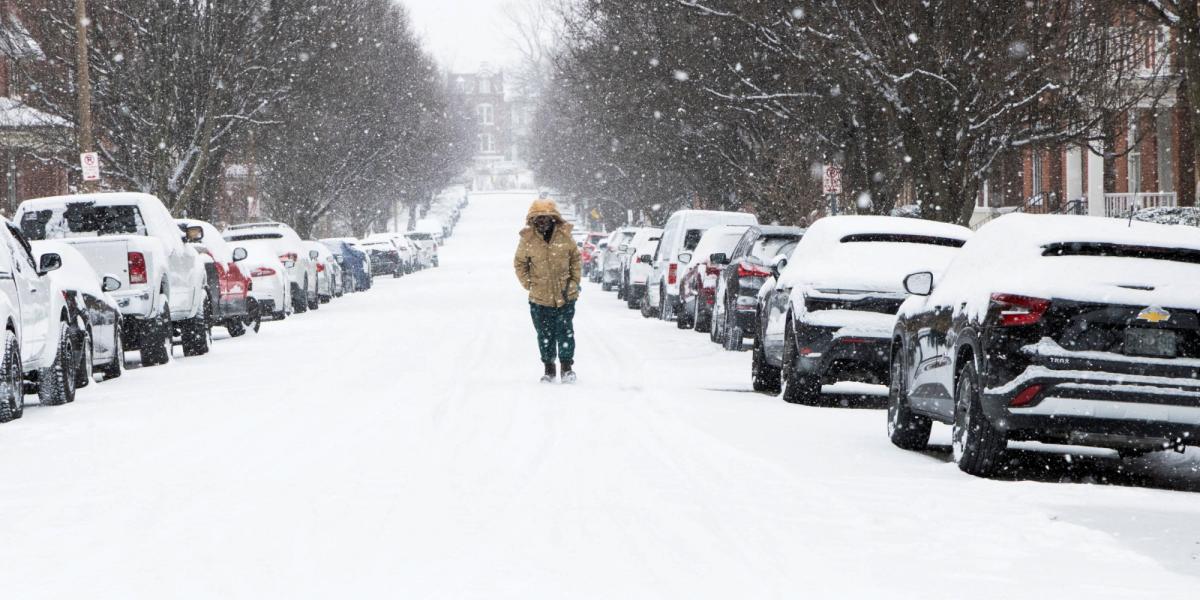
A gigantic winter storm dumped snow and freezing rain on New Mexico and Texas on Saturday as it moved northeast across the United States, threatening tens of millions of people with power outages, transportation chaos and freezing temperatures.
He National Weather Service (NWS) called the storm “unusually extensive and long-lived” caused by the arrival of an arctic air mass from Canada.
The NWS was forecasting heavy snowfall in some areas and possibly “catastrophic” ice accumulations from freezing rain.
The Secretary of Transportation of the United States, Sean Duffy, warned that until 240 million Americans may be affected because of the storm. At least 16 states and the capital Washington declared an emergency.
“Take this storm seriously, folks,” the NWS said in X, predicting a “staggeringly long swath” of snow from New Mexico in the southwest to Maine in the far northeast.
Nearly 4,000 flights with origin or destination in the United States were canceled this Saturday, according to the specialized site FlightAware, which already counts nearly 9,000 cancellations for Sunday.
Photo: AFP
In Texas, freezing rain hit Dallas and temperatures dropped to -6 degrees Celsius.
In Houston, Mayor John Whitmire asked residents of the nation’s fourth most populous city to shelter in place Saturday night for the next 72 hours.
In this metropolis of almost 2.4 million inhabitants, shelters will open starting Saturday afternoon, especially for homeless people.
Eric Maple, 56, was waiting for a shelter to open in Houston. “We are not used to what is supposed to come”he told AFP.
Photo: AFP
“But our city is strong and there are good people here, so we all try to come together,” added the homeless man.
State authorities also wanted to convey reassurance about the strength of the electrical grid, which suffered a general blackout during the last major winter storm in 2021.
However, Nearly 130,000 homes in the United States were without electricity as of Saturday afternoon, according to the tracking site poweroutage.us, with more than 50,000 outages in Texas and neighboring Louisiana.
Snow also hit the states of Oklahoma and Arkansas, with up to 15 centimeters of accumulation reported in some spots, the NWS said.
The storm is expected to hit the populated region of the mid-Atlantic and northeastern states before a mass of frigid air settles.
“The Effects of snow and sleet will persist well into next week, with episodes of refreezing that will keep surfaces icy and dangerous for both driving and walking,” the weather service said.
The federal government announced that its offices will be closed on Monday, as a preventive measure.
“We will continue to monitor and stay in contact with all states in the path of this storm. Stay safe and stay warm!” said US President Donald Trump on his Truth Social platform.
“Extremely dangerous conditions”
Disturbances of the polar vortex, which send these Arctic air masses toward the United States, have become more frequent over the past 20 years.
This could be due to relatively rapid warming of the Arcticwhich weakens the belt of winds that normally insulates the atmosphere over that polar area of North America. But scientists hope to have more data, over a longer period, to establish a link between these extreme winter storms and climate change.
The NWS warned that heavy ice can cause “long-lasting power outages, extensive tree damage, and extremely dangerous or impassable travel conditions,” even in many states that don’t typically have severe winters.
In the state of New York, Democratic Governor Kathy Hochul called for people not to go outside. “Five or six minutes outside can literally be dangerous to your health,” he warned.
Photo: AFP
He emphasized the need to take precautions such as protecting pipes, using heaters carefully and checking the status of the most vulnerable neighbors.
Authorities warned that the low temperatures expected after the storm could last up to a week, especially in the Great Plains and the north-central part of the country, where minimum wind chills are forecast below -45 degrees Celsius.