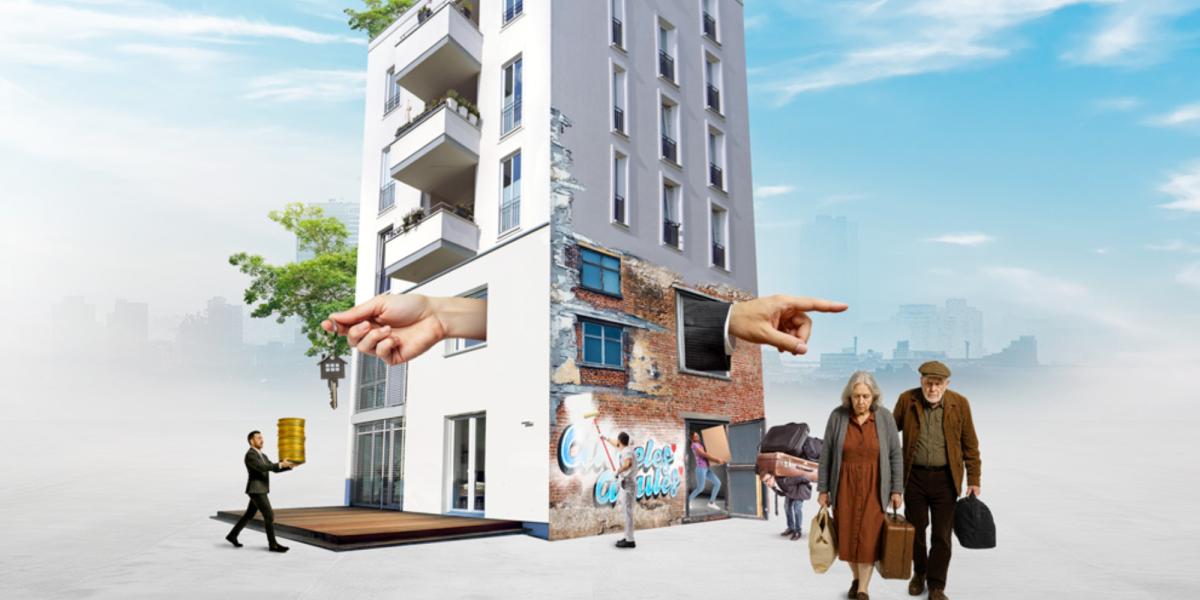
Gentrification in Mexico City is growing and is reaching its limits in traditional colonies such as Rome and Countess, where the growing real estate voracity faces the protests and mobilizations of neighbors who have inhabited these areas for decades, two experts from the National Autonomous University of Mexico (UNAM) agreed.
Vicente Moctezuma Mendoza, a researcher at the Institute of Social Research (IIS) of the UNAM, said that this phenomenon is a process of urban transformation that implies that a place in the city is modified with the arrival of new tenants with a higher purchasing level than the traditional inhabitants of the area, which are expelled towards the periphery of the city.
However, he explained that the process depends on social inequalities, reproduces them and generates new exclusive spaces.
“Its main implications are the displacement or expulsion of the people who inhabits those spaces, because the price of the income increases or because the stores where these people supply change, for example, of small premises and fondas to department stores and shopping centers that are also exclusive, since those who do not have a high purchasing level cannot access them,” said the coordinator of the seminar ” popular sectors ”.
How can gentrification be reduced?
According to Moctezuma Mendoza, it would be necessary to overcome the objective of capturing more profits and implementing an ethical dimension from the State.
“There are no urban regulations or programs that protect the characteristics of the neighborhoods, which allow the social life to be reproduced in them, without being threatened by market dynamics,” he said.
He considered that the State should put people in the center and not to the market, and create strategies that consider housing as a right.