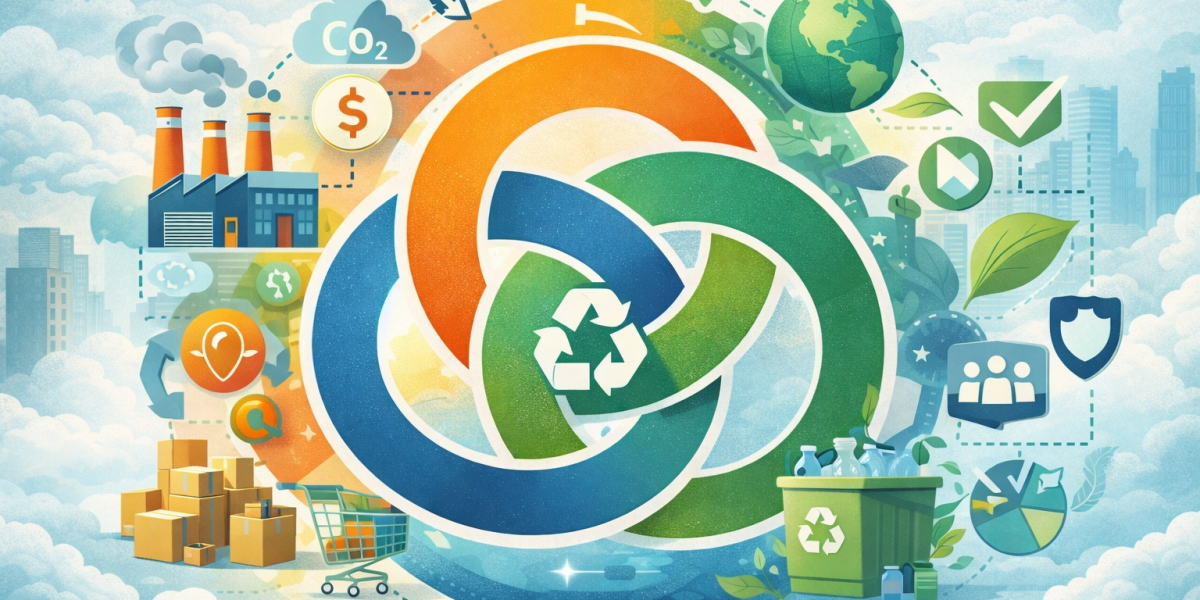
The General Law of Circular Economy (LGEC) is already part of the Mexican legal framework. After being approved by the Senate on December 10, 2025, the legislation was officially published on January 19, 2026 in the Official Gazette of the Federation (DOF), activating a new regulatory scheme that transforms the way companies produce, design, use materials and manage waste.
The law establishes rules so that economic activity transitions from a linear model that goes from producing, consuming and disposing, to a circular one that prioritizes extending the useful life of products, reducing waste generation and reincorporating materials into production processes.
From voluntary practices to legal requirements
One of the most relevant changes is that the circular economy It stops depending solely on business will. The environmental authority may issue agreements by sector or type of product that force companies to meet specific goals of circularity under the Extended Producer Responsibility (EPR) scheme.
This means that producers and importers will be environmentally responsible for their products throughout their entire life cycle: from design and manufacturing, to reuse, recycling, recovery or final disposal.
New requirement: Circular Management
When a sector is regulated by an REP agreement, companies must prepare a Management Circular and register it with the authority. This document will be key and must include:
- Product life cycle analysis.
- Circularity mechanisms (reuse, repair, redesign, recycling, remanufacturing, among others).
- Goals, indicators and measurement methodologies.
The authority may authorize, condition or deny the registration, in addition to requiring periodic reports. Failure to comply, provide false information or fail to achieve goals may result in administrative sanctions.
Direct impact on design and value chain
The LGEC promotes a profound change in the way of conceiving products. Circular design, reparability, modularity and the use of secondary raw materials instead of virgin materials are promoted where feasible.
The sustainable chain is also strengthened, where waste or by-products from one company can become inputs from another, integrating circularity throughout the value chain. This transforms not only internal processes, but relationships between suppliers, manufacturers and distributors.
More traceability, more data and supervision
The law requires greater generation of verifiable information. Circular economy indicators are incorporated, such as carbon footprint, water footprint and levels of use of materials and energy.
This information will feed official records and platforms, and will be relevant for inspections, audits and surveillance processes. Product traceability becomes a key element of regulatory compliance, not just a sustainability issue.
New ESG risk scenario
With this framework, poor management of waste, materials or product design is no longer just an environmental problem, but a legal, financial and reputational risk.
Compliance with the LGEC is directly linked to the ESG (environmental, social and governance) agenda:
- Greater exposure to sanctions for non-compliance.
- Relevance of verified environmental information.
- Alignment with international standards, key for exporting companies or companies with foreign investment.
The law also contemplates voluntary environmental audits and badges for circular products, which can become differentiation tools in the market and in public purchases.
Beyond the legal obligation, the law redefines circularity as part of the business strategy, from reducing waste, redesigning products, recovering materials and optimizing processes that can translate into operational efficiency, cost savings and greater competitiveness.