The G20 – group of the world’s largest economies – plans to publish a text on critical minerals that reinforces the idea of benefiting these products in their countries of origin. It is a milestone from the point of view of developing countries, according to the Secretary of Economic and Financial Affairs at Itamaraty, Philip Fox-Drummond Gough.
This Wednesday (19), the Ministry of Foreign Affairs held a press conference, in Brasília, about the G20 Leaders’ Summit, which will take place next Saturday (22) and Sunday (23), in Johannesburg, South Africa, with the presence of President Luiz Inácio Lula da Silva. This year, the South African government is president of the bloc.
Ambassador Gough is already in the country’s capital in negotiations leading up to the high-level meeting and explained that critical minerals are a priority of the South African presidency. He participated in the press conference via video conference.
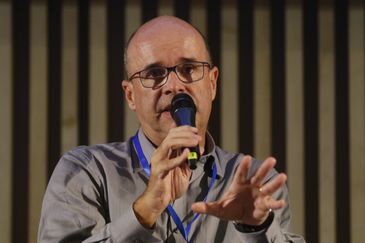
Ambassador Philip Fox-Drummond Gough Photo: Fernando Frazão/Agência Brasil
“This is the first time that a text has been obtained on this,” he said, explaining that the document being negotiated contains the principles that must be observed in the extraction and processing of critical minerals.
“One of the most important points favors processing at origin, in the countries that extract these minerals. It is in line with the theses, especially from developing countries, which want to carry out processing in their own territories and add value to production”, added Gough.
>> Follow the Agência Brasil channel on WhatsApp
Critical minerals are essential resources for strategic sectors, such as technology, defense and energy transition, whose supply is subject to risks of scarcity or dependence on few suppliers. They include elements such as lithium, cobalt, nickel and rare earths, which are key to electric vehicle batteries, wind turbines, solar panels and semiconductors.
Brazil, for example, has around 10% of the world’s reserves of these elementsaccording to the Brazilian Mining Institute (Ibram), an entity that represents the private sector.
In the country, research indicates that the search for minerals needed for energy transition has already been causing conflict on new exploratory fronts. Another study shows that This demand accelerates the climate crisis.
Leaders’ statement
The G20 is the main body for international economic cooperation, created in 1999, bringing together only finance ministers and central bank presidents. Over time, it also gained a political character and the current format is now at the level of heads of state and government.
The summit will be divided into three sessions, two on Saturday and one on Sunday.
The main document of the meeting will be the declaration of G20 leaders, which is being negotiated by ambassadors. There are, however, countries that are opposing the declaration, due to the absence of the United States at the meeting, and defending only a letter from the summit.
According to Ambassador Philip Fox-Drummond Gough, the position of the South African presidency is that there should be a declaration and Brazil “firmly” supports this intention. “Just as there was a declaration at all other summits,” he said.
Among the topics being negotiated is the taxation of the super-rich, which was defended by the Brazilian presidency at the G20 last year, and should be included in the declaration of this summit. According to Gough, the matter will be discussed at a side event this Thursday (20), on inequalities, which is an important point of the South African presidency.
Also according to the ambassador, despite the G20’s political nature, the intention is not to be “too exhaustive” on global political issues to prevent this from hindering the leaders’ declaration and the group’s economic-financial debate.
In this sense, a simplification in the treatment of political issues is being negotiated. Regarding wars and conflicts, for example, the final document talks mainly about international principles and rights.
In addition to the leaders’ declaration, a declaration will also be published in the financial area that addresses topics such as public debt sustainability and investment facilitation and promotion.
Agenda
President Lula arrives in Johannesburg on Friday (21) and is expected to hold bilateral meetings with other leaders, including the president of South Africa, Cyril Ramaphosa. On Saturday and Sunday he participates in the G20 sessions.
Also on Sunday, on the sidelines of the G20, a meeting is planned between the leaders of the India-Brazil-South Africa Dialogue Forum (Ibas). The trilateral initiative was developed in 2003 with the aim of promoting cooperation between countries in the Global South.
Afterwards, Lula leaves for Maputo, capital of Mozambique, where he makes a working visit.
Mozambique
During a press interview at Itamaraty, the Secretary for Africa and the Middle East, Carlos Sérgio Sobral Duarte, recalled that, upon assuming his third term, in 2023, the president made it clear that he would resume relations with African countries as a foreign policy priority.
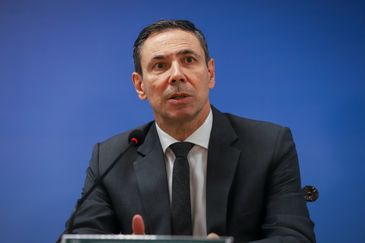
Secretary of Africa and the Middle East of the MRE, Carlos Sérgio Sobral Duarte, Photo: Antonio Cruz/ Agência Brasil
In 2023 he visited South Africa, Angola and São Tomé and Príncipe. In 2024, he was in Egypt and Ethiopia, as well as receiving the president of Benin on an official visit. And in 2025, he already welcomed the presidents of Angola and Nigeria. Furthermore, the In May this year, Brazil hosted a meeting of agriculture ministers.
Lula’s trip to Mozambique is part of the celebrations of 50 years of diplomatic relations between the two countries.
“It is a country that has a deep and extensive tradition in the field of cooperation with Brazil”, said Ambassador Duarte. They are also partners within the scope of the Community of Portuguese Speaking Countries (CPLP) and there is a convergence in their actions in international forums.
Mozambique is the largest beneficiary of Brazilian cooperation with resources from the Brazilian Cooperation Agency (ABC) in Africa, covering diverse areas – health, agriculture, education, professional training, among others – and involving structuring projects. During the visit, cooperation in areas such as agriculture, entrepreneurship, health, education and combating organized crime should be revisited.
Both countries also want to expand trade and investment. In this sense, a business forum is being organized, which should be attended by 150 to 200 Brazilian and Mozambican businesspeople, with panels on agribusiness, industry and innovation and health.
The Secretary of Trade Promotion, Science, Technology, Innovation and Culture at Itamarty, Laudemar Gonçalves de Aguiar Neto, recalled that bilateral trade with Mozambique is limited, but that Brazil’s commercial relations with African countries are part of a “larger political project” of combining cooperation for development and education.
“It is a political project that includes cooperation, training, education, commercial promotion and science and technology,” he said. “And we do not impose rules and conditions, we propose technical cooperation according to what these countries want”, added the ambassador.
Commercial exchange between Brazil and Mozambique was US$40.5 million in 2024, with Brazilian exports totaling US$37.8 million, and imports of US$2.7 million.
Exported products mainly consist of fresh, frozen or chilled poultry meat (41%), perfumery products or headdresses (4.7%) and furniture and parts thereof (5%). Imports are made up of disqualified or denervated tobacco (95%).
On the 24th, in Maputo, a meeting between Lula and the country’s president, Daniel Chapo, is scheduled, when an agreement on cooperation between diplomatic academies should be signed. Other technical cooperation terms are being negotiated.
The president will also participate in the closing of the business forum and should receive the title of honorary doctor from the Pedagogical University of Maputo.