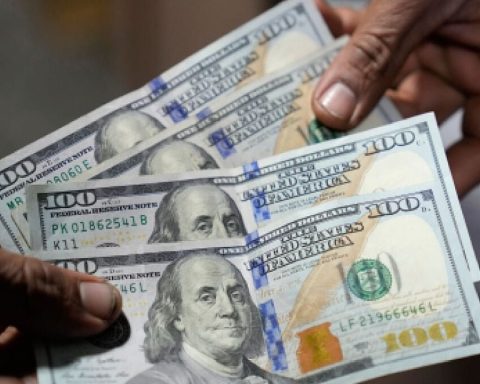
The Argentine financial market is in a state of high expectation and volatility after the recent agreement reached between the Government and the International Monetary Fund (IMF). This agreement, which seeks to stabilize the economy and guarantee compliance with the country’s financial obligations, has generated a significant impact on the futures market of the dollarwhere investors are adopting coverage strategies against possible changes in the exchange scheme.
On the A3 market platform, contracts for dollar Future have experienced an increase of 6%, reaching a price of $ 1,190 for the end of April. This value exceeds both the gradual devaluation rate known as “Crawling Peg” and inflation expectations projected for the same period.
This behavior reflects the perception of risk and uncertainty that prevails among investors, who seek to protect themselves to possible fluctuations in the exchange rate. The agreement with the IMF includes a financial package of 20,000 million dollars and raises the possibility of implementing a more flexible exchange scheme.
According to analysts, this could involve the elimination of crawling PEG, currently established in 1% monthly, and the adoption of a managed flotation system. Although the specific details of the agreement have not yet been revealed, the expectation of changes in the exchange regime has led investors to adjust their strategies and to increase their exposure in future dollar contracts.

The Government, on the other hand, has ruled out the possibility of an abrupt devaluation of the official exchange rate, arguing that this could accelerate inflation in a pre -election context. However, uncertainty about the implementation of new economic policies has generated an increase in the demand for financial instruments that allow mitigating exchange risk.
This phenomenon not only affects short -term contracts, but also reflected in implicit monthly devaluation rates, which are aligned with the rates offered by bonds in pesos. In addition, the futures market of the dollar It is influenced by external factors, such as volatility in global financial markets and international commercial tensions.

Basic elements
These elements have contributed to an increase in the exchange gap, which is currently above 25%. This situation further complicates the panorama for the Central Bank, which faces the challenge of maintaining exchange stability while implementing the reforms agreed with the IMF.
In this context, economists highlight the importance of the definitions taken in the next few days. Among the key aspects are the amount of the initial disbursement of the agreement with the IMP and the specific measures that will be adopted to make the exchange scheme more flexible.
Followers in Google News And in our channel of Instagramto continue enjoying the latest news and our best content.