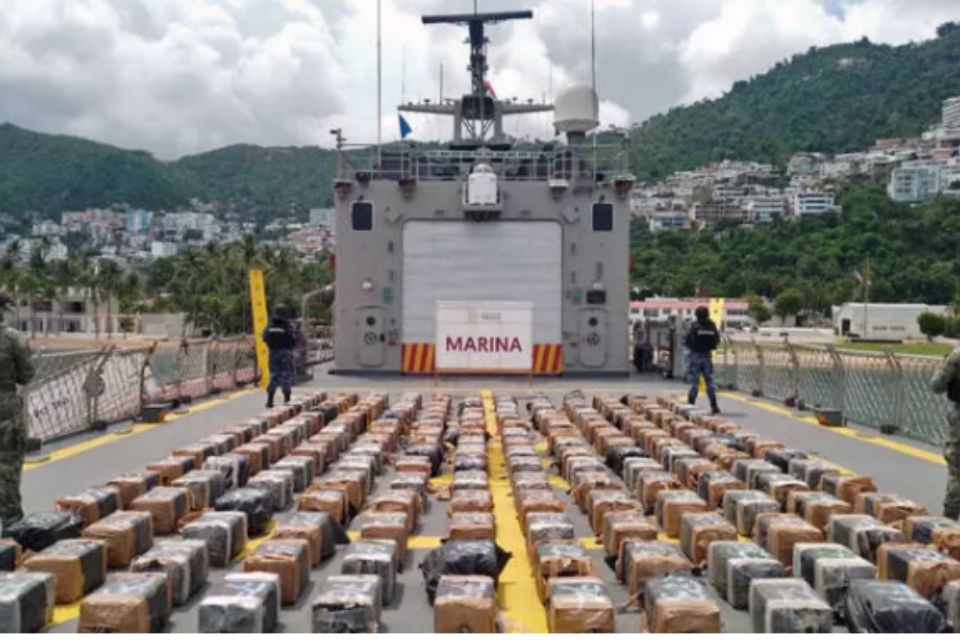
A production controlled by armed groups
Before flooding the world markets of North America, Europe, but now also from Asia or Africa, coca is nothing more than a green leaf, hand -colored in the Andes. At first, there are thousands of small farmers who cultivate coca in hundreds of thousands of hectares – 355,000 according to the last 2023 count – mainly in Colombia and, to a lesser extent, in Bolivia and Peru. In its latest report, the American DEA points out that “Colombian criminal organizations continue to dominate large -scale cocaine production.
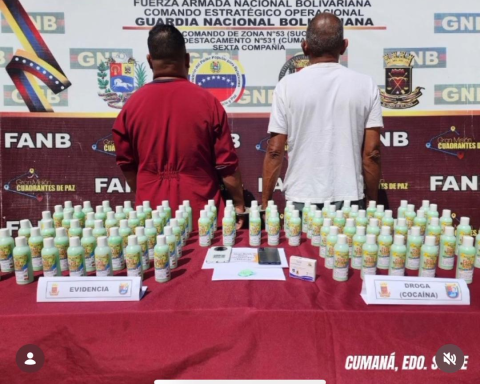
In fact, Colombia concentrates on its own two thirds of world production. This is located in “Five production enclaves, the specialist in the drug market, territories in which the State is very difficult to intervene, controlled by armed groups: Dissidents of the FARC, guerrillas of the ELN, ancient paramilitaries such as the Gulf Clan” requires. These organizations supervise the entire local chain: they impose their law both to the cultivators and the clandestine laboratories that transform the sheet into pasta and then in pure cocaine. They collect taxes, sometimes they demand a part of the crops and organize the export, directly or through subcontractors.
In Bolivia, where coca cultivation is legal, the situation is very different, explains the drug market specialist: “There are no armed cartels or groups. Production is regulated by unions and works quite well, at least there is no violence.”
*Also read: How to prepare and what is Venezuela’s real capacity to face US threats
The Brazilian PCC, the platform that has become the export center
Once produced, cocaine must leave South America to reach consumer markets. The sea road is still the favorite, hidden in authorized container, semi -squeeze or transported airways by “mules”, men or women who are paid for transporting the drug in their luggage or even in their body, after having ingested it. Although local criminal groups can sometimes organize export themselves, the most common is that they resort to transnational networks specialized in logistics and security.
That is where the Primeiro Da Capital (PCC) Brazilian comes into play. “In essence, it is a group of prisoners of São Paulo that, after the Carandiru massacre in 1992, created this organization to demand better imprisonment conditions,” explains Victor Simoni, researcher at the Interministerial Research Program applied to the fight against drugs (Pirelad). The group initially organized inmates around “a logic at the same time corporatist and secret society, with a baptism system to become brothers (” Irmaos “) and an internal justice system in prisons.”
As of the 2000s, it expanded outside prisons to control the retail cocaine market in favelas and diversify its criminal activities: money laundering, car traffic, spare parts, counterfeit medications and people trafficking.
Then, in the 2010, the PCC invaded the Brazilian ports and airports, in particular the port of Santos, the largest in Latin America, to ensure and control the logistics of export of cocaine to Europe and other continents. “The PCC acts as an intermediation platform: Colombian producers, for example, produce huge amounts, but do not always have the ability to send several tons to the port of Le Havre (France) or Rotterdam (Netherlands). Therefore, the PCC puts them in contact, in exchange for money or services provided, with logistas capable of passing cocaine through European ports, or with mafias such as ‘Italian ndrangheta or the mafias of the Balkans who want to make orders to Colombians.
Unlike Pablo Escobar’s “Scarface” model in the 80s and 90s, pyramidal and focused on a drug baron, the Brazilian PCC has a “horizontal, reticular structure, in which each link only knows the previous one and the next one, which makes the chain track difficult,” says Victor Simoni.
A very effective method also from the economic point of view: the PCC has managed to diversify traffic routes and offer purest and most cheap cocaine in retail markets. Before the war on drugs in North America, traffickers were oriented towards less pressured markets in the mid -2010, specifically Europe. Today, says the researcher who has studied the seizures in the port of Le Havre, “most cocaine waves arriving in Europe are orchestrated by the PCC.” The Filières Atlantiques report: Le PCC et le commerce atlantique between Le Brésil et l’Aph of L’Ouest (Atlantic routes: the PCC and the Atlantic trade between Brazil and Western Africa) of Global Initiative in 2023 also established a link between the Brazilian PCC and the development of the flows towards the flow Transit to Europe.
According to experts, the PCC has become one of the main transnational actors in cocaine export, orchestrating an important part of flows to Europe and secondary markets. This does not prevent other organizations, such as Mexican cartels for Sinaloa and Jalisco, to continue playing a central role, particularly in access to the North American market. They are still important actors in export, although sometimes they go through the “intermediation” of the PCC. “It seems that there is a world agreement between the large criminal groups,” says Victor Simoni: “Everyone has understood that violence harms traffic and profitability, and that it is better to collaborate.”
Although it is difficult to estimate the cocaine market, the National Directorate of Intelligence and Customs Research (DNRED) of France said at an audience published in a senatorial report* of 2024 that “as long as a seizure level between 70 % and 90 % of the production is not reached, the economic model is not attacked”.
A fragmented distribution
“Current world criminal logistics connects to a greater variety of producers and retailers, which guarantees a market without monopoly or monopsony, although very few transnational criminal groups control the center of the value chain,” analyzes Nicolas Lien and Gabriel Feltran in an article published in 2025 in the Journal of Illicit Economies and Development. “The chain remains diverse and, together with the great actors, we find European traffickers who make their orders directly in Peru and small groups that buy 10 or 15 kilos to introduce them into the metropolis,” says Laurent Laniel.
Although the central link of large -scale export is dominated by the PCC, the final distribution of cocaine in Europe and other places is very fragmented. In European ports, the main arrival points of the drug, the merchandise is received by well -implanted groups, whether they are historical mafias, such as the Italian Ndrangheta, the new Albanian and Balcanic Networks, or the Moroccan or Spanish criminal groups. Rotterdam, Antwerp, Hamburg, Le Havre, Valencia or Barcelona are among the main entrance ports of the continent. In total, 419 tons were seized in 2023, according to the latest EUDA report. Europol points out that, for each ton seized, several more escape from the network. Logically, the more it descends in the chain until reaching the neighborhood trafficker, the more the fragmentation is accentuated. It is a model that allows greater resilience: in case of raids or seizures, the market is recomposed very quickly.
Many local intermediaries charge in cocaine, which feeds the appearance of new consumer markets, especially in Western Africa, but also in some European ports. After an seizure in the port of Valencia, part of the shipment ended up in the local market, deleted by corrupt dockers.
*Journalism in Venezuela is exercised in a hostile environment for the press with dozens of legal instruments arranged for the punishment of the word, especially the laws “against hatred”, “against fascism” and “against blockade.” This content was written taking into consideration the threats and limits that, consequently, have been imposed on the dissemination of information from within the country.