In exile, Dariel combined personal effort, family values and opportunities that only a system of freedom can offer.
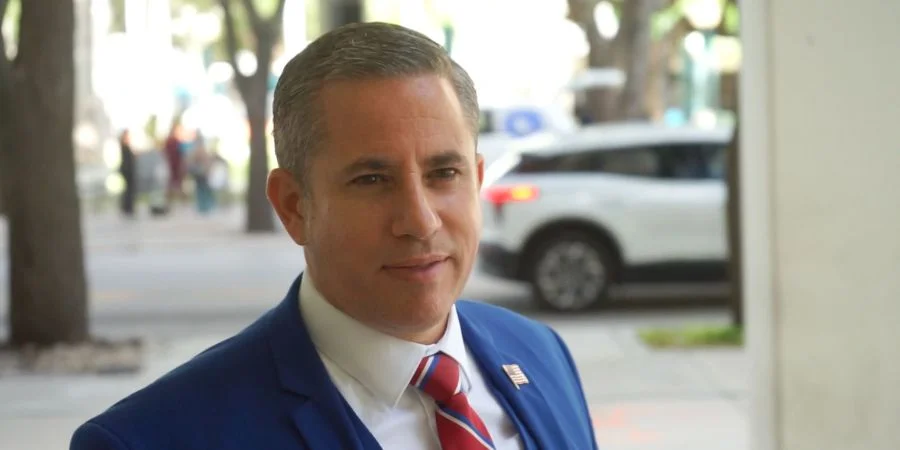
Miami – Dariel Fernández arrived in the United States as thousands of Cubans. With just over 20 years he was lucky to win the Visas Lottery and did not hesitate to escape the dictatorship that marked his childhood in Cuba, discriminating against his Catholic faith. The beginnings were not simple, but found in American democracy the space to grow as a person, entrepreneur and then as a public servant.
From his first steps in small businesses to reach one of the most important positions of the local government as Miami-Dade County Tax Collector, Dariel has shown that success in exile was possible for him because he combined personal effort, family values and opportunities that only a system of freedom can offer.
Tell us about the home where you grew up and your first years of training
I was born in Güines, but I grew up early. There I took my first steps. As a child I was curious, always asking everything. I educated in an environment closely linked to the Catholic Church, with very firm values. The daughters of charity had their house three blocks from mine, and grew with God as the center of my life.
I started my studies in an childhood garden next to my house, then I made primary school, high school, and ended up in the Polytechnic studying electricity. I always liked technology, fix things. Sometimes he disarmed a radio and then he didn’t know how to assemble it again. I especially remember one, who was the only one in the house, and when my mother saw that she couldn’t build it, a good mess was armed.
Did you suffer discrimination for being a Catholic?
Yes. The Castro dictatorship never tolerated that young people participated in religious activities. In school they prohibited us from carrying the scarf for going to church. Despite that, I was very active in the Catholic Church, gave catechism and helped in rural communities.
When did your desire to emigrate begin?
I was always clear that the American dream is not to have a house or a car, but the freedom to grow as a person and undertake. In Cuba, the totalitarian regime suffocates you, wants to control yourself in all aspects. I knew I had to get out of there.
I arrived in the United States alone, with 22 years, thanks to the hype. I remember that the day I arrived, I told a friend: “Where am I going to work tomorrow?” I came eager to throw pa’lante. My first job was in a car workshop, washing cars and changing alternators. He earned $ 250 or $ 300 a week. At first I worked three shifts a day: in an American company, then in a condominium, and at night in CVS. He slept very few hours, but he knew that the effort was the only way to move forward.
When making your life in a new country, did you break with Cuba?
Upon arriving in the United States, I rejected everything that reminded me of the regime: the flag, the shield, to the green color. I felt that all that belonged to them. But a friend helped me to understand that these symbols are from Cuba, from his people, and that we cannot allow us to snatch them. It was a reconnection process with my roots and with the true Cuban identity, separated from the dictatorship.
It is essential to support those who are rescuing the real history of Cuba, such as Lilo Vilaplana with their planted films and about the UMAP. The dictatorship changed and manipulated the story, and it is our responsibility that the truth is not forgotten: that there were fields of concentration, repression, and that Castroism has destroyed generations.
How did you start in the media?
In a spiritual retreat I met the director of Radio Paz 830 am. He offered me to work and learn about advertising sales and marketing. Thus I started working on the radio, producing programs for figures such as Ángel Saavedra, Agustín Acosta and Ambrosio Hernández. Then they gave me their own television space, just when YouTube and Facebook were born. I was a pioneer in social networks, although I never wanted to be an “influencer.”
Communicator pass your own company …
I saw the need to unite marketing and technology, so I founded my own company, where we offer advertising solutions, software development, websites and applications. We start little by little, looking for key people to develop projects and provide services to small and large customers.
Why did you decide to get involved in local politics?
When I worked on the radio, people came to ask me for help to solve problems because they knew many local politicians. So I realized that I could do more for the community from within the system.
After founding my business, I joined local politics. I was elected president of the movement We are morea position that performance until today, and I also actively joined the Republican Party, where I was always registered by family values, support for small businesses and the defense of a small and transparent government.
I was elected as Community Council member In Miami-Dade, a position where we represent not incorporated areas of the county, making decisions about local problems. This allowed me to know closely how politics works in the United States, something that does not exist in Cuba.
After many years where that position was appointed, an amendment was approved to be elected by popular vote. I postulated as a republican candidate, won the primary and then the general election, becoming the first Cuban American to be an elected tax collector in the 67 years of county history.
With so many projects, how do you balancing your personal and professional life?
Nothing I have achieved would be possible without God in my life and without the unconditional support of my wife Caroline and my daughters, Elisa and Anastasia. My family is my biggest engine. First there is God, then my family, then the business and politics. That is my order of priorities. I work every day in the present, because the past cannot be changed and the future is uncertain, but the present can transform what is coming.
John Paul II said that the family is the basis of humanity. When you have that present in your life and in your heart, every day you try to be better person and help others without expecting anything in return. We, as a family, have worked on that. We are not perfect, we make mistakes, but the effort to be better human beings is always.
You talked about the legacy of Cuban exile. If you had to choose a reference, someone you wanted to match as a public servant, who would be?
There have been many: Jorge Mas Canosa, Lincoln Díaz-Balart, Ileana Ros-Lehtinen, Marco Rubio … Everyone has marked both local and national politics. But beyond names, I believe that each person has a social responsibility. We can all change the reality that surrounds us if we assume that commitment.
Many immigrants prefer not to get involved in politics. What would you say?
I would tell them that if they do not participate, they will be victims of the same thing they lived in Cuba. Indifference does nothing. As I said Oswaldo Payá: “The night will not be eternal.” Historical memory must be kept alive and teach new generations what communism really does.
It is important to understand that Cuba’s policy is one thing and that of the United States is another. When you know how to separate these two realities, you have more tools to really help. We must be the voice of those who do not have it within the island, such as José Daniel Ferrer or Maykel Osorbo, and amplify their message.
Do you plan to return to Cuba one day?
No. I will not return while the dictatorship exists. I respect those who have personal reasons to return, but criticize those who travel to do tourism and hold their money to the regime. Everyone is responsible for their actions. My commitment is with freedom, and I think that supporting that dictatorship, directly or indirectly, is to betray those who suffer within the island.
What do you think of business in the US that have links with the Cuban regime?
Everyone who does business with the dictatorship is complicit. There are companies that wash money from Castroism, especially in sectors such as shipments. The laws that have been passed, such as that of Governor Desantis, which prohibits state businesses with members of the Chinese or Cuban Communist Party, are the way. You have to hit them where it hurts: their pocket.
What do you think is the key to weakening the Cuban dictatorship?
Suffocate it economically. That dictatorship is supported by remittances, businesses and tourism. Every day they are more cornered, without the support of Russia or a strong Venezuela. We saw it on July 11; The town did not go to look for vaccines, “freedom.” You have to continue pressing economically, without rest.
The change will come. It can be in a year, in two, in three, but it will arrive. The dictatorship is supported by less than a thousand people who control nine million. When we all understand the responsibility we have, that day will arrive.
In a future democratic Cuba, would you like to contribute your experience?
Of course. As today we help in the Dominican Republic through a Catholic Foundation I will be willing to support Cuba. But that change must be driven from within. Cubans must be taught to work to support their families with the fruit of their effort.
The Cubans of the other shore are being affected by the new immigration policies of the United States. What do you think?
Many arrived as political refugees and returned to Cuba in three months. That has affected the credibility of our cause. The United States cannot load with the problems of all countries. We must respect the laws of this nation that opened the doors to us.
To close, what is your final message for the Cuban community?
The center of life must be God. We all live on this planet and we must focus on what unites us. I tell the Cubans inside the island: freedom is in their hands. And to those who are outside, this country gave us an opportunity that our own land denied us. Respect the United States. The guilt of our problems is not from others, it is from the Cuban dictatorship. Law and order are fundamental. If you come to destroy this nation, they will look for you, and I will be the first.