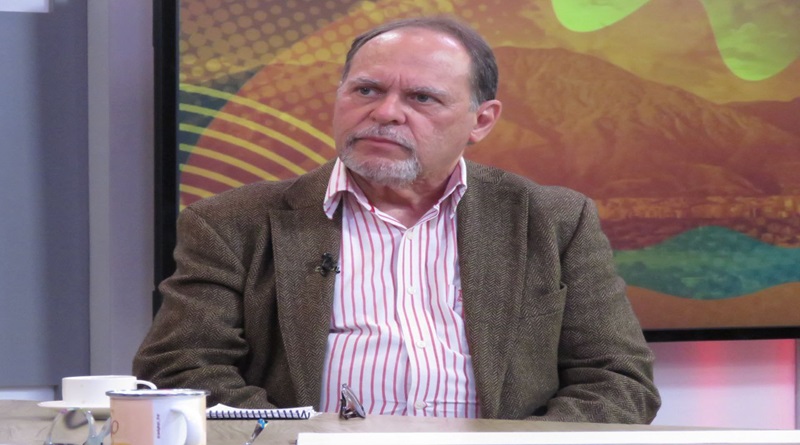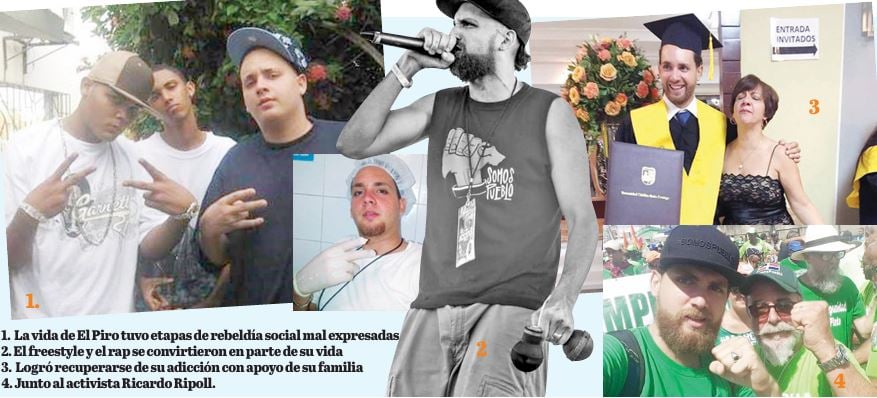
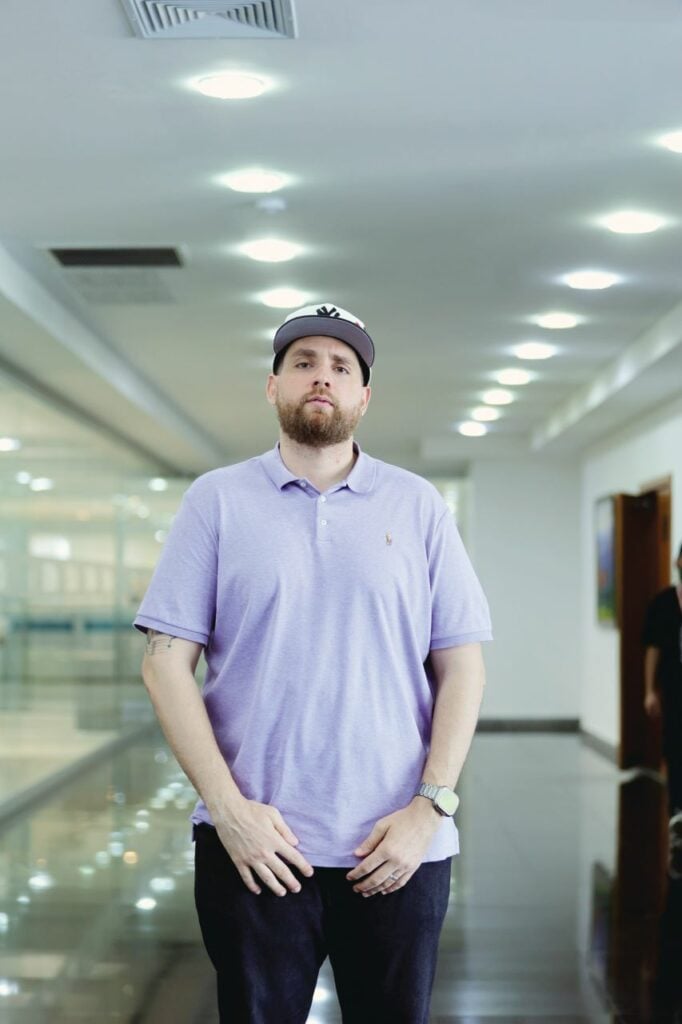
SANTO DOMINGO.- Eduardo Sánchez Tolentino, known as El Piro, is much more than the serious-looking communicator who has stood out from the Somos Pueblo platform, his life has
traveled the path of youthful rebellions, rhymes, excesses and the opportunity to reinvent himself until he becomes a dad who melts because of his children.
Born in Santo Domingo, El Piro grew up in Bella Vista. He is described as a restless boy,
mischievous and in constant movement.
He studied at several schools until graduating from the UNPHU high school, after having gone through
“like five or six schools” due to their indiscipline. “I grew up primarily with my mother,” he says,
while reflecting on how the absence of a father figure influenced his character: “I understand that perhaps the lack of a father figure gives him certain rebelliousness, because you don’t have a dad to tell you, look, behave well.” That lack, he acknowledges, translated into indiscipline, disobedience and a tendency to challenge limits.
In his childhood, curiosity often led him into problematic situations. “I took a bicycle from someone without asking to borrow it and I fell… I was always fighting,” he says, remembering the pranks of his adolescence.
It was in Bella Vista where his life began to take more marked turns, and where he also learned about what he calls “controlled substances.”
The street and freestyle The turning point in his youth came on a neighborhood basketball court.
“There was a field where tigueres from all the neighborhoods came down,” he says.
“There I learned what freestyle was, that the boys would improvise while playing basketball.”
“I got involved in that environment and started improvising. That was around 2003 or 2004. Then I started writing.” His talent was honed in corner microphones and neighborhood rap groups, a nascent culture that mixed competition and the need to attract attention.
However, at that time his music had no social content. “The rap that I did at that time was not social rap. I was not into anything social, what I was into was being antisocial,” he confesses.
His art was a reflection of his environment: direct, street, and often violent. “We did it because we liked it, not because it made money. Nowadays anyone gets into it for free, but before it was passion.”
The descent into drugs
El Piro’s story is also that of a young man trapped by addiction.
“I have many friends and acquaintances who have lost their lives using drugs,” he says seriously.
dad. “That is not a life that you have the decision to leave, just as I am going to move that newspaper. That
It’s not real. There is a cerebral issue.” Curiosity, he says, was the beginning of a spiral that dragged him for years.
“I saw the tigueres smoking, and one day I got curious and went to try it.
But that was normal on the court, it wasn’t that they were hiding. “That was there.” Over time, the substance became a refuge and a condemnation.
He went through several rehabilitation centers, until a mixture of guilt and hope made him stop.
“I felt a certain guilt because I knew all the money my family had put into it,” he says.
The confinement, which he thought would be brief, was extended for four months.
There he met 12-step groups, spaces where “other addicts share with addicts who are already
clean how they have stopped consuming all types of drugs.”
That’s when he found a light. “I saw some hope in them and I identified.
Return to rap
His return to art had its challenges. “When I leave the streets and leave that life, I’m interested in making music again,” he says. “It was difficult for me because I was used to doing it that way. I thought
that without being plugged in I wasn’t going to do well.
Then I realized that no, it works out better for me.”
That’s when his message changed. Rebellion became commitment, and rhyme became
social tool. “This is how El Piro was born, which today combines rap with communication with a mi
criticism of the country’s problems.
His connection with activism was strengthened in 2014, when he published a video of social content
on Facebook that caught the attention of activist Ricardo Ripoll.