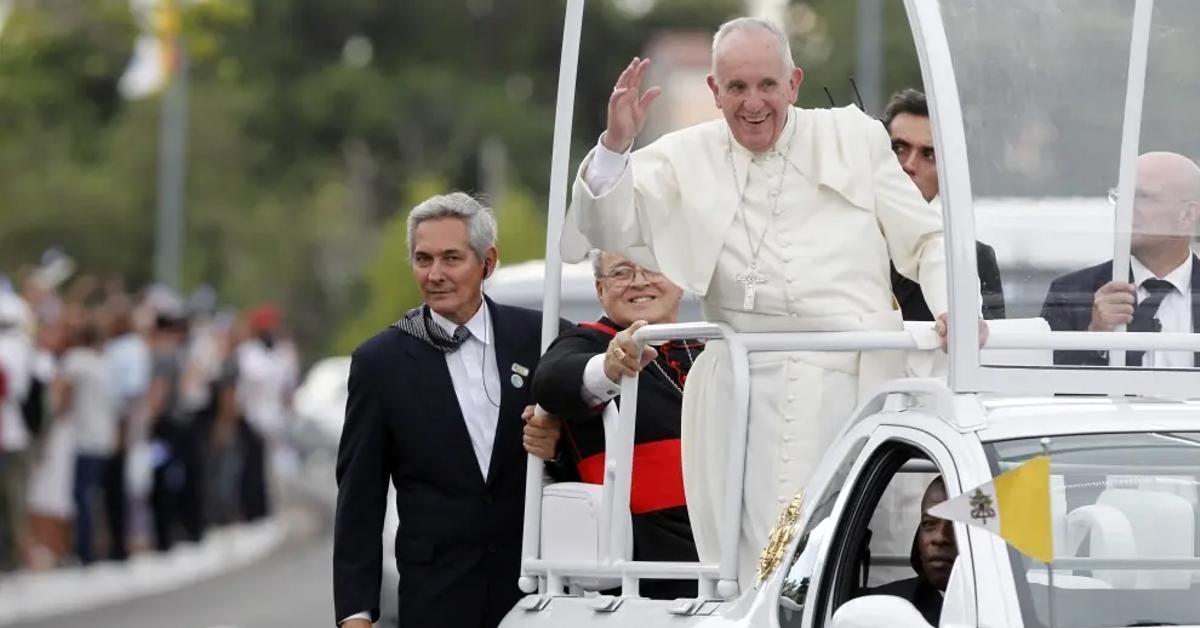
Havana/When Pope Francis toured the streets of Havana in September 2015, his white figure stood out from the popemobile as he waved to the crowd. At his side, almost fused with the surroundings and protocol, walked a man in a black suit, a tie fluttering in the wind, and an alert look. More than ten years later, that image takes on unexpected weight: the man next to the Pope was Humberto Alfonso Roca Sánchez, colonel of the Ministry of the Interior, today identified as the highest-ranking officer among the 32 Cubans killed in the recent United States military operation in Venezuela.
The photograph, taken during that historic visit between September 19 and 22, 2015, confirms what was deduced when reading the list of Cubans who died during the capture of Nicolás Maduro: Roca Sánchez occupied a key place within the security apparatus of the Venezuelan leader. They were the sharpest eyes in Havana in Caracas. The deployment for the papal visit was one of the most complex organized on the Island in decades, with a mixed device that included the National Revolutionary Police, the personal security of the Ministry of the Interior, counterintelligence bodies and the Vatican’s protection team, including the Swiss Guard. Not everyone walks at that level, so close to the Pontiff, in an event of global reach.
There are no known studies, previous missions or public promotions of Humberto Alfonso Roca Sánchez
Of Humberto Alfonso Roca Sánchez, the first name on the official list of deceased published after the incursion into Venezuela, there are no known studies, previous missions or public promotions. This biographical silence, common in the highest cadres of Intelligence, contrasts with the eloquence of this archive image. The photo places it at a time when Cuba was timidly opening itself to the world, negotiating with the United States and exhibiting a carefully rehearsed normality. Roca Sánchez was there.
In the image from a decade ago, the Pope smiles and blesses, while the man in the black suit mistakenly meets the camera lens, thus breaking his anonymity. His role was not to greet or make himself visible, but to ensure that the guest remained intact, a mission that he was not able to successfully accomplish in Caracas.