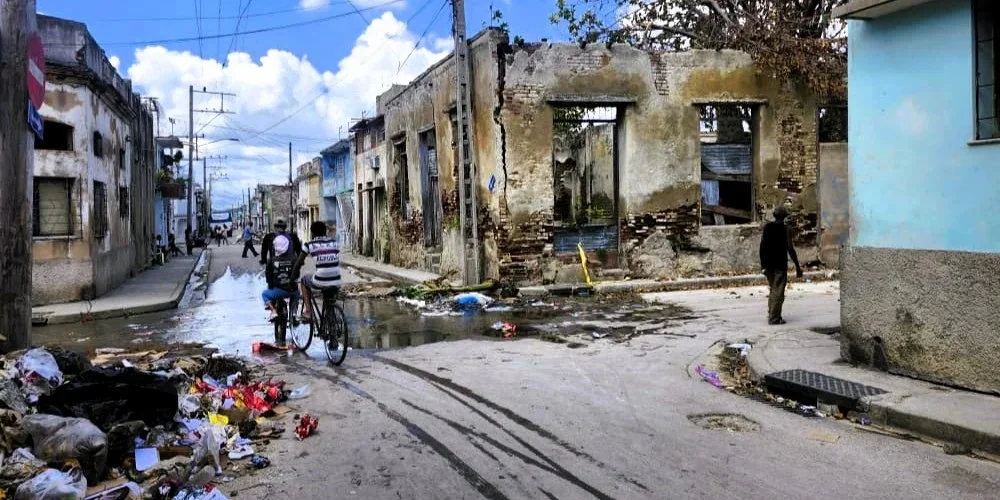
The lack of resources to fumigate, collect garbage or repair water leaks, together with blackouts and a shortage of repellents, forms a perfect breeding ground for the expansion of ‘Aedes aegypti’ in Cuba and beyond.
MIAMI, United States. – The strong outbreak of chikungunya that Cuba is going through already has consequences outside its borders. Health authorities from the Dominican Republic and Ecuador have reported cases of the disease in travelers from the Island or suspected of having contracted the virus there, while reports from Florida and Hong Kong confirm the risk that the Cuban epidemic will become a source of arbovirus exports to other countries.
The Ministry of Public Health of the Dominican Republic recently reported which keeps under surveillance “possible cases of chikungunya imported from Cuba”, after detecting symptoms compatible with this disease in travelers from the Island. Although the Minister of Public Health, Víctor Atallah, did not reveal the number of samples analyzed, he did confirm that they are awaiting laboratory results and that surveillance was reinforced at the country’s airports in light of the epidemiological alert in force in Cuba.
According to that report, Dominican authorities have intensified controls at airports and ports to identify passengers with fever or other clinical signs related to arboviruses, in a regional context of increasing cases and with Cuba as one of the epicenters of chikungunya and dengue in the Caribbean.
Meanwhile, Ecuador no longer talks only about suspicions. In an official statement dated November 21, the Ministry of Public Health (MSP) reported that “two cases have been identified in travelers from Cuba, with symptoms compatible with chikungunya.”
In that same statement, the Ecuadorian MSP warned that the situation is related to the “chikungunya outbreak in the Republic of Cuba (with more than 20,000 cases reported)”, and announced the reinforcement of epidemiological surveillance at entry points to the country and in the areas where the patients reside, precisely to reduce the possibility that these imported cases reactivate the circulation of the virus at the local level.
Thousands of kilometers from the island, in Hong Kong, the Health Protection Center reported On November 4, a new imported case of chikungunya fever occurred in a 60-year-old woman who had recently traveled to Cuba. The patient began experiencing joint pain on October 27, a day before returning to Hong Kong, and later developed fever, after which she tested positive for the disease.
In the United States, Florida views Cuba with special concern. A specialized site analysis Vax Before Travelbased on data from the Florida Department of Health, indicates that, as of mid-July, the state had recorded “hundreds” of cases of chikungunya, dengue and about 23 cases of malaria associated with travel, “many of them related to travelers from Cuba.” In parallel, the travel portal of the United States Centers for Disease Control and Prevention (CDC) maintains a level 2 advisory (“enhanced precautions”) entitled “Chikungunya in Cuba”.
The Ministry of Health of Ecuador is, so far, the first health authority to quantify the direct impact of the Cuban outbreak outside the Island by recognizing cases of chikungunya “in travelers from Cuba”, one of them already confirmed.
What is seen in Ecuador and the Dominican Republic adds to a broader pattern: the combination of international mobility and weakness of internal epidemiological control turns Cuba into a potential exporter of arboviruses, not only chikungunya but also other infections such as the Oropouche virus, as the CDC itself has already documented in a report about 21 American travelers infected after returning from the Island.
On November 13, the national director of Epidemiology, Francisco Durán García, recognized that the country is facing “a wave of mosquito-borne diseases, including dengue and chikungunya,” which in a few weeks had affected “almost a third of the population and sickened large segments of workers.”
Durán described the situation with a phrase that illustrates the seriousness of the scenario: “The situation is acute,” he said.
The lack of resources to fumigate, collect garbage or repair water leaks, together with blackouts and a shortage of repellents, forms a perfect breeding ground for the expansion of the Aedes aegypti.
The crisis has also been recognized outside Cuba. The UK Foreign Office updated its travel warning on the Island and reported that “the Cuban Government has declared an arbovirus epidemic after the increase in cases of dengue, Oropouche and chikungunya” and recommended that travelers take extreme measures against mosquito bites.
The warnings to travelers show the extent to which Cuba has become a risk node for the spread of these diseases. At the end of September, the United States Embassy in Havana also issued a health alert in which he expressly refers to the CDC notice on chikungunya in Cuba and advised visitors to check their health insurance, consult a doctor before traveling and seek care if they develop symptoms after their stay on the Island.