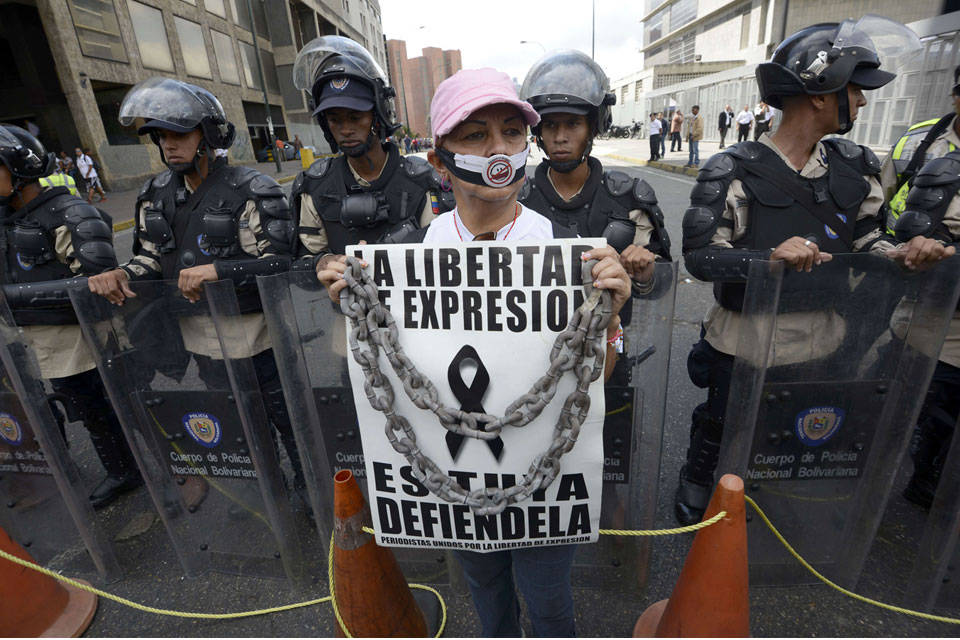
In Latin America, the indicator that contributed most to the degradation of freedom of expression was the increase in self-censorship by journalists themselves, which in those twelve years increased by 52.14%, due to fear of suffering reprisals when reporting on sensitive topics.
Freedom of expression and access to information fell by 6.86% in the Latin American and Caribbean region between 2012 and 2024, which is slightly less than the contraction experienced globally, which was 10%, according to a UNESCO report published this Monday, December 15.
The data is part of the conclusions of the study ‘Global trends, journalism: shaping a world at peace 2022/2025′where the Paris-based UN agency relies on V-Dem figures to set up an index that measures freedom of expression.
Based on these references – which are the world’s largest set of data on democracy, compiled by an international network of thousands of academics and experts coordinated by the V-Dem Institute of the University of Gothenburg (Sweden) – the study analyzes factors such as the effort to censor the media, harassment of journalists or freedom of academic and cultural expression.
In Latin America, the average annual decline was 0.53% in the period 2012-2024 and the indicator that most contributed to this degradation was the increase in self-censorship by journalists themselves, which in those twelve years increased by 52.14%, due to fear of suffering reprisals when they report on sensitive topics.
The podium of the parameters that most affected freedom of expression in Latin America and the Caribbean was completed by the restrictions imposed on the media, which increased by 41.51% between 2012 and 2024, and academic and cultural freedom, which decreased by 40.23%.
*Read also: IPYS registers 130 cases of “violations of freedom of expression” in Venezuela in 2025
This has a direct impact on the lives of journalists, since in this region – where the danger of practicing journalism has escalated, especially in countries like Mexico -, in the period 2018-2024, almost a thousand informants were forcibly displaced.
“These trends not only indicate an increase in pressure on journalists and independent media, but also a weakening of the institutional environments that traditionally encourage debate and pluralism,” underlines the study, in whose preparation experts such as Colombian Catalina Botero, lawyer and specialist in freedom of expression at the University of Los Andes, participated.
At a global level, however, the data are even worse, since the 10% decline in the freedom of expression index is only comparable to that which occurred with the First World War, in the prelude to the Second World War and in the worst of the Cold War in the 1970s, as UNESCO warned this Monday.
With information from the EFE agency
*Journalism in Venezuela is carried out in a hostile environment for the press with dozens of legal instruments in place to punish the word, especially the laws “against hate”, “against fascism” and “against the blockade.” This content was written taking into consideration the threats and limits that, consequently, have been imposed on the dissemination of information from within the country.
Post Views: 36