The times of “planting” political prisoners to reap favors and pardons, to reciprocate winks and prizes are over.
More than 800 political prisoners in Venezuelan prisons were of no use to save Nicolás Maduro’s skin. Perhaps, just as he trusted too much in a personal Cuban escort that was no guarantee of anything, he also copied the Castro regime’s methods of fabricating crimes against innocent people and locking up opponents with the idea of always having some bargaining chips on hand to negotiate.
There was no need for dialogue or exchange of prisoners. It was enough for Chavismo, as well as the Ortegas in Nicaragua, to see a very clear warning in what happened this January 3 so that they understand that overcrowded prisons are rather a burden, a page that must be turned urgently because, contrary to what has happened with other North American administrations, in matters of understanding and progress in bilateral political and economic relations, a political prisoner only has value when he is no longer considered as such, when the injustice committed is recognized, when he is released “spontaneously”, without being thrown on a negotiating table as if he were a commodity, a property.
Those who replaced Nicolás Maduro have had it more than clear, and perhaps they even have as an experience how inadvisable it is to apply the manual of the “perfect repressor” that the Cuban communists sold them at a high price, who in turn would not do anything wrong in discarding theirs. And at the same time close their little schools of horror, foreseeing how useless it is to fill the prisons with independent journalists, peaceful protesters, artists, activists and other “annoying people”, when it is much healthier to keep them empty.
And even more beneficial would be if, once released, instead of forcing them into exile or blackmailing them by returning to prison – as is the practice in Cuba – they are invited from sincerity, and not from trickery and simulation, to participate in the urgent task of healing and rebuild the nationwhen the years and failures accumulated by Castroism speak for themselves of the incapacity of the current rulers, of the dead end where they are, of the options that are exhausted if they do not take advantage now of the unique opportunity that they have been given to start doing things but well, at least in another way, that is, with everyone and for the good of all, or to resign and leave before it is too late, like Nicolás Maduro, or worse still, like the other Nicolás, the last name Ceausescu.
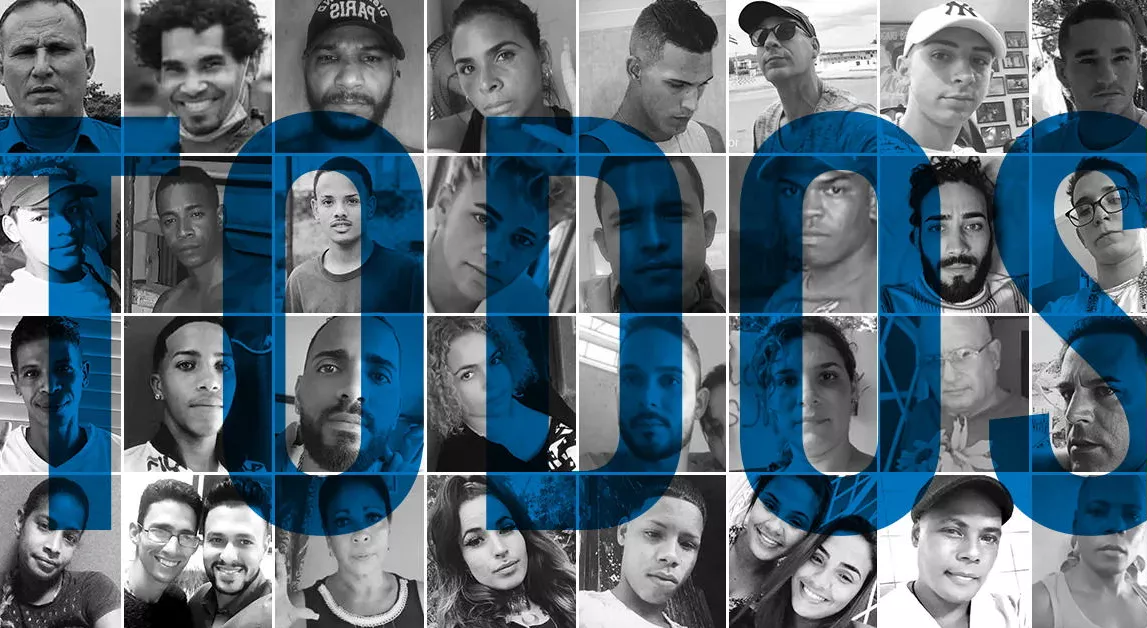
Cuba is currently the country that has the most political prisoners in relation to the number of inhabitants. Just as the country with more sentences for arbitrary detention in the world, according to United Nations reports. Furthermore, it has remained for years in the top positions among the countries with the highest prison population rate, narrowly approaching 800 per 100,000 inhabitants. But, going beyond the statistics and touching reality with our hands, Cuba is possibly the only country where the majority of the population considered “free” spends its entire life with the certainty, more than with the simple sensation, of being condemned to confinement and silence. To death in life.
Those of us who have tried to survive in it, even for a few minutes, know it well: all of Cuba is an infernal prison, and the prisons it houses are Hell. If life is hard on our streets, if the hunger and diseases that we Cubans suffer are horrible in this simulacrum of “freedom” where it is impossible to be truly free, let us try to imagine what it means to be a prisoner, or worse still, a political prisoner of Castroism, against whom they will do everything they can to subdue him, to humiliate him if he does not bow down. They will do it to him and they will be more cruel to his family.
No matter how confident the Cuban communists may be in the idea that an imprisoned opposition and a people subjugated by misery and weapons are their strongest pillars, enough to continue adding years to the dictatorship, the truth is that a similar confidence, infected by Castroism, was the weakest point and, consequently, the main enemy of Nicolás Maduro.
Repression and prison, the country in ruins—without prosperity or happiness for the people—in the end, along with disloyalty, end up working against the ruler who practices them as the only resource to perpetuate himself in power. There are as examples the dictatorships that have fallen and will continue to fall. The times of “planting” political prisoners to reap favors and pardons, to reciprocate winks and prizes are over.
Castroism should be looked at the events of Venezuela as in a mirror and, far from choosing once again the paths of repression, resentment, abuse, distant cuteness and useless entrenchments, he should interpret what happened as the sign or the opportunity that has really been placed before him. The Chavistas, apparently, caught them instantly. Therefore, it would be in their best interest to imitate them without wasting another minute on nonsense. You have already seen that no one will come to save you if you do not save yourselves now. Releasing political prisoners would be a good start.