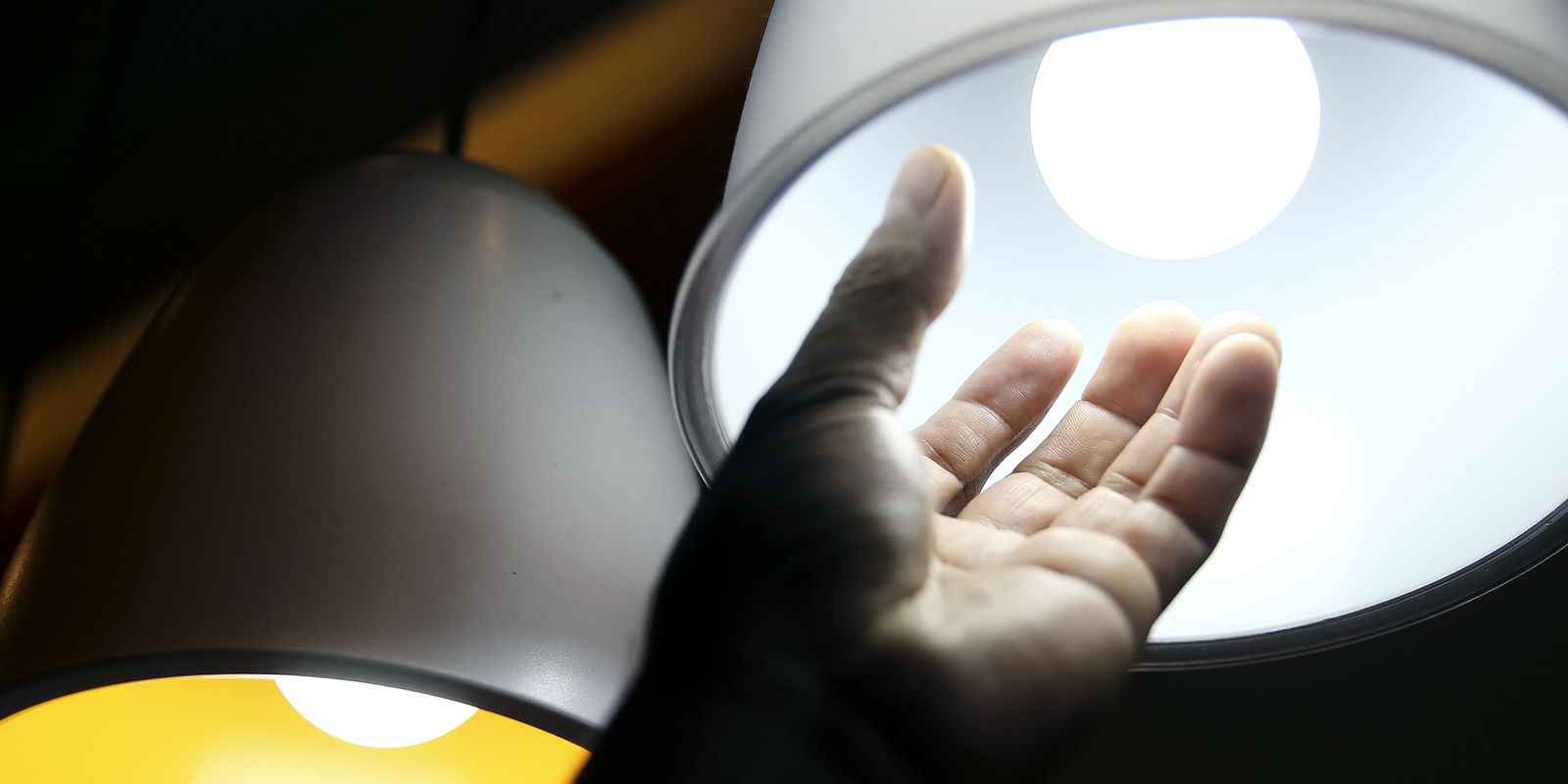
The free or discounted light bill for low-income families consuming up to 80 kilowatts-hours (KWh) per month goes to the presidential sanction, after the approval of provisional measure by the House of Representatives and the Senate on Wednesday (17).
Gratuity should benefit 4.5 million families registered in CadÚnico with monthly family income per person lower or equal to half a minimum wage. By the text, the social tariff also receives families who receive the continued benefit (BPC), as well as low -income indigenous and quilombolas.
Legislative houses approved the government’s proposal on the last day of validity of the Provisional Measure (MP) 1,300 of 2025, issued in May. Deputies and senators made several changes in the original text of the Planalto, including discount on hydroelectric debts.
The new Social Energy Tariff has been valid since July, since MP has immediate effect, but needed Parliament to become law.
The measure expands the scope of the social tariff of electricity. Earlier, the social rate gave a discount ranging from 65% to 10% depending on KWh consumption, up to the limit of 220 kWh per month.
Now the fare will be free until 80kWh. If consumption passes this value, the family pays only the difference. Considering the gratuity or discount, the measure should benefit 60 million Brazilians, according to calculations by the Ministry of Mines and Energy.
According to the government, “ measure It represents a structural update of the legal framework, reconciling social justice and strengthening of the Brazilian electricity sector ”.
The exemption will be countertified by the Energy Development Account (CDE), fund funded by the whole of consumers to support public policies in the energy sector.
On the other hand, other costs not associated with the energy consumed, such as the contribution of public lighting and the tax on the circulation of goods and services (ICMS), in accordance with the law of each state or municipality, may be charged from families.
Among the items that were left out of the original MP text by decision of Parliament, are the different rates per time, and change in price criteria in short -term energy operations.
Hydroelectric debts
Proposed by the MP’s rapporteur in the House, Deputy Coelho Filho (Union-PE), a discount was included for debt of hydroelectric generators with the Union. The reduced installments to win imply a fiscal waiver of the government of about $ 4 billion, according to the rapporteur.
Nuclear energy and irrigation
According to the new measure, the highest energy cost of nuclear power plants will be apportioned among all consumers through additional tariff, except for low -income consumers.
Until then, this cost was focused on specific contracts. The change is valid from January 1, 2026.
Regarding the irrigation and aquaculture sector, the text ends with the fixed time from 9:30 pm to 6am for energy discount granted to these activities and also with a continuous period, with the definition of time with the distributor according to government parameters.
Points withdrawn
Several points provided for in the original MP of the Executive were removed in the processing of the matter by the National Congress. Some devices removed were transferred, by agreement between leaders, to MP 1304 of 2025, still under discussion.
Among them, the choice of energy supplier by the residential and commercial consumer, the performance of the electricity marketing chamber (CCEE) in the gas market and the end of incentives for alternative source energy.
Other topics that were left out are:
- Assignment to a regulation on the definition of conditions for the decentralization of regulation, control and inspection of electricity facilities provided and located in the territory of states or municipalities;
- Rules for negotiating titers representing small hydroelectric plant debts in the short -term energy market due to hydrological risk, which results from losses that a hydroelectric generator may have if a prolonged drought affects reservoirs or water flow from a watershed.
*With information from the Senate Agency and Agency Câmara