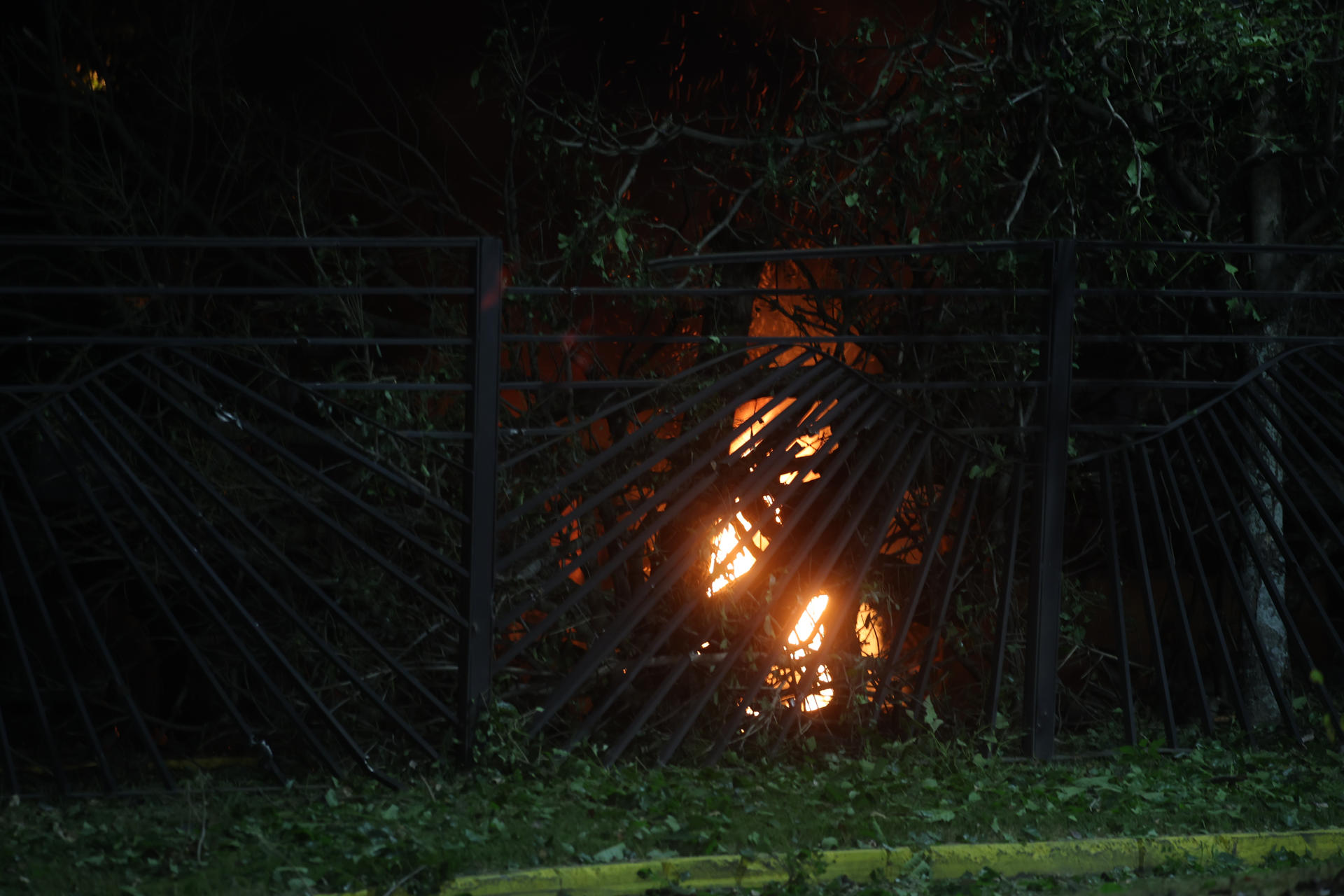

Without helicopters, explosions or the smell of gunpowder, on the Caracas and the rest of the country floats a pall of uncertainty after the capture of Nicolás Maduro by US forces and his transfer to New York, according to reports cnn. The arrest of the Chavista leader opens a scenario with multiple questions about the consolidation of official power and the political direction of Venezuela.
Political scientist Carmen Beatriz Fernández, director of the consulting firm DataStrategia, indicated that “we are experiencing a transition, it has already begun,” and expressed her hope that the process leads “to democracy,” although she stressed that she maintains expectations regarding the upcoming announcements. Fernández warned that it could be a “rebranding”, that is, a change of president without altering the regimewith signs of a transition supervised by the United States that could culminate in elections.
Duration of the presidency in charge of Delcy Rodríguez
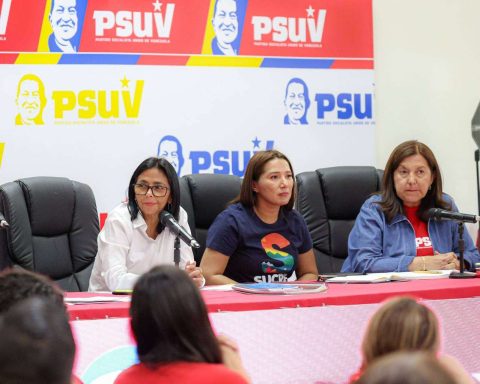
The Supreme Court of Justice (TSJ) ordered that Vice President Delcy Rodríguez assume the presidency in charge after Maduro’s “forced absence,” in accordance with article 234 of the Constitution. The rule establishes that the vice president can temporarily replace the president for up to 90 days, extendable for another 90 days by decision of the National Assembly.
“The TSJ acted correctly in pointing out that the matter is not resolved, but It is striking that he does not say how long Rodríguez will take office.“, he pointed out to cnn Juan Carlos Apitz, dean of the UCV Faculty of Law.
Apitz clarified that it is up to the National Assembly (AN), controlled by the ruling party, to determine if it is an “absolute failure,” which would force elections to be called in 30 days. “They can’t keep it for life, it would be a contradiction”he noted, although he stressed that “the political conditions are not yet in place” for an immediate election.
Meanwhile, Rodríguez consolidates his power with appointments in security and the economy, and the withdrawal of officials close to Maduro is recorded, according to analyst Eduardo Valero Castro, former director of the UCV School of Political Studies.
Transition and elections
Valero Castro drew a parallel with the transition after the death of Juan Vicente Gómez in 1935, when his successor Eleazar López Contreras preserved elements of the previous regime while opening up political space. “Today it is coming from the same sources. I don’t think there will be an opening to democracy directly, at least in six months. “It will be petal by petal,” he told cnn.
Fernández agreed that the Venezuelan transition occurs from the regime itself, not from external sectors, and stressed that it is up to society to demand progress towards democracy, including the release of political prisoners and the reincorporation of exiled opposition leaders.
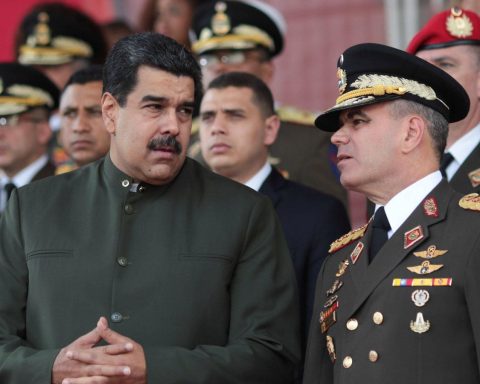
The United States maintains rewards for Diosdado Cabello, Vladimir Padrino and other officials for alleged ties to drug trafficking and corruption. Since the death of Hugo Chávez, power was fragmented between civic and military, highlighting the Rodríguez, Godfather and Cabello.
Political scientist Fernández indicated that “so far there is no indication of a rupture” within Chavismo, and that both Padrino and Cabello have ratified their support for Rodríguez. However, Valero Castro pointed out that doubts persist about the ease of the US operation, which has generated speculation about possible agreements between the Venezuelan military and the United States.
The role of groups
Chavismo’s control apparatus includes armed bands known as “colectivos”, linked to the Ministry of the Interior and emerged after the 2002 coup attempt. “You don’t have to be a genius to know Diosdado’s move”Apitz said. “It has to be strengthened to be able to negotiate and save itself, reinforcing the firepower of the troops,” including groups, police and military.
Fernández added that the groups have been armed over the years, but that the ethical and moral motivation that supported them has been diluted. “Today the revolution does not have that ethic, that part is unrelated. What remains of Chavismo, between 15 and 20%, is taking this very strong blow, with suspicion of betrayal,” he explained.
Valero Castro warned that the process of releasing prisoners could generate tensions with the armed groups that control sectors of Caracas, especially in the west. The acting president thus faces a complex scenario, in which she must balance international legitimacy with pressure from Washington and the reality of internal power.
“That it becomes evident that he is under Trump’s tutelage is his worst scenario”Fernández concluded, pointing out that Rodríguez today has a weaker position than Maduro. “It cannot upset the official bases too much; it is a dangerous game,” he warned.