The legislator justified the changes and left it to history and academia to assess whether they are correct or not, for example the new figure of “public interest.” All this, he said, “in defense of a different vision that we have, which clashes with the traditional vision that was had of institutions and laws.”
“We are looking to see if, like in everything else, as they did before, the PAN, then the PRI and then the PRI again, impose their vision and they achieved it and we respect it. We seek to beat them in elections, how to defeat that vision. Now when the opposition wins they will also seek to modify what we are now proposing,” he explained.
In his argument Godoy added: “We do it thinking about the greater good of the nation. We can make mistakes as other governments have made mistakes with a neoliberal vision. We can also make mistakes but time will decide this, the laws can be perfected.”
“Surely much of what we do today will be questioned in 10 or 15 years,” he said.
They reject the reform
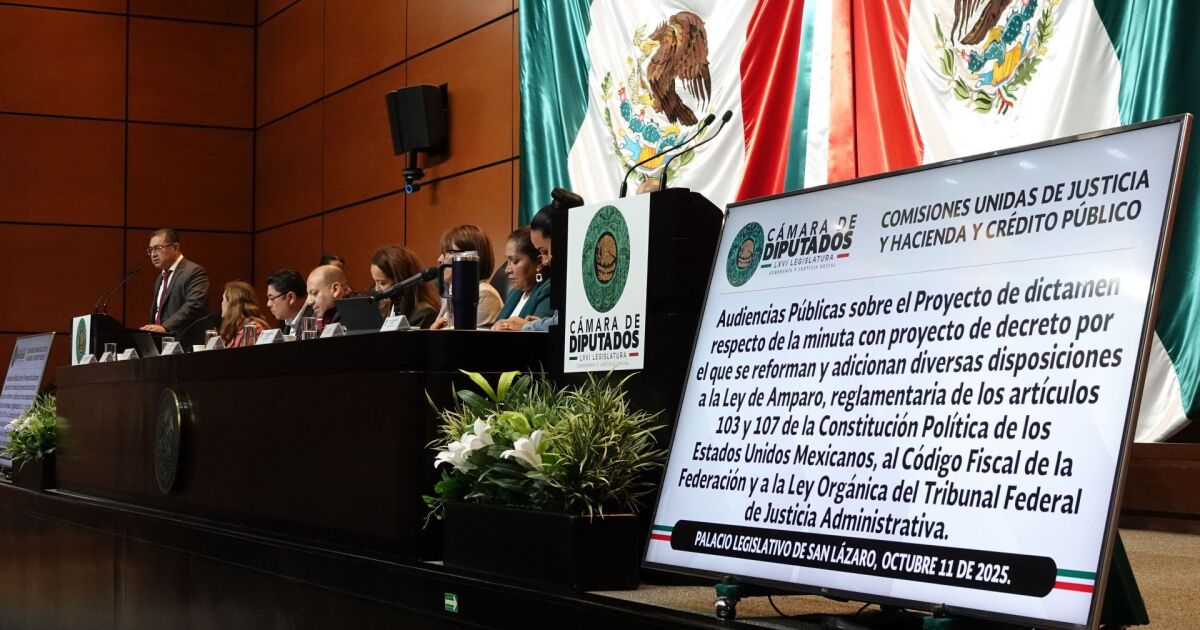
After concluding the Open Parliament on the minutes of the Amparo Law, the ruling will be made in a few minutes and the president of the Justice Commission, Julio César Moreno, said that there was already a relevant modification from the start.
“The draft opinion already comes with a change, which is the elimination of the retroactive effect of the reform and several proposals will surely come,” he explained.
In the three sessions of the forum, held on Friday, Saturday and Monday, 30 speakers participated and none defended the changes.
100% of the experts expressed their doubts and even their warnings about the consequences that, if approved, the reforms will have on human rights, the economic sector and collective interests.
For this reason, at the end, PAN representative Margarita Zavala said that “it is important that we do not rush it, but that we thoroughly review what we are doing, because it is a reform with a very difficult point of return. The lawyers and the people do not deserve it.”
In this Monday’s session, some of the speakers stated that the reform seeks to leave no avenues for judges and order them to deny suspensions for practically everything.
Roberto Gil Zuarth, former PAN legislator, explained that the changes establish “clear rules, a kind of check list, a kind of mechanics in which the judge has to determine step by step whether the suspension can be granted or not,” and although it eliminates discretion, this is given to the reviewing judges.
“It seems a sign of distrust in the popularly elected judge. There are probably reasons. If democratically elected legitimacy implied tying the judge to the popular will, it seems that this is a countermajoritarian measure of the legislator. You take away the discretion of the popularly elected judge and replace it with rules of action.”
The jurist and professor at the Free School of Law Luisa Conesa Labastida also stated that the new judges lack the context to evaluate the cases with the jurisprudential background.