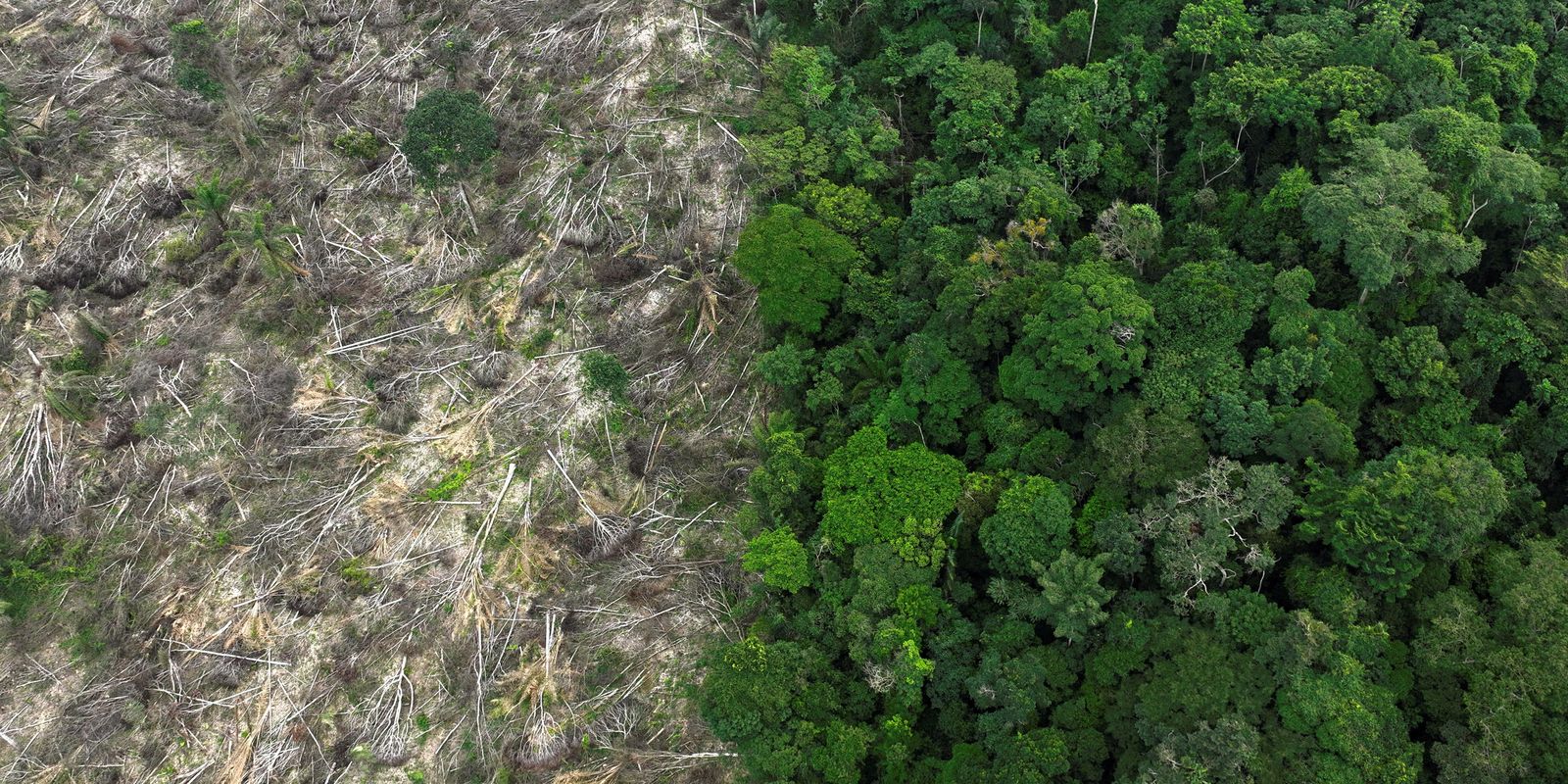
Transform tropical forests into economic and climate assets: this is the proposal of the study released this Monday (13) by the Climate Policy Initiative, linked to the Pontifical Catholic University of Rio de Janeiro (CPI/PUC-Rio).
The survey presents the Reversing Deforestation Mechanism (RDM), which can generate up to US$100 billion in annual revenue for countries with tropical forests.
THE study was developed from a request from the president of COP30, ambassador André Corrêa do Lago.
The idea is to gather data on the economic dimensions of the conference, within the “Baku to Belém Roadmap for 1.3T”, an initiative that seeks to raise US$1.3 trillion to finance the energy transition.
“Forests are not only vulnerable to climate change, they are indispensable assets for the climate fight”, explains Juliano Assunção, executive director of CPI/PUC-Rio.
“Scaling up the removal of carbon from the atmosphere is increasingly a priority, and tropical forests offer one of the most powerful tools available.”
The proposed mechanism is based on payments for forest restoration results, creating financial incentives for tropical countries to expand the recovery of degraded areas.
The estimate is that the RDM can generate revenues of more than US$5,000 per restored hectare, with the potential to remove up to 2 GtCO₂ per year (global carbon dioxide emissions in tons).
>> Follow the channel Brazil Agency on WhatsApp
Amazon
In the case of the Amazon, the study shows that the use of RDM could reverse the current scenario: instead of emitting 16 GtCO₂ in 30 years, the region could capture 18 GtCO₂ through large-scale natural regeneration. This would represent around US$30 billion annually in revenue for the region.
“The Amazon has a relevant contribution to global climate goals”, says Assunção. “Forest restoration, when coupled with carbon capture at a fair carbon price, is a more profitable land use than low-productivity livestock farming.”
RDM differentiates itself from initiatives such as jurisdictional REDD+ (JREDD+) and Tropical Forests Forever Fund (TFFF)as it focuses on restoration at scale, and not just preventing deforestation. The mechanism is structured as a bilateral agreement between a buyer (such as a government or private institution) and a jurisdiction (national or subnational).
Payments are based on the amount of carbon captured and managed by jurisdictional funds earmarked for forest restoration, fire prevention and socioeconomic development of local communities.
According to CPI/PUC-Rio, the tropical countries analyzed — 91 in total — have 1.27 billion hectares of forests, storing the equivalent of a third of global historical CO₂ emissions. Restoring areas degraded since 2001 could recapture up to 49 GtCO₂.
“Large-scale restoration can transform millions of degraded hectares into climate assets, but this will only be possible if we mobilize robust, long-term financing. COP30 is the opportunity to consolidate a financial architecture capable of mobilizing international resources that match the potential of tropical forests in the climate agenda”, says Assunção.