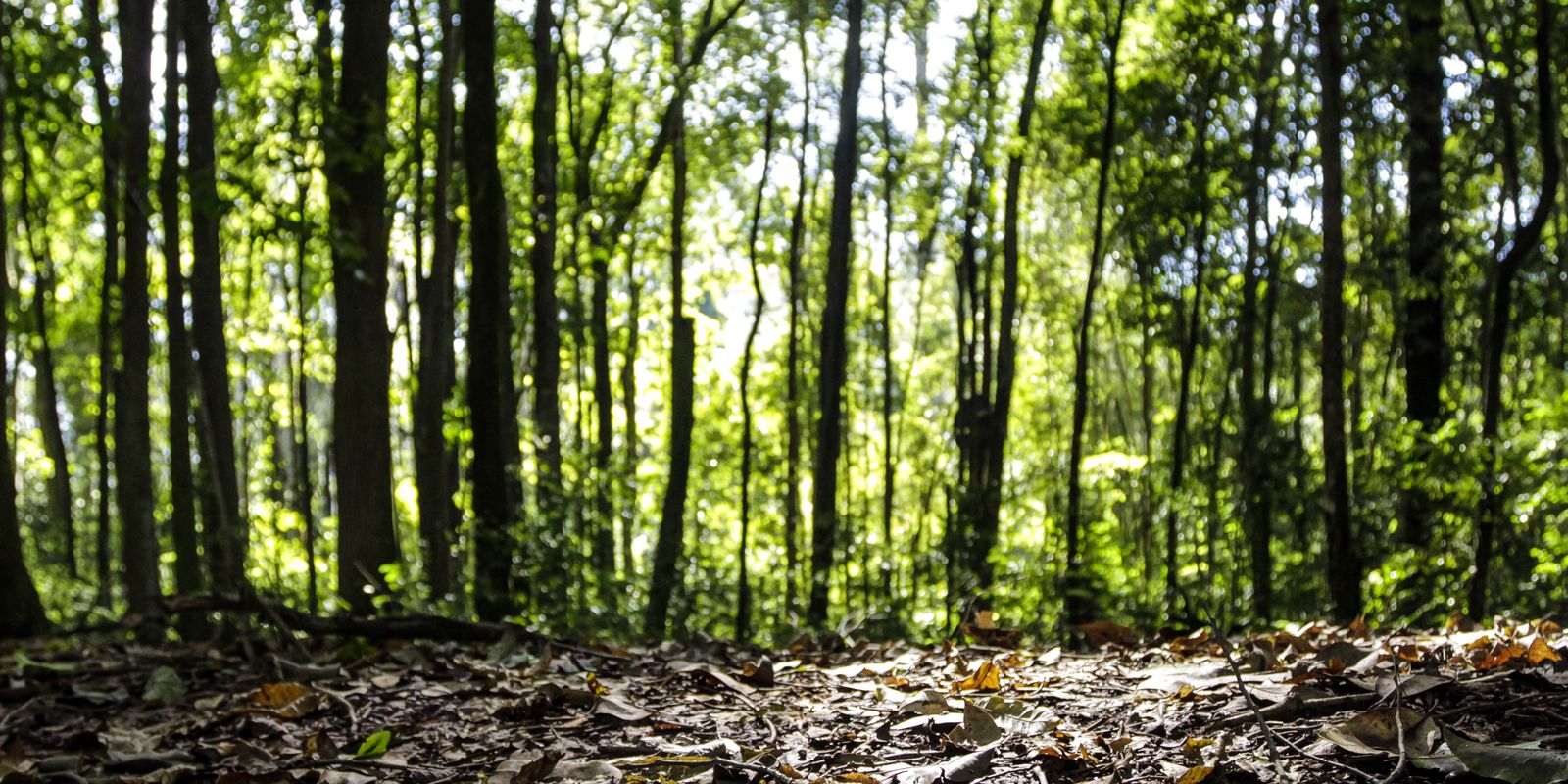
Brazilian forests, whether natural or planted, generated economic production of R $ 44.3 billion in 2024. This amount represents growth of 16.7% over the previous year. Already compared to 2019, the production more than doubled, reaching 140% increase.
The data are part of the survey of plant extraction and forestry production, released this Thursday (25) by the Brazilian Institute of Geography and Statistics (IBGE). The increase in production value can be explained by the association of more extraction and higher sales prices.
The survey shows that forestry accounts for 84.1% (R $ 37.2 billion) of economic production forestswhile the other 15.9% (R $ 7 billion) are attributed to plant extractivism. Since 1998, Silvicola Production surpasses the extractive.
Silviculture is the production taken from planted areas, while extractivism refers to natural areas such as forests and forests. IBGE Agriculture Manager Carlos Alfredo Barreto Guedes points out that not all form of plant extraction is illegal.
“Much of extractivism are authorized extractions,” he says.
Regional distribution
The research points out that 4,921 of the 5,570 Brazilian municipalities recorded forest production. In regional terms, the south and southeast concentrate 65.7% of forest production.
- Southeast: 34.7%
- South: 31%
- Midwest: 13.5%
- North: 11.1%
- Northeast: 9.7%
With a production of R $ 8.5 billion in 2024, Minas Gerais accounts for 22.8% of the total produced by the country and occupies the top of the ranking among the federation unitsfollowed by Paraná, with R $ 6.3 billion (17% of the national total).
Among the municipalities, the list is led by the city of Paraná General Carneiro, with R $ 674.4 million. The ranking follows with Três Lagoas (MS), João Pinheiro (MG), Brasilândia (MS) and Buritizeiro (MG). All reach the prominent position because of production from planted areas.
Logging
The economic production of forestry is almost all (98.3%) of logging activity. Within this group, paper and pulp production has the largest participation:
- Wood in log for paper and pulp (40.1%)
- Wood in log for other purposes: (24.5%)
- Charcoal: (21.4%)
- Wood: (12.2%)
- Others: (1.7%)
Wood production in paper for paper and pulp was record in 2024, reaching 122.1 million cubic meters (m³). These are numbers that help Brazil to be worldwide cellulose export champion-the main raw material of the paper industry. Since 2022, the country has overcome Canada.
In 2024, Brazil sold 19.7 million tons abroad, generating US $ 10.6 billion. The main destinations were China (43.7%), the United States (15.8%), Italy (8.8%) and Netherlands (8.3%).
According to IBGE, Brazil’s prominent position in pulp production was reached “due to favorable climatic and soil conditions for rapid growth of forests, coupled with investments in sustainable practices, which make it highly competitive in the international market.”
Cellulose is one of 700 products that were left out of the United States tariff list in August 2025which imposes a rate of up to 50% over part of Brazilian exports.
Planted area
The forest area planted for foresters in Brazil reaches 9.9 million hectares (ha), in 3,552 municipalities. To have dimension, it is practically the size of the state of Pernambuco. From this area, 77.6%are dedicated to eucalyptus cultivation, ahead of Pinus (18.6%) and other species (3.8%).
Eucalyptus is the wood used in virtually all charcoal obtaining (98.4%), 86.9% of firewood and 87.4% for paper and cellulose.
Analyst Carlos Alfredo Guedes points out that this preference is explained by characteristics of the species, including the time necessary for cultivation.
“Eucalyptus has a lot of diversity of use and a very fast growth, around seven to eight years. It has adapted very well here on Brazilian soil, has adapted very well to the weather,” says Guedes, compared to Pinus, which takes ten to 12 years to be harvested.
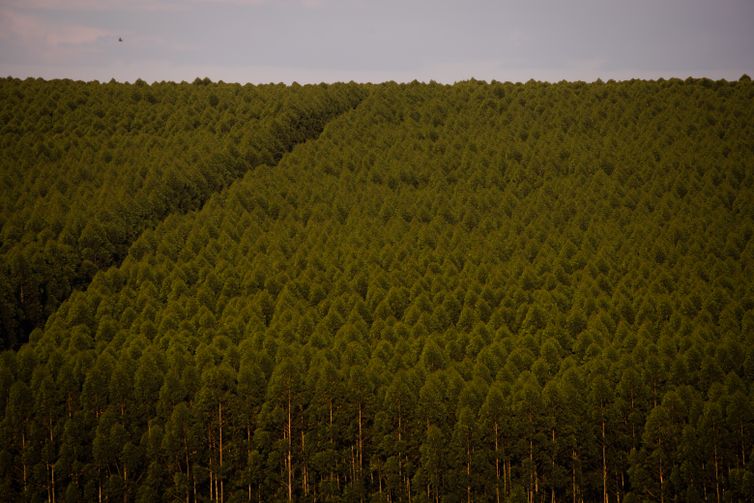
Eucalyptus plantation for forestry – CNA/Wenderson Araujo/Trilux
Minas Gerais is the state with the largest area of planted eucalyptus, with 2.1 million ha, that is, it is as if there was a eucalyptus sergipe within Minas Gerais.
Already the municipality with the largest forest planted of the species is Ribas do Rio Pardo, in Mato Grosso do Sul. There are 380.7 thousand ha, almost twice the area of the city of São Paulo.
Vegetable extractivism
In plant extractivism, logging activity is also predominant, with 65.6% of the R $ 7 billion generated. Then the other prominent group is formed by food products, which respond 28.6% of the value generated (R $ 2.0 billion).
Within this group, half is represented by acai (50.9%). Then they appear mate (26%) and Brazil nuts (9.7%).
“Açaí Amazonian is collected from a regional native palm tree, concentrating 92.9% of its extraction in the northern region. In 2024, this production was 247.5 thousand tons,” says IBGE.
Pará recorded the largest production of acai, with 168.5 thousand tons (68.1% of the national total). Of the ten municipalities with the largest volumes, eight are Pará.
Limoeiro do Ajuru, in the northeast of the state, boasts the title of largest Brazilian producer, with 20.2% of everything that was extracted from acai in the country in 2024.
Already the extraction of yerba mate is concentrated in the southern region and reached production of 377.4 thousand tons in 2024. Paraná is the national champion, with 85.8% of Brazilian production. The municipality with the highest volume extracted was the Paraná São Mateus do Sul, representing 17.2% of the one extracted in the country.