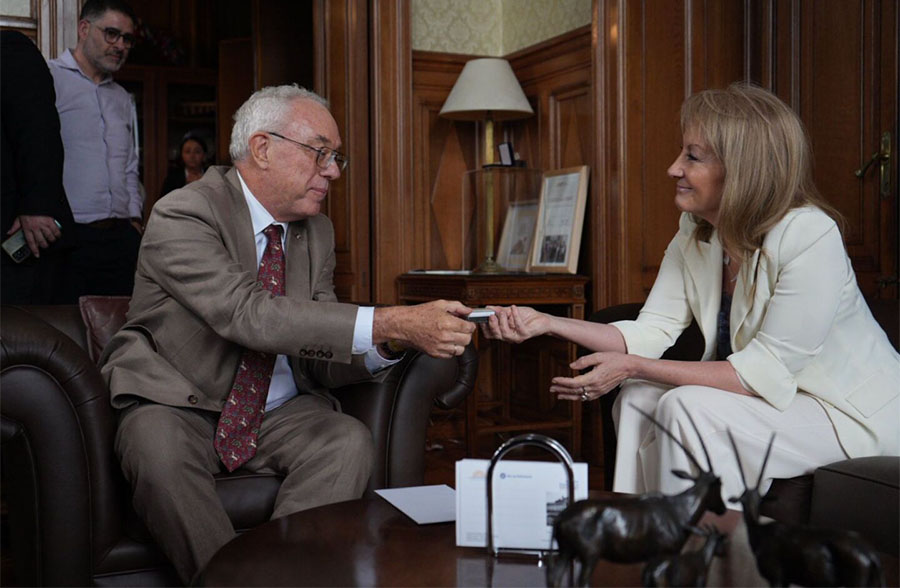
Chancellor Lubetkin handed over a “pendrive” and documents containing more than 4,000 pages of the pact. Although the documents delivered are provisional versions (waiting for the final authenticated texts that must arrive from the pro tempore presidency of Paraguay), the objective is to save time.
Purpose: That all groups of the Uruguayan Parliament begin the detailed analysis of the clauses.
Strategy: The government seeks to “put first” in the region, demonstrating a clear political will to move quickly while clearing up doubts about internal processes in Europe.
Carolina Cosse’s position
The vice president received the document with an attitude of openness and institutional responsibility. His statements reflect a cautious but determined optimism towards integration:
Unanimous support: Cosse expressed his conviction that Parliament will support the agreement unanimously, underlining Uruguay’s tradition of maintaining state policies in matters of foreign relations.
The importance of detail: true to his technical profile, Cosse has previously insisted on the importance of studying the “fine print” of the agreement. Considers that, although Mercosur is vital for the national industry, it is essential to analyze how the details impact sovereignty and local development.
Process management: As president of the General Assembly, she immediately activated the parliamentary mechanisms so that the material was distributed to all political parties and the formal debate began.
“The important thing is that it moves, that there is some gesture, some progress,” Cosse had previously noted, highlighting the need to not let a treaty that has been in negotiation for more than 25 years die.
What’s next?
The Uruguayan Parliament is expected to dedicate the next few months to international affairs committees. Chancellor Lubetkin stressed that this agreement is strategic for the next 20 years, so the speed that Cosse brings to the legislative process will be key for the country’s international image.