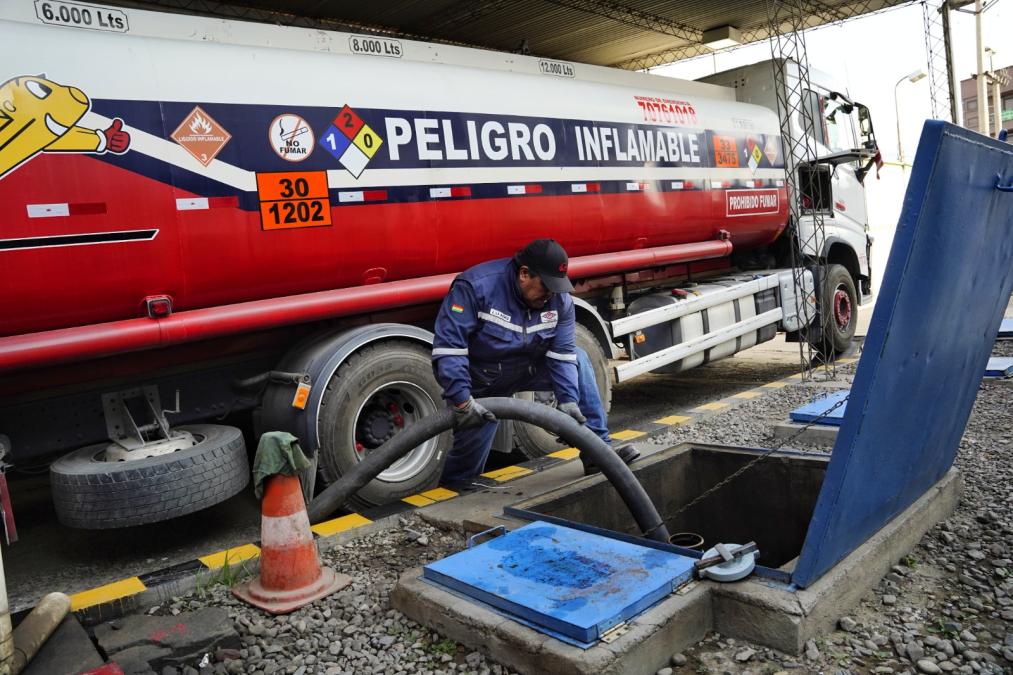
The president of Bolivian fiscal oil deposits (YPFB), Armin Dorgathen, confirmed that The state meets 100% of the national demand for gasoline and diesel. However, The ranks in the stations for diesel persist, due to the illegal collection and the fuel resale.
Dorgathen said that in the Case of gasoline, the ranks have practically disappeared, but in diesel “there are people who line up as a business”. These buyers accumulate large volumes to resell them, generating Artificial pressure on the supply.
Recurrent practice is that The same vehicles make rows multiple times to collect diesel, which affects availability in the stations. The National Hydrocarbons Agency (Anh) carries out controls, But the phenomenon persists, since in a matter of hours the fuel is exhausted in various points of sale.
Economic impact and market control
YPFB president warned that Much of the diesel sold ends in illegal resalea factor that distorts the real offer and can affect the stability of the energy market.
Unlike diesel, the gasoline collection is lower in volume —It don’t exceed 1,000 to 3,000 liters, which limits its impact on the supply chain.
The effective control of the illegal collection is vital To ensure the efficiency of the office and avoid distortions that affect key sectors, such as transport and agriculture, which depend on diesel for their operations, said the head of the state oil company.