“Advanced air mobility is now officially a mode of transportation in Florida,” said the FDOT secretary.
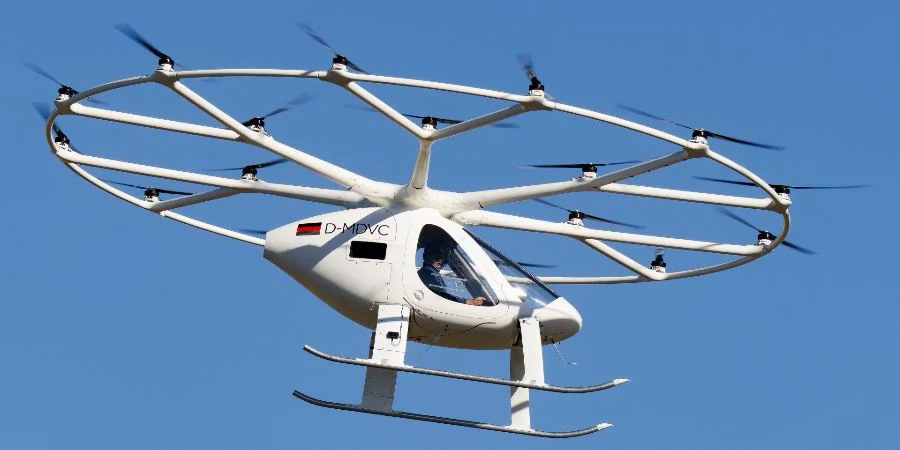
MIAMI, United States. – The so-called “electric flying cars”—vertical takeoff and landing (eVTOL) aircraft—will begin to operate commercially between tampa and orlandoFlorida, towards the end of 2026, two years earlier than planned and inaugurating “the first aerial highway in the United States.”
According to a television report FOX 13 Tampa Baybased on a Florida Department of Transportation (FDOT) presentation to the Polk County Commission, “the goal is for commercial vehicles to take off by the end of 2026,” as part of the first phase of the Aerial Highway Network focused on the I-4 corridor.
Univision Tampa Baywhich also cites FDOT, notes that the agency “confirmed that vertical takeoff and landing vehicles will be operating between Orlando and Tampa before the end of 2026, two years ahead of the original schedule,” initially scheduled for 2028.
A business plan published in November 2025 by FDOT itself, under the title Advanced Air Mobility Business Plan: Florida’s Aerial Highway Network (in Spanish, “Advanced Air Mobility Business Plan: Florida’s Aerial Highway Network”) provides the technical basis for these projections. The document models the first operational year of the network in 2027 and estimates that, in that initial phase, advanced air mobility services could move between 220,000 and 1.4 million passengers, with growth to a range of between 11.2 and 18.7 million annual trips by 2050 if all phases of the system are deployed.
The study itself identifies the highest potential volumes of demand precisely in the Orlando-Space Coast, Orlando-Tampa and Orlando-SunTrax segments.
In your official page on advanced air mobility (Advanced Air Mobility, AAM), FDOT defines this new modality as “the future of transportation” and states that Florida “is taking steps to become the first state in the country to have commercial AAM services,” through next-generation aircraft — including electric air taxis — that will rely on a network of vertiports to more quickly and flexibly connect the state’s main urban and economic centers.
The centerpiece of the project is the SunTrax campus, a high-tech transportation testing facility that FDOT operates in Auburndale in Polk County, off Interstate 4 and outside the immediate airspace of Tampa and Orlando international airports.
According to FOX 13 coverage, during a presentation to Polk commissioners the FDOT reported that at SunTrax “a vertiport has already been built” and that there is “another one on the way,” accompanied by a 20,000-square-foot hangar and a 3,000-foot runway.
Local television station WFTS Tampa Bay, in a similar report on SunTrax as “the country’s first air taxi testing center,” agrees that “construction of a vertiport or landing center has just been completed” and that “an additional vertiport is now under construction.”
However, test routes will still need to validate the safety, efficiency and economic viability of eVTOL aircraft before opening service to the public.
SunTrax’s own official portal details the internal project schedule. According to this roadmap, the first AAM Aerial Highway Network should be established in the fall of 2025, with the identification of profitable use cases and the formation of alliances to develop network stations. AAM’s new Florida headquarters, located at SunTrax, is expected to be fully operational in early 2026; and towards the end of 2026 “the infrastructure supporting the AAM will be fully activated and ready to deploy profitable commercial passenger transport services.”
In parallel, Governor Ron DeSantis has explicitly linked the project with the promise of alleviating chronic congestion in the center of the state. In an official statement from his officedated October 2025, the Government details the investment in the SunTrax expansion and confirms “the official start of construction of the first of two advanced air mobility (AAM) vertiports at FDOT’s SunTrax test facilities.”
That same text frames the commitment to the AAM within a broader package of infrastructure works for I-4 and other roads in central Florida.
Overall, the narrative presents AAM as a complement to, and not a substitute for, the land transportation system. FDOT’s business plan emphasizes that the air network is designed to serve especially business travel, tourism and commuting (commuting), in a context of strong growth in mobility demand in the central corridor of the state.
For its part, SunTrax maintains that Florida is “leading the country in taking highways to the sky with AAM technology,” with aircraft that take off vertically, fly at low altitudes and use vertiports equipped with passenger terminals, parking and loading positions, hangars and connections with other modes of transportation.
Local media have also reported the enthusiasm of officials in the Polk County area, where the initial investment is concentrated. Commissioner Becky Troutman acknowledged in an interview with WFTS “the hardships of traveling on I-4” and declared that the project “really begins to open up a network of aerial highways,” while warning that success will depend on the technology moving from the laboratory to an everyday mode of travel for the county’s population.
In statements similar to FOX 13FDOT officials explained that the immediate goal of the SunTrax expansion is to support research and development of these vehicles, with the expectation that, over time, the infrastructure can also be used for operations and maintenance in a commercial environment.
FDOT Secretary Jared Perdue himself during the Florida Automated Vehicle Summit conferenceheld at ChampionsGate, stated: “Advanced air mobility is now officially a mode of transportation in Florida.”
However, the actual deployment of “flying cars” will depend on factors beyond state enthusiasm. The goal of putting commercial vehicles into flight by the end of 2026 will require coordination with the Federal Aviation Administration (FAA), responsible for certifying both eVTOL aircraft and vertiport infrastructure and low-altitude air traffic management procedures.
Additionally, Florida residents interviewed have expressed doubts about practical issues such as “where these air taxis will stop,” how much the trips will cost, and how the system will be financed.
If the deadlines managed by SunTrax and the Department of Transportation itself are met, Florida would not only become the first state to integrate advanced air mobility into its public transportation network, but the Tampa-Orlando section of Interstate 4 could operate, de facto, as the first commercial air highway in the United States.