A survey carried out with residents of Rio de Janeiro who participated in the 2025 Festa Literária das Periferias (Flup) shows the central place occupied by literature in these people’s lives. 
The interviews were carried out at the event, between November 19th and 30th, 2025, and Respondents said they had read, on average, eight books in the last 12 months, and 82% of them were reading some publication when the survey was carried out.
The data indicates a mostly female readership (70%). The age distribution shows balance: the largest group is between 30 and 39 years old (31.7%), followed by people between 40 and 49 years old (25%) and between 20 and 29 years old (24.5%). There were also readers between 50 and 59 years old (12.8%), 10 and 19 years old (3.3%) and 60 to 69 years old (2.7%).
The literary novel appears as the preferred genre, followed by works of sociology and politics, history, poetry, philosophy, biographies, chronicles and humor, arts, science fiction, comics/manga, detective literature, fan fiction and self-help.
The interviewees are residents of different territories considered peripheral to the North, West and Southwest zones of Rio, such as Madureira, Bangu, Realengo, Campo Grande, Acari, Irajá, Guadalupe, Marechal Hermes, Rocha Miranda, Cascadura, Piedade and Jacarepaguá. People from municipalities in Baixada Fluminense also participated, such as Duque de Caxias, Nova Iguaçu, Nilópolis, São João de Meriti and Mesquita.
The survey also points to the recognition of local cultural production. More than half of those interviewed (59%) say they know artists from their own territories. For Flup’s creator and general curator, Júlio Ludemir, this confirms the vitality of the peripheral literary scene.
“Peripheral artistic production is recognized and valued by those who live in these territories”, he states.
“The challenge is to ensure that this creation, by crossing borders and reaching new audiences, generates real returns for its authors and communities, avoiding the recurrent cultural appropriation of peripheral areas by elite groups”, observes Ludemir.
“The training processes throughout the year and the event itself, with its debates and shows and other attractions, are part of this effort to return recognition and value to the community itself for what it produces”, he adds.

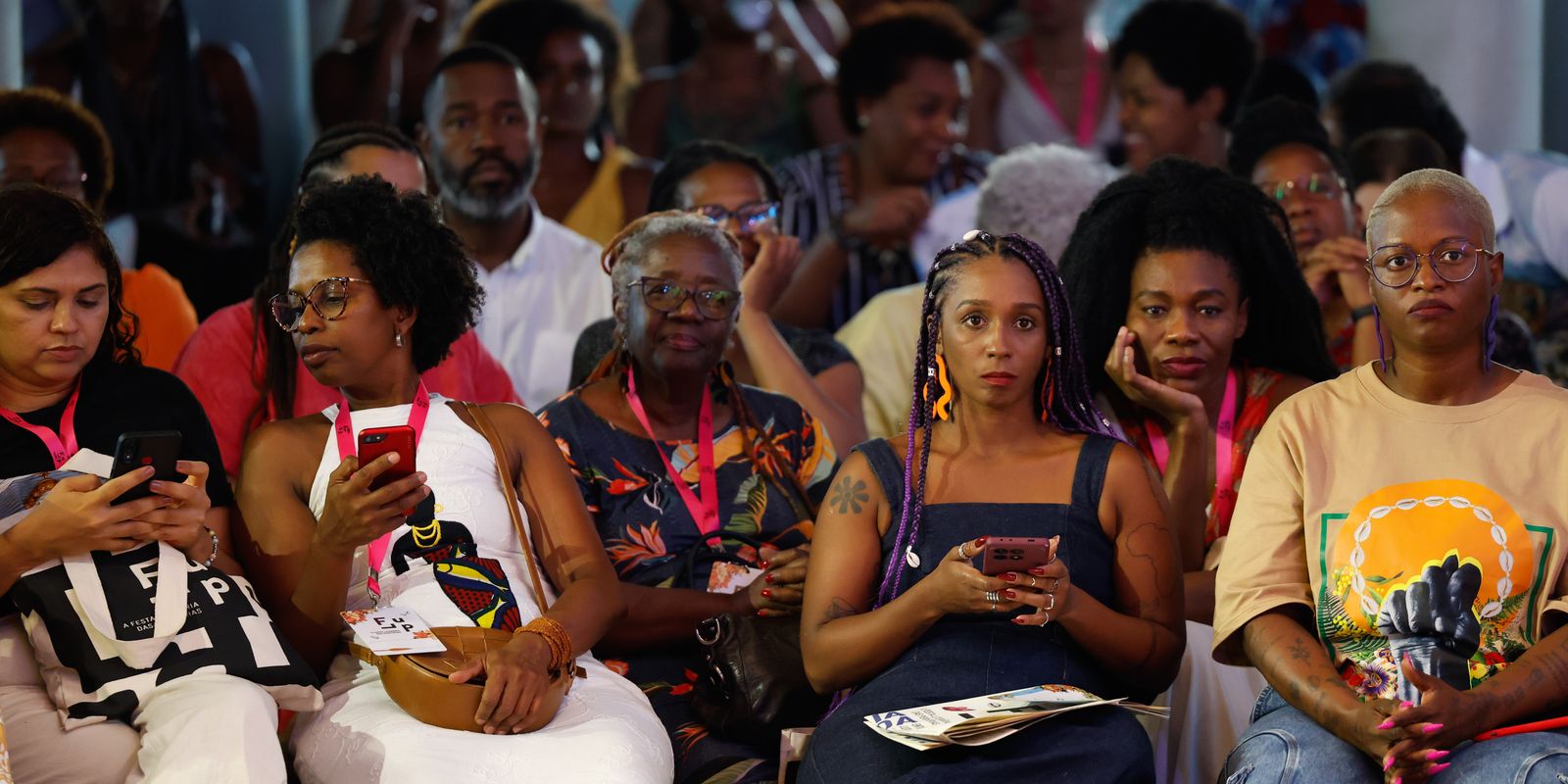
Public participates in the Literary Festival of the Peripheries (Flup), at Circo Voador. Photo: Fernando Frazão/Agência Brasil
Physical book is preferred
The taste for reading is high among Flup’s regulars. When evaluating how much they enjoy reading, on a scale of 1 to 5, 66% gave it a maximum rating, while 20% gave it a 4 and 11% a 3. Only 3% gave it a rating between 1 and 2.
The physical book predominates in readers’ preference, cited by 79% of respondentswhile 19% prefer digital, and 2%, audiobooks. Among the factors that influence the reading habit, literary events lead, followed by college, school, friends, internet and family. The scenario differs from the 2024 survey, when the school appeared as the main stimulus.
“The data shows what we knew: the habit of reading is a practice associated with personal interest, but, undeniably, also the result of educational and social stimuli, reaffirming the need for public policies and actions such as Flup and other spaces for training and encouraging literature”, said Júlio Ludemir, founder and general curator of Flup.
When it comes to channels used to obtain information and consume content related to literature, Instagram appears as the main source, cited by 41% of participants, followed by YouTube (13%), blogs and websites (13%), TikTok (7%) and WhatsApp (2%). Other media, including analogue channels, were also mentioned.
When listing the cultural practices of greatest interest, literature comes first, chosen by 51% of respondents. Music (39%), films and series (35%), art exhibitions (33%) and other cultural activities appear next.