The majority of travel-associated chikungunya cases in 2025 have been reported in Miami-Dade County.
MIAMI, United States. – Florida Department of Health (FDOH) reported that 149 of the 160 positive cases of chikungunya associated with travel throughout 2025 correspond to people who visited Cuba.
The figure appears in the weekly arbovirus surveillance report corresponding to epidemiological week 49 (from November 30 to December 6 of this year).
According to that official document, the majority of travel-associated chikungunya cases in 2025 have been reported in Miami-Dade County (95), followed by Broward (18) and Hillsborough (15), in addition to other counties with lower numbers. The FDOH also details that, among the 160 cases this year (so far), the “countries of origin” include Cuba (149), as well as Bangladesh, Brazil, India, Indonesia, the Philippines, Sri Lanka and Bolivia.
The same report indicates that in Florida there have been no locally acquired cases of chikungunya at least this year.
In parallel, the Centers for Disease Control and Prevention (CDC) maintains a health notice for travelers due to chikungunya outbreaks that include Cuba, along with Bangladesh, the Chinese province of Guangdong and Sri Lanka.
The FDOH weekly report specifies that “travel-associated” cases are reported in people with a history of travel to a chikungunya-endemic area in the two weeks prior to the onset of symptoms, a criterion used by the state for its epidemiological surveillance.
Arbovirus epidemic in Cuba raises alerts
In addition to the US, several governments in Latin America and Eurasia maintain active alerts aimed at their citizens about the risks of traveling to Cuba in the midst of an arbovirus epidemic (mainly dengue and chikungunya).
Until now, the Ministry of Public Health (MINSAP) of Cuba has recognized 52 deaths from arbovirus in recent monthsmany of them in those under 18 years of age. Francisco Durán García himself, head of Epidemiology at MINSAP, admitted that the wave of mosquito-borne diseases has affected almost a third of the population.
In addition to the CDC Level 2 Travel Advisory for Cubathe United States Embassy in Havana issued a “health alert” on September 30 (the diplomatic headquarters has reiterated it several times).
In the United Kingdom, the Foreign, Commonwealth and Development Office (FCDO) updated its health section in the Cuba travel guide to reflect official recognition from Havana and the CDC advisory.
The Ministry of Foreign Affairs, European Union and Cooperation of Spain, for its part, has tightened its travel recommendations. The official fact sheet on Cuba indicates that the country “is currently suffering from a serious epidemic, with simultaneous outbreaks of various viral diseases transmitted by mosquitoes”, among which dengue and chikungunya stand out.
Mexico has also issued a specific notice to its citizens. The embassy of that country in Havana published on its official website a statement titled “Notice about arbovirosis”, in which it refers to the “complex health situation derived from the transmission of arboviruses (dengue, Zika, chikungunya, Oropuche)” on the Island and recommends that those who plan to travel take out medical expenses insurance with coverage in Cuba.
Even the Russian Ministry of Foreign Affairs, a historical ally of the Havana regime and one of the main sources of tourists to the Island, has released several notes about the situation in Cuba. In one of them, published on the official website of the embassy of that Eurasian country in Havana, it recommends taking precautionary measures “in relation to the existing epidemiological situation in Cuba and the reports from the local Ministry of Health on the increased incidence on the Island of tropical fevers such as dengue and chikungunya.”
Other governments have reinforced the health sections of their guides to Cuba, focusing on diseases transmitted by mosquitoes. The Australian Government’s Smartraveller website, for example, warns that in Cuba “diseases transmitted by insects, including dengue and chikungunya, are common” and urges people to ensure that accommodation is insect-proof and to use repellent. The official SafeTravel platform, of the New Zealand Government, also mentions Cuba among the destinations where diseases transmitted by insects—including dengue—represent a relevant health risk.
Outside the strictly governmental sphere, organizations and media specialized in health and travel have been highlighting the Cuban case. Various reports indicate that the CDC included Cuba among the countries for which it has issued travel advisories for chikungunya in recent months, and that travelers from the Island have been diagnosed with this disease upon returning to Europe.
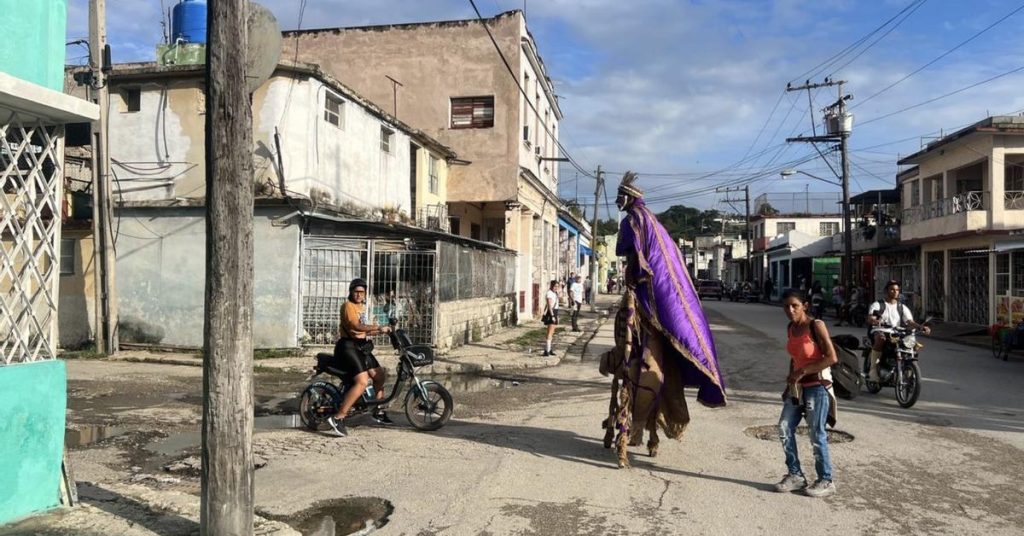
In Cuba, the deterioration of environmental conditions—accumulated garbage, stagnant water, supply cuts that prevent basic hygiene from being maintained—has created an ideal scenario for the proliferation of mosquitoes. Aedes aegypti and other vectors. Added to this is the coexistence of other viruses, such as Oropouche, which complicate differential diagnosis and further saturate health services.