By Eli ElsterPhD candidate in Evolutionary Anthropology, University of California, Davis.
On February 22, 2020, Mad Mike Hughes He towed a homemade rocket to the Mojave Desert and launched into the sky. Your goal? Verify that the Earth was flat from space. It was his third attempt and, tragically, it proved fatal. Hughes crashed shortly after takeoff and died.
Hughes’s nickname, Mad Mike, that may seem very accurate. Isn’t it crazy to risk your life fighting for a theory that was refuted in the ancient greece?
But Hughes’ conviction, while surprising, is not unique. In all recorded culturespeople have held strong beliefs that seemed to lack evidence in their favor, something we might call “extraordinary beliefs.”
For evolutionary anthropologists like methe omnipresence of this type of belief is an enigma. The human brain evolved to form accurate models of the worldand most of the time we do it pretty well. So why do people also often adopt and develop beliefs that lack strong evidence to support them?
In a new review published in the magazine Trends in Cognitive Sciences, I propose a simple answer: People come to believe in flat Earth, spirits, and microchipped vaccines for the same reasons they come to believe in anything else. Their experiences lead them to think that those beliefs are true.
Extraordinary belief theories
Most social scientists have taken a different view on this issue. Certain supernatural beliefsthe conspiracy theories and the pseudoscience They have surprised researchers by being totally impervious to contradicting evidence. Consequently, they have assumed that experience is not relevant to the formation of those beliefs. Instead, they have focused on two other explanatory factors.
The first common explanation is cognitive biases. Many psychologists maintain that humans have mental shortcuts to reason about how the world works. For example, people are very likely to see intentions and intelligence behind random events. Such a bias could explain why people often believe that deities control phenomena such as the weather or diseases.
The second factor is the social dynamics: People adopt certain beliefs not because they are sure they are true, but because other people have them or because they want to convey something about themselves to others. For example, some conspiracy theorists may adopt strange beliefs because such beliefs beliefs are accompanied by a community of loyal and supportive believers.
Both approaches can partly explain how people come to have extraordinary beliefs. But they rule out three ways in which experience, along with the other two factors, can shape those ideas.
Experience as a filter
First, I propose that experience can act as a filter. Determine what extraordinary beliefs can successfully spread among the population.
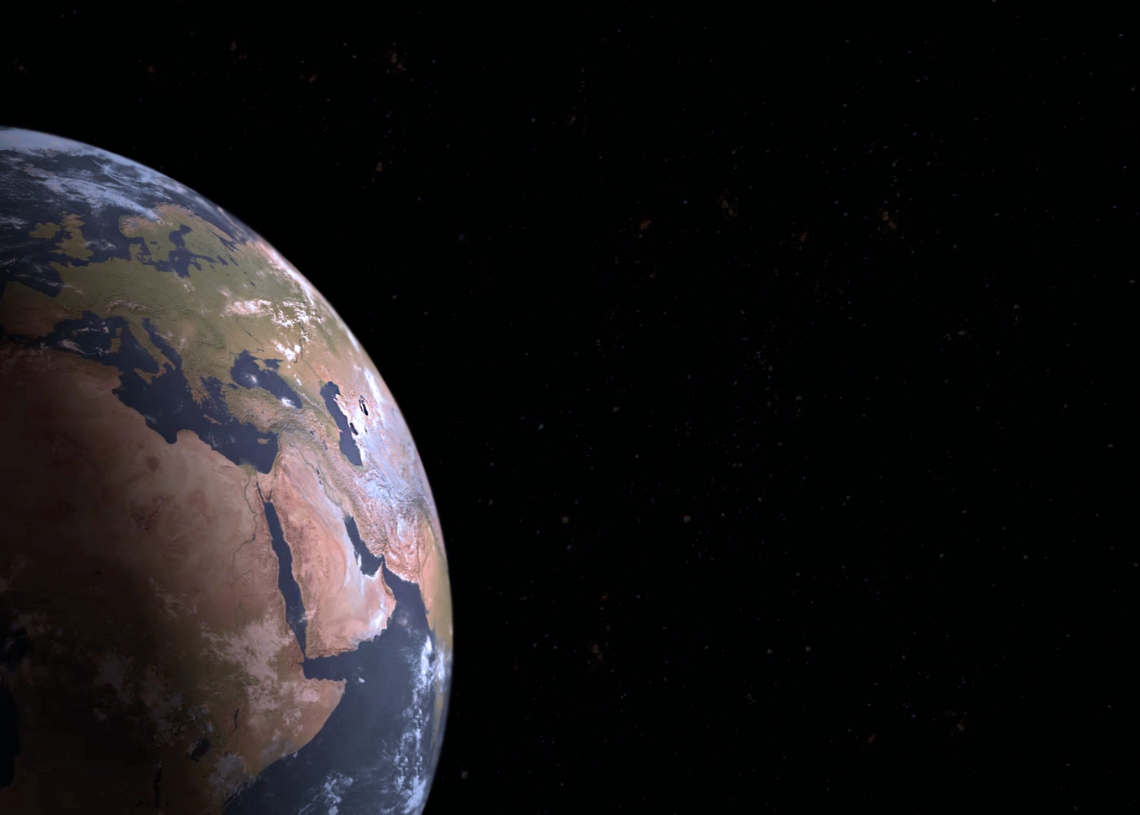
Take for example the theory that the Earth is flat. We know with absolute certainty that it is false, but it is no more or less wrong than the theory that the Earth is shaped like a cone. So what makes flat-earthering alone successful over other equally incorrect alternatives?
The answer is as obvious as it seems: the Earth appears flat when we are on it, it is not cone-shaped. Visual evidence favors one extraordinary belief over others. Of course, scientific evidence clearly shows that our planet is round, but it is strange that some people prefer to trust what their eyes tell them.
Experience as a spark
My second argument is that experience acts as a spark for extraordinary beliefs. Strange experiences, such as auditory hallucinations, are difficult to explain and understand. So people go to great lengths to explain them, and in doing so, come up with beliefs that seem suitably strange.
For this route, sleep paralysis is a good case study. This phenomenon It occurs in the space between sleep and wakefulness: we feel like we are awake, but we can’t move or speak. It’s scary and quite common. And, interestingly, those who suffer from it often feel as if there was a threatening agent sitting on his chest.
As a scientist, I interpret sleep paralysis as the result of neural confusion. But it is not difficult to imagine how someone without scientific training—that is, almost all human beings throughout history—could interpret the experience as proof of the existence of supernatural beings.
Experience as a tool
To me, the third potential route to extraordinary beliefs is especially intriguing. In many cases, people not only adopt such beliefs, but develop immersive practices that make them seem true.
For example, imagine that you are a farmer living in the highlands of Lesotho, southern Africa, where you do ethnographic fieldwork. She suffers a series of miscarriages and wants to know why. So he goes to a traditional healer, who tells him that he can get the answer from his ancestors by drinking a hallucinogenic drink. You drink the drink and, shortly after, you begin to see spirits that speak to you and explain the reasons for your misfortune.
Clearly an experience like this could reinforce your belief in the existence of spirits. These immersive practices, such as prayerthe ritual dance and the religious use of psychoactive substancesthey create evidence that makes the associated beliefs appear true.
What comes next?
Extraordinary beliefs are not intrinsically good or bad. In particular, the religious beliefs They provide meaning, security and a sense of community to billions of people.
However, some extraordinary beliefs are cause for great concern. Specifically, misinformation about science and policy It is very dangerous. By recognizing how those beliefs are formed from experience, researchers can find better ways to combat its spread.
Equally important, however, is that the perspective I suggest can foster greater compassion and affinity toward people who hold beliefs that seem very different from your own. They are not “crazy” nor are they insincere. Like any other human being, they believe that the evidence is on their side.
Eli Elster He is a doctoral candidate in Evolutionary Anthropology, University of California, Davis.
This article was published in The Conversation. Read the original in spanish and in English.