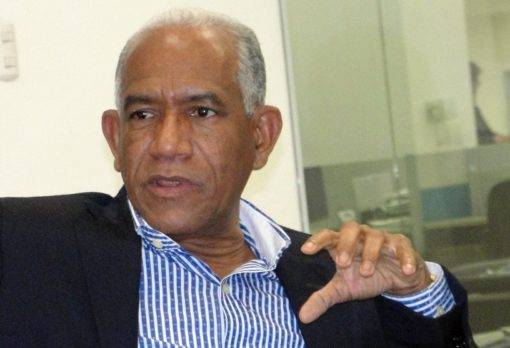
Economist Nelson Suárez categorically ruled out the possibility that the government of President Luis Abinader promotes a tax reform in the remainder of his management.
During your participation in the program One+onetransmitted by Teleantillas, Suarez argued that the political moment is no longer conducive to structural reforms.
Technical designation does not guarantee reform
Although he recognized the ability of the new Minister of Finance, Magín Díaz, Suárez was clear in which A tax reform does not depend only on technical will:
“I don’t think he can only introduce a reform. He can make some operational and functional changes, but he will not promote a tax reform.”
“The normal operating expenses of the then, we cannot make a large EH Public Investment Plan prioritized, we continue to make public investments to the crazy, according to what the people who finance the campaign of governments determine,” he said regarding public spending.
Economy in deceleration and fiscal pressure
Suarez also warned about the limited state capacity to sustain their financial commitmentspointing out that the fiscal space has closed:
“The Government dedicated more than 300 billion pesos in six months to the interests of debt, education, capital amortization, subsidies to the electricity sector and the Central Bank. That is absolute madness.”

In addition, he criticized the official discourse that presents an image of stability:
“That is a lie. That is advertising. It is not reality, for God.”
Fiscal Reform: Between political economy and political will
For the expert the problem is not only technical, but political:
“The reform has a component of economic policy, but also of political economy. The political decision has to be taken by the president, and I do not think he does.”
What alternatives are left?
Given the impossibility of a tax reform, the economist warned about the risk of keep increasing indebtedness:
“We continue making public investments, according to what the people who finance the campaign of governments.”
He also questioned the efficiency of public spending and the clientele scheme that prevents improving the quality of spending:
“Sometimes the state sometimes gets the most expensive things than everyone for many elements, including corruption.”