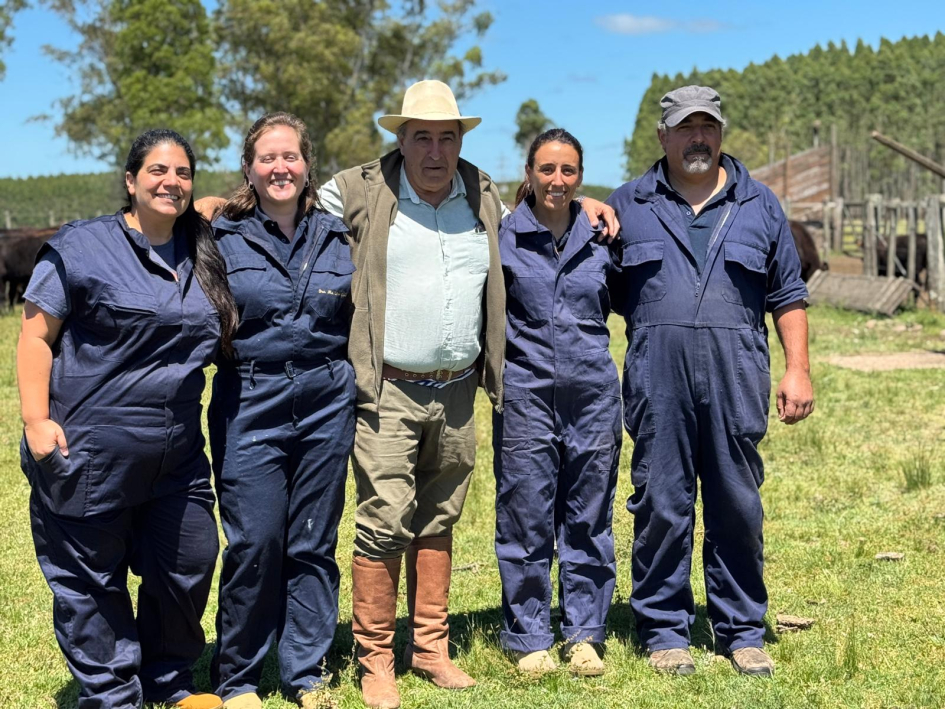
Field testing of the vaccine developed by the Pasteur Institute against the bovine tick began
Yesterday the MGAP, Dr. Alfredo Fratti, accompanied this first trial carried out in Los Manantiales, San Gregorio de Polanco. It was a very hopeful day to improve national production.
Subsequently, the minister held a meeting with the artisanal fishermen of San Gregorio.
Until tomorrow, Thursday, the Ministry of Livestock, Agriculture and Fisheries (MGAP) accompanies the beginning of the field test of the experimental vaccine developed by the Pasteur Institute of Montevideo for the control of the bovine tick. The trial, which will last until May, covers more than 4,000 animals in seven livestock establishments located in different areas of the country, within the framework of the National Plan to Fight the Tick.
The Ministry of Livestock, Agriculture and Fisheries (MGAP) reports that this Monday the field test of the experimental vaccine developed by the Pasteur Institute of Montevideo for the control of the bovine tick began. This is a key stage within the scientific research process that the Pasteur Institute has been developing for several years, with the technical support of the Animal Health Division and the monitoring of the MGAP.
This phase will allow the performance of the vaccine to be evaluated in real production conditions, in livestock establishments in different areas of the country. The vaccine will be tested on more than 4,000 animals, belonging to seven establishments distributed in seven departments. Farms located north of the Negro River – in Artigas, Salto, Rivera and Tacuarembó – and in the east of the country – in Cerro Largo, Treinta y Tres and Lavalleja – participate, areas where the tick represents a relevant health problem.
The establishments included in the test present different situations: some have a high tick parasite load, others are at a lower threshold, and in several there is a history of resistance to certain chemicals. This diversity of scenarios will allow a more complete evaluation of the vaccine’s performance as a control tool.
The vaccine, for intramuscular application, will be administered in three doses: a first dose today and two subsequent boosters, after 21 days and 42 days. The field trial will run from November to May, with periodic monitoring to measure the effectiveness of the vaccine and its contribution to the control of the bovine tick.
The Minister of Livestock, Agriculture and Fisheries, Alfredo Fratti, is accompanying the application days in the departments of Tacuarembó, Cerro Largo and Treinta y Tres, in direct contact with the producers and the technical teams involved.
The tick continues to be one of the main health challenges of national livestock production. The advancement of new control alternatives, such as vaccines, represents a strategic opportunity for the country, complementing the tools available within the framework of the National Plan to Fight the Tick.
In the coming months, the MGAP will continue to report on the relevant milestones of this research, in permanent coordination with the Pasteur Institute of Montevideo and the technical teams participating in the trial.