After the announcement this Wednesday of the implementation of a new official floating rate in Cubaall eyes were on the possible value of the dollar and the other currencies at that rate.
And we did not have to wait long to confirm what many Cubans assumed: that this value would be high and would not be very far from the quotes of the same currencies at the controversial exchange rate. The Toucha medium that the Government accuses of manipulating the informal exchange market for political motivations.
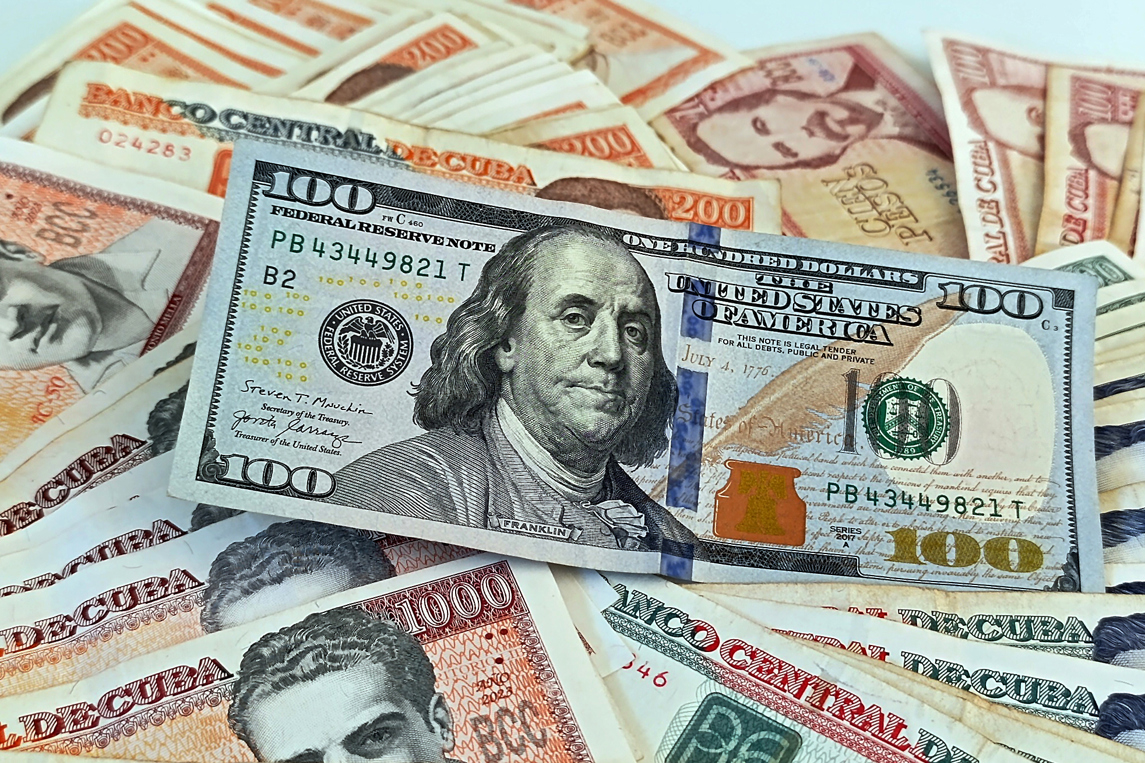
In short, the first floating rate established by the Central Bank of Cuba (BCC) set the value of the US dollar at 410 pesos (CUP), only 30 pesos below the price that that currency exhibits today according to the exchange rate. The Touchcalculated from purchase and sale offers on digital platforms.
Furthermore, both the euro and the Canadian dollar have higher quotes in the BCC’s first floating rate than in that of the opposition, which has been strongly questioned in recent weeks by both the authorities and the official media, as well as by part of the private sector on the island.
While it stops The Touch -that yesterday he reported that its site had suffered an “organized attack” and was blocked in Cuba—this morning the European currency had an average value of 480 CUP, for the BCC its new value is 481.42 CUP. In the case of the Canadian currency, the difference is even greater: 260 CUP for the independent publication and 297.42 for the Central Bank of the island.
The MLC, which does not have its own price in the official rate, remained at 300 pesos according to the rate of the opposition media, after experiencing a surprising increase in recent weeks and yesterday the minister-president of the BCC assured that the Government intends to “strengthen the purchasing capacity” of that virtual currency and its “use value”, although without detailing how.
Update of informal currency market rates in Cuba
Date: 12/18/2025Image 1: Representative rate of the informal market (elTOQUE)
EUR: 480.00 CUP
USD: 440.00 CUP
MLC: 300.00 CUPThere are offers in the ranges:
EUR: from 440.00 to 500.00 CUP
USD: from 410.00 to 470.00 CUP
MLC:… pic.twitter.com/nsEE5PWmhI— The Touch (@eltoquecom) December 18, 2025
Also in CADECA
The new official contributions, established by the Government for individuals and the private sector, already vary in practice depending on the operation to be carried out.
On the first day of the floating rate, the Exchange Houses (CADECA) today buy US dollars at 401.8 CUP and sell them at 418.2. Meanwhile, they buy euros and Canadian dollars at 471.79 and 291.47 CUP respectively; and they sell them at 491.05 and 303.37.
In the case of CADECAs located in hotels, ports and airports The margin of difference—and profit for the exchange entity—is even greater.
All these official values will be valid for only 24 hours, in accordance with the regulations of the Government, which will publish the new floating rate on a daily basis.
Asked by the official press about the values of the new floating rate, even before its first publication, Ian Pedro Carbonell, director of Macroeconomic Policies of the BCC, acknowledged that this price would not be low.
“Perhaps it is not what many expected, but it is what will allow the exchange market to function,” said the official, who said that “the new rate is based on real operations and not on purchase and sale intentions, as occurs in the informal market.”
Carbonell pointed out that the daily floating rate for individuals and private businesses would be “objective” and would respond “to the conditions of the economy.”
In addition, he confirmed that for the moment purchases by natural persons will continue to be limited to up to $100, based on virtual queues through the Ticket application, which he admitted “works slowly.”
As for private sector actors, he explained that “they will be able to purchase foreign currency up to 50% of the average gross income from the fiscal account in the last quarter” and added that they “will have access to the exchange market without the need to operate with cash, since the transactions will be carried out from the fiscal accounts.”