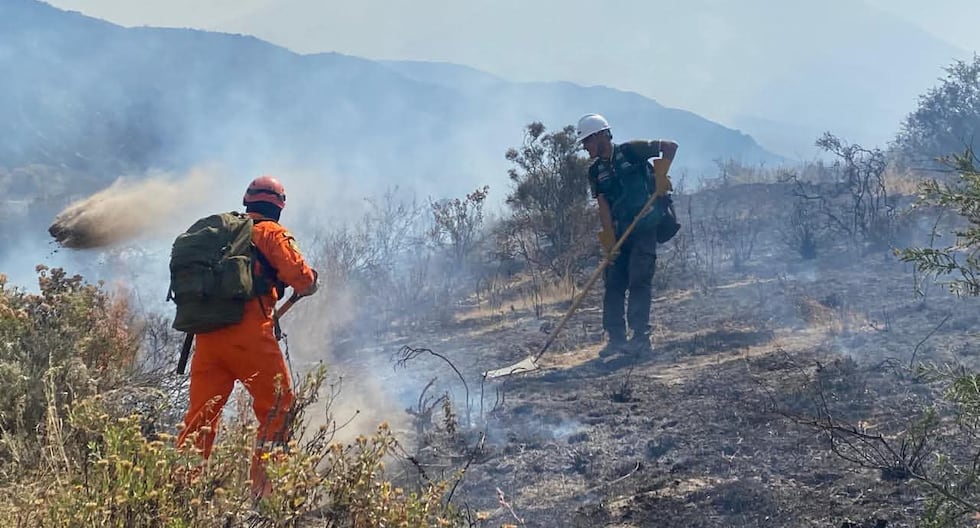
The forest fire that began on September 13 at the slopes of the Misti Volcano swept a high and pasture high Andean ecosystem, affecting at least 50 species of flora. According to the National Forest and Wildlife Service (Serfor), 15 of them are categorized as vulnerable and eight are endemic to the region, such as Cahuato (Tecoma Arequipensis).
As for the fauna, Luis Felipe Gonzales Dueñas, Forest and Wildlife Technical Administrator in Arequipa, indicated that there is not yet an exact number of affected species, but they have identified Andean foxes traces, partridges, lizards and cuyes shelters Silvestres, in addition to Birds whose nests were consumed by fire.
Fortunately, no injured specimens have been found during the intervention, but the loss of habitat seriously compromises the survival of these species in the area.
Fire razed habitat of more than 50 species of flora and fauna after fire in Misti volcano. Photo: Dissemination.

Fire razed habitat of more than 50 species of flora and fauna after fire in Misti volcano. Photo: Dissemination.

Fire razed habitat of more than 50 species of flora and fauna after fire in Misti volcano. Photo: Dissemination.

Fire razed habitat of more than 50 species of flora and fauna after fire in Misti volcano. Photo: Dissemination.
The official explained that the recovery of the area will depend on the rains, as the ecosystem is adapted to long periods of drought. “If permanent rainfall is recorded, regeneration could take between three and four years. The pastures will grow first, but the shrub species will take longer to recover”he said.
Gonzales Dueñas warned that it is suspected that the Fire would have been caused by alleged invaders that delimited land in the area. Therefore, the agency announced that it will initiate investigations and apply administrative sanctions against those responsible, which could be up to 10 ITU.
At the moment, Serfor has not yet specified the exact extension of the hectares consumed, since the official calculation is carried out after analyzing the “Fire scar” through satellite images and technical reports.
Recommended video: