Cinema rooms at the Banco do Brasil Cultural Center Rio de Janeiro (CCBB RJ) will receive, for the first time, exhibitions from the African Cinemas Show (MCA), between 10 and 15 September. Created in 2018, when it took place in Salvador, the festival is dedicated exclusively to the screening of contemporary films produced on the continent.
Since it started, the show has traveled Brazilian cities such as Aracaju, Porto Alegre, Sao Paulo, Curitiba and Poços de Caldas. This time, the program is included in the France-Brazil 2025 season and brings to the state capital a selection of 15 feature films and five shorts from 11 African countries. In addition to Rio, the festival will go through the cities of Salvador (BA), Cachoeira (BA) and São Paulo (SP).
Admission is free, and tickets will be available to the public from 9am at the CCBB box office itself. The full schedule can be checked on the CCBB website.
The curatorship is divided by the show’s director and creator, Ana Camila Esteves, and the Ganense Jacqueline Nsiah, a member of the Berlin International Film Festival Selection Committee, also known as Berlinale. The films that will be screened have already participated in important international festivals, such as Cannes, in southern France; of Locarno, Switzerland; From Tribeca, in New York, United States, besides Berlinale. Despite that, Most of the works are unprecedented in Brazil.
In an interview with Brazil agencyAna Camila Esteves said that The festival seeks to increase the repertoire of contemporary African films in the country, as well as challenging and deconstructing stereotypes over the African continent through cinema.
“These are movies that do not pass here,” she summarized. “We watch these films at other festivals worldwide, but Brazil was not among these visibility windows for these movies.”
“The choice of contemporary films was because the oldest and the retrospectives of filmmakers [africanos] They already had exhibition in Brazil. This already existed and continues to exist. But today, we are the only continued festival in Brazil that is exclusively dedicated to contemporary African films, ”he added.
Ana Camila vented that she was anguish for these films not to reach Brazil even if there was a huge curiosity of the Brazilian public. This feeling was a milestone for the creation of the festival. “This was proving year by year, with the huge amount of audience we mobilize, in all the cities where we go. That’s why it worked, and we are already in the eighth year,” he said.
Being able to hold the CCBB festival is a reason for satisfaction for the curator. “I’m too happy with it. I would rather make this first edition [no Rio] In a space like CCBB, because the curatorship they make of film projects is very good. I always wanted to be in the middle of this CCBB curatorship. There are many very good shows. I see that they select very carefully. I feel flattered and I think for us, it will also be important to have this CCBB seal, ”he said.

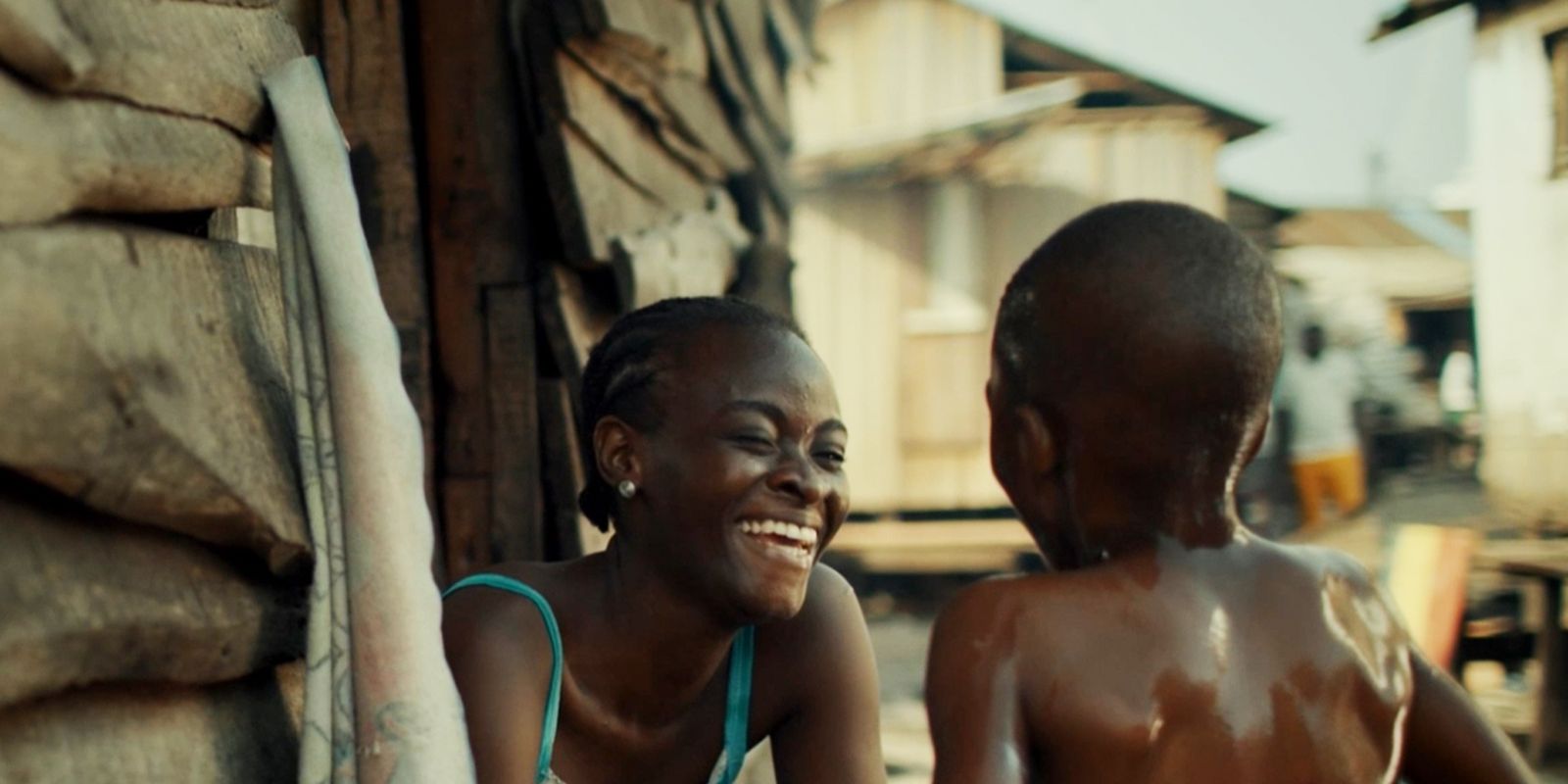
Movie scene The burden of Nigeria, One of the highlights of the African Cinemas Show Iyua Alaha/Disclosure
African cinemas, in the plural
For Ana Camila Esteves, the differences that exist between Africa countries contribute to the diversity seen in films. The director said that, as there are many countries, with different aesthetics and narratives, there is no way to talk about a line, a single genre. As explained, it is a very diverse cinematography, which is why the name of the event is show of African cinemas in the plural.
“We try to mark this plural all the time, because it is obviously talking not only of different aesthetics, styles and narratives, but of different production conditions as well, which will make it easier or difficult to build a narrative, style and aesthetics,” he said,
The creator of the festival exemplifies that countries such as Senegal have more conditions of film production compared to others such as Kenya or Ethiopia. In addition, there are countries that have a more authorial production, such as Burkina Faso, or other countries with more commercial titles, such as Nigeria and South Africa.
“It is very heterogeneous. In fact, our idea is to reinforce how heterogeneous and diverse is the cinema produced on the African continent, precisely because it is a gigantic continent and has many things happening. So, we have genre, horror, romance, drama, musical film, he has, considering that the audience will be surprised by the programming.
As this is the first edition in Rio de Janeiro, according to Ana Camila, some films that have already participated in previous festivals have been rescued, including a special session of Nigerian Mami Wataon Saturday (13), with the presence of the director of photography of the work, Liso Soares.
“It was a movie that had a great projection. She was awarded at the US Sundance Festival for the photograph of this film. It was also a watershed in her career,” he said, adding that most of the program are unprecedented in Brazil.
Ana Camila recalled that Rio de Janeiro already has the Black Film meeting, created by filmmaker Zózimo Bulbul, a festival that this year has its 18th edition. Therefore, the city’s audience has been in contact with black cinematography for a long time, but the difference is that the show will be focused only on African films.
“While in Zozimo Bulbul is the Brazilian black cinema, the Caribbean and Africa, ours is only Africa. It is a focus that offers the public an experience. A very specific immersion on the African continent. We do not discuss the issue of diaspora, other festivals have exercised this role in a fantastic way. Guided by the people who are African and live there. I think that, in this sense, is an initiative and a new experience that we offer, ”he added.
Prominent Nigeria
Although recognizing the difficulty in suggesting highlights between the films, Ana Camila indicated The burden of Nigeria (WHEN NIGHARIA HAPPENSNigeria, 2025), who will open the festival, on Saturday (10), at 17:30. After the session, there will be a debate with the presence of director Ema Edosio. For the closing, another highlight pointed out by Ana Camila was programmed: Demba (Senegal, 2024), long directed by the award -winning Mamadou Dia, who will be present that day.
The program reserves a special place for the acclaimed About when I broke the silence (On becoming a guinea fowlco -production between Zambia and the US, 2024), production of the A24 directed by Zambiana Rungano Nyoni. The best known work of the filmmaker and screenwriter in Brazil is I’m not a witch2017 movie, which tells the story of the 8 -year -old girl Shula (Maggie Mulubwa) accused of witchcraft.
In this edition, Nigeria’s cinematography is in evidence. Ana Camila said she made a trip to the country last year for the festival Sixteenwhen it signed a partnership to bring to Brazil a session of shorts selected by that show.
In addition, the program has long Nigerians who are accompanied by the director at festivals around the world. “I decided to make this collection of contemporary Nigerian films here in Brazil, so that people know what is being done there in the last two, three years,” he said, remembering that there are five feature films and seven shorts.
Those interested in expanding knowledge about Nigerian cinema can be inscribed in a short course, which will be taught by Ana Camila Esteves herself. “The activity offers critical immersion in Nollywoodone of the largest film industries in the world, addressing its historical context, market strategies, popular narratives and presence on streaming platforms, ”the organization said.