If confirmed, it would be feminicide number 22 of which you have news in Cuba since January of this year.
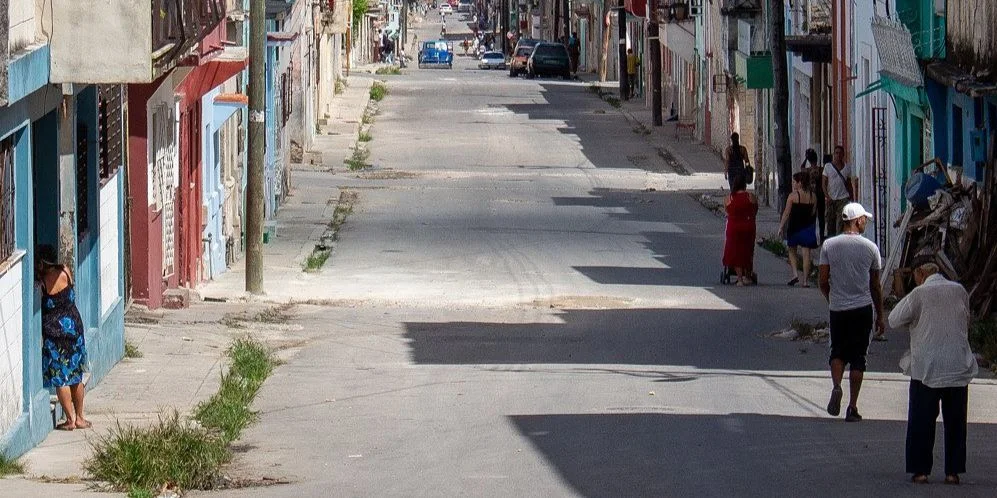
Miami, United States. – A woman identified as Kenia, a resident of the Havana neighborhood of Luyanó and mother of a seven -year -old girl, was allegedly killed by her partner, who threw her from the roof of the house they shared on Rodríguez Street, as confirmed by several residents of the place to the independent newspaper to the independent newspaper 14ymedio.
“The man is alcoholic and stuck her constantly. They say that the woman had been holding blows until today, that she killed her,” a woman resident told that medium a few blocks from the event site.
The neighbors also confirmed 14ymedio that it was a very violent man who would have a history of another murder. According to the report, the National Revolutionary Police (PNR) would have stopped him after the crime.
So far, Cuban independent observatories who verify cases of sexist violence have not confirmed the facts. However, the news has begun to circulate on social networks: although the name of the victim does not need, the filmmaker and professor Belvega Belmonte He reported on Facebook A feminicide that coincides on the date and place (province) of the same crime: “The chapist who was working in my car has just killed in my car !!! Femicide 22 of this year !!!
If confirmed, it would be feminicide number 22 of which you have news in Cuba since January of this year.
More than twenty sexist crimes so far from 2025
Until the past 26 D Ejulio, the Yosítecreo Feminist Platform in Cuba (YSTCC) and the Magazine Gender Observatory Tense wings They had confirmed 21 femicidesa murder of a man for gender and an attempt to feminicide on the island, only for the year.
Two weeks ago, the Cuba Observatory on gender equality (OCIG, state) reported that the judicial processes completed in 2024 gave an account of a total of 76 Cuban women 15 years or more killed for gender reasons. (It is not strictly about the victims of femicides that occurred in 2024 on the island, but only those involved in judicial processes completed that year and collected by the complementary statistical information subsystem of the Popular Supreme Court).
Although the official OCIG report avoided using the term “feminicide”, statistics correspond, according to its definitions, to cases of extreme gender violence that derived from intentional homicides. Of the 76 judicial murders, 55 were perpetrated by the victim’s couple or ex -partner, and 21 by other known people.
Since 2019, the OGAT and YSTCC have managed to verify 267 femicides in Cuba, despite operating in a hostile environment characterized by the criminalization of feminist activism, restricted access to institutional sources and the absence of a legal typification of feminicide in Cuban legislation.
While the authorities use expressions such as “murder for gender reasons” or “extreme gender violence”, independent groups insist on the need to name the problem as feminicide and demand the creation of public registration protocols and an integral law against gender violence.
The Cuban State does not systematically publish annual statistics with detailed methodology or offer disaggregated data with intersective approach accessible to citizens. This institutional opacity remains an obstacle to dimensioning the true magnitude of the phenomenon.