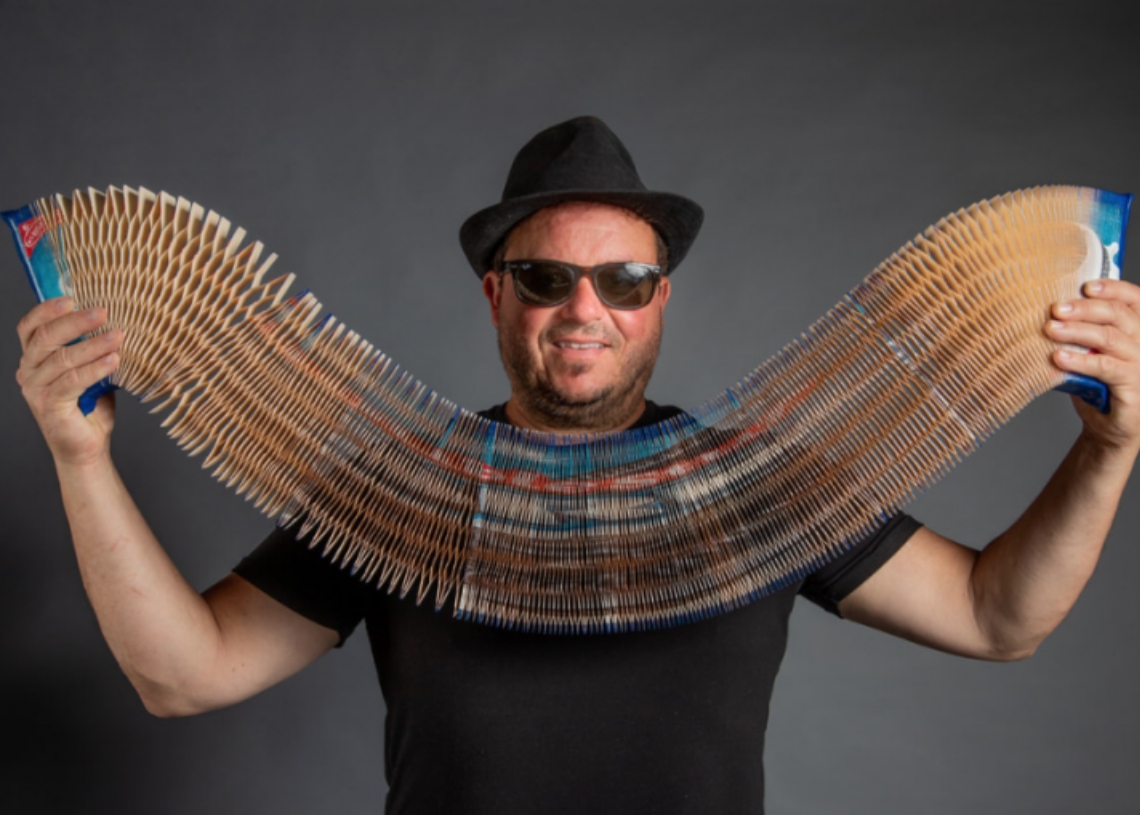
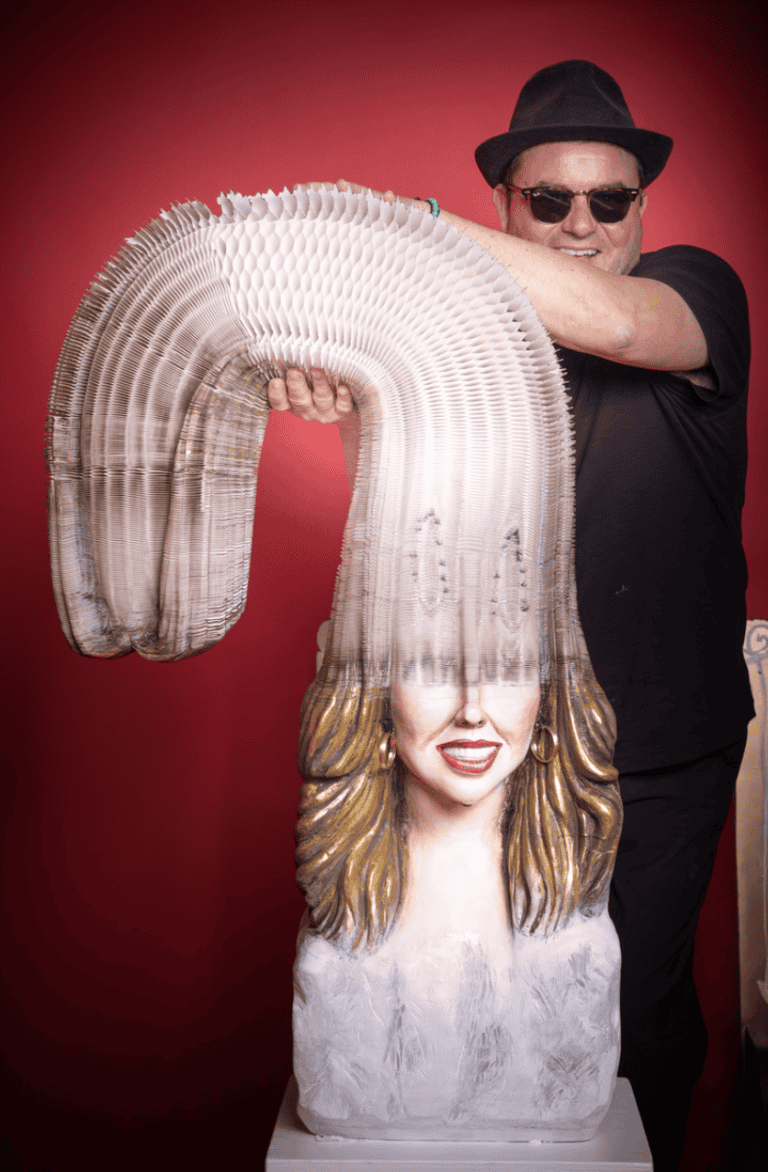
The sculptures of Felix Semper (Havana, 1964) seem to deny the very nature of paper. At first glance they are solid busts, objects that could have been carved from marble or wood. But all it takes is a gesture from the artist for these pieces to open like an infinite accordion, revealing that what seemed immutable is, in reality, flexible and alive. That magic of the unexpected has made Semper a unique creator within the contemporary scene.
Born in Havana and raised between Spain and Miami, he went through a unique path before dedicating himself fully to art. He worked as a printer and builder until a personal crisis led him to reinvent himself. It was then that paper—that material that he knew from printing workshops—became his ally and the basis of a technique that today dazzles in museums, international fairs and television programs.
His most famous work, a flexible bust of Notorious BIG, marked the beginning of a career that has paid tribute to iconic figures such as Frida Kahlo, Andy Warhol, Bob Marley and José Martí. Beyond these celebrities, each Semper sculpture contains a reflection on the duality of life: apparent solidity and internal fragility, stasis and movement, the eternal and the ephemeral.
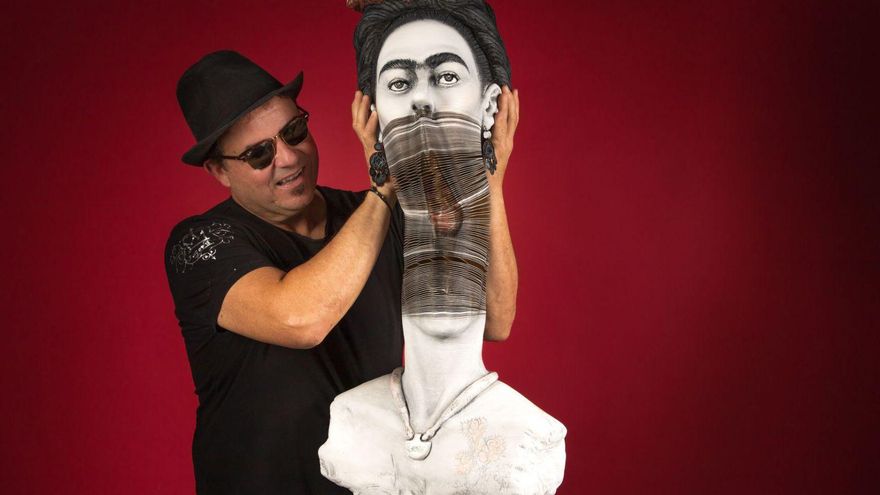
With exhibitions in cities such as New York, Doha, Copenhagen or Riyadh, and a recognition that has led him to be claimed by both private collectors and institutions, Félix Semper does not stop experimenting. Today he explores the use of flexible woods, electronic mechanisms and new ways of infusing dynamism into sculpture. His art, as he himself says, does not want to stay still: it seeks to surprise, open, move, be as changing as life itself.
As an artist, he leaves us with the certainty that art can be reinvented in the simplest form: a sheet of paper converted into infinite sculpture. His work, marked by surprise and movement, not only transforms matter, it also invites us to look at life with different eyes, to understand that nothing is as rigid as it seems and that there is always the possibility of opening and unfolding towards new forms of creation.
How did the idea of creating “stretchable” paper sculptures come about? Was it a planned process or the result of experimentation?
It was totally the result of experimentation. I have always liked to explore the limits of materials and one day, working with paper, I discovered that I could transform it into something alive, flexible and unexpected. It was not a premeditated plan, but the result of playing, making mistakes and letting myself be carried away by curiosity.

Could you describe step by step how you go from an idea to the final sculpture?
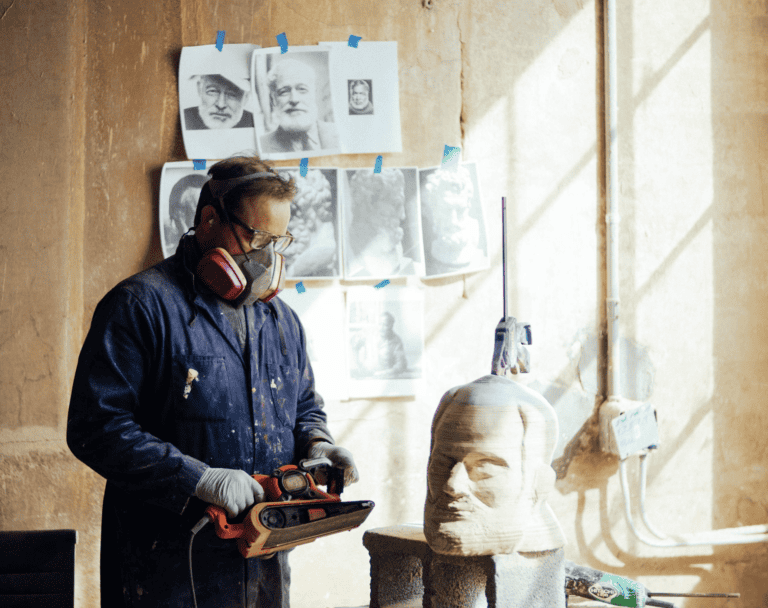
First comes the vision: sometimes it is a very clear image in my mind and other times, a vaguer intuition. Then I make sketches, tests of proportions and structures. Then begins the layer-by-layer construction of the paper, a long and meticulous process that requires patience. Finally I work on the finishes: paint, details… until the piece comes to life and can move and stretch.
Why did you choose paper as your main material and what challenges does it present compared to other traditional materials?
The role chose me. It is a humble and everyday material, which we all know, but at the same time versatile and surprising. Its great challenge is fragility: it breaks, deforms and does not forgive mistakes. But that’s the magic: transforming something so fragile into strong and dynamic sculptures.

What meaning do you give to flexibility and movement in your pieces?
For me they represent life itself. Nothing is static; everything is constantly changing. The movement symbolizes the freedom to transform, adapt and reinvent oneself. My sculptures are not static because I am neither; I am always evolving.
The fragility of the paper contrasts with the strength of your sculptures. Do you see in it a metaphor for life or the human condition?
Yes, absolutely. We are fragile and vulnerable, but at the same time we have an enormous capacity for resilience and inner strength. The contrast between the apparent weakness of the paper and the power of the sculpture is a metaphor for our own existence.

Your sculptures come to life before viewers. How does audience interaction influence your work?
The public is essential. Sculpture is one thing in my studio and quite another when someone touches it, stretches it and explores it. This is when the work is completed and truly comes to life. The interaction inspires me and motivates me to continue creating.
What have been the biggest technical or artistic challenges you have faced in your paper sculptures?
The biggest challenge is always resistance. Getting a piece of paper to move many times without breaking requires constant innovation in techniques, adhesives, cuts and processes. On an artistic level, the challenge is not to repeat myself, maintain freshness and continue surprising.
How has your Cuban heritage influenced your artistic vision and your themes?
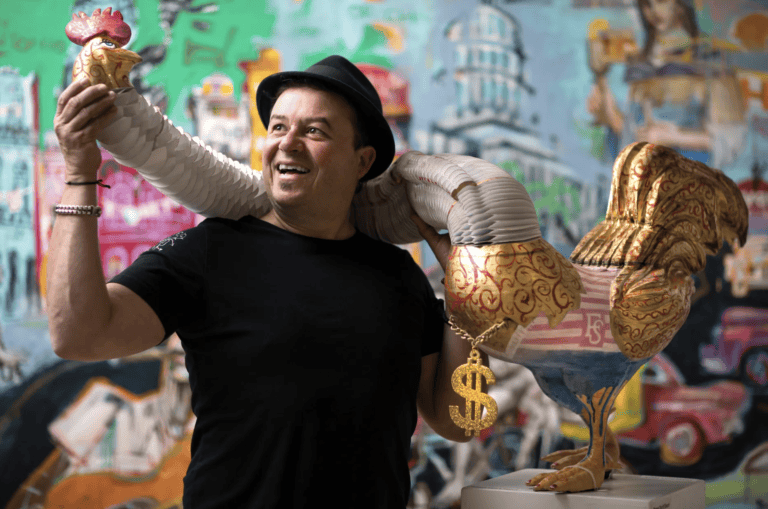
My Cuban heritage gave me color, rhythm and passion. Cuba is a place full of creative energy, improvisation and the ability to transform little into something great. That way of seeing the world is present in my work: paper, something simple, becomes something extraordinary.
Innovation is central to your work. What new techniques or materials are you excited to explore in the future?
I am interested in combining paper with new technologies, exploring ecological resins, 3D printing and recycled materials. I want to continue breaking barriers and expanding what a sculpture can be.
When someone looks at one of your sculptures for the first time, what emotion or thought do you hope to provoke?
I want them to feel surprise, awe and even disbelief. Let them ask themselves: “How is it possible that this is made of paper?” And beyond that, let them smile and reflect on the beauty of the unexpected.
Is there any work that you consider your favorite or most representative?
Each work has its story, but if I had to choose, it would be the first stretchable sculpture I managed to finish. It was the starting point, the moment when I understood that I had found my language. That piece changed my life and my path as an artist.
Finally, what advice would you give to a young artist looking to create something completely new and different in the art world?
I would tell you not to be afraid of making mistakes, to experiment without limits and trust your inner voice. Art is born from authenticity, not from following trends. The new comes when you dare to be yourself one hundred percent.