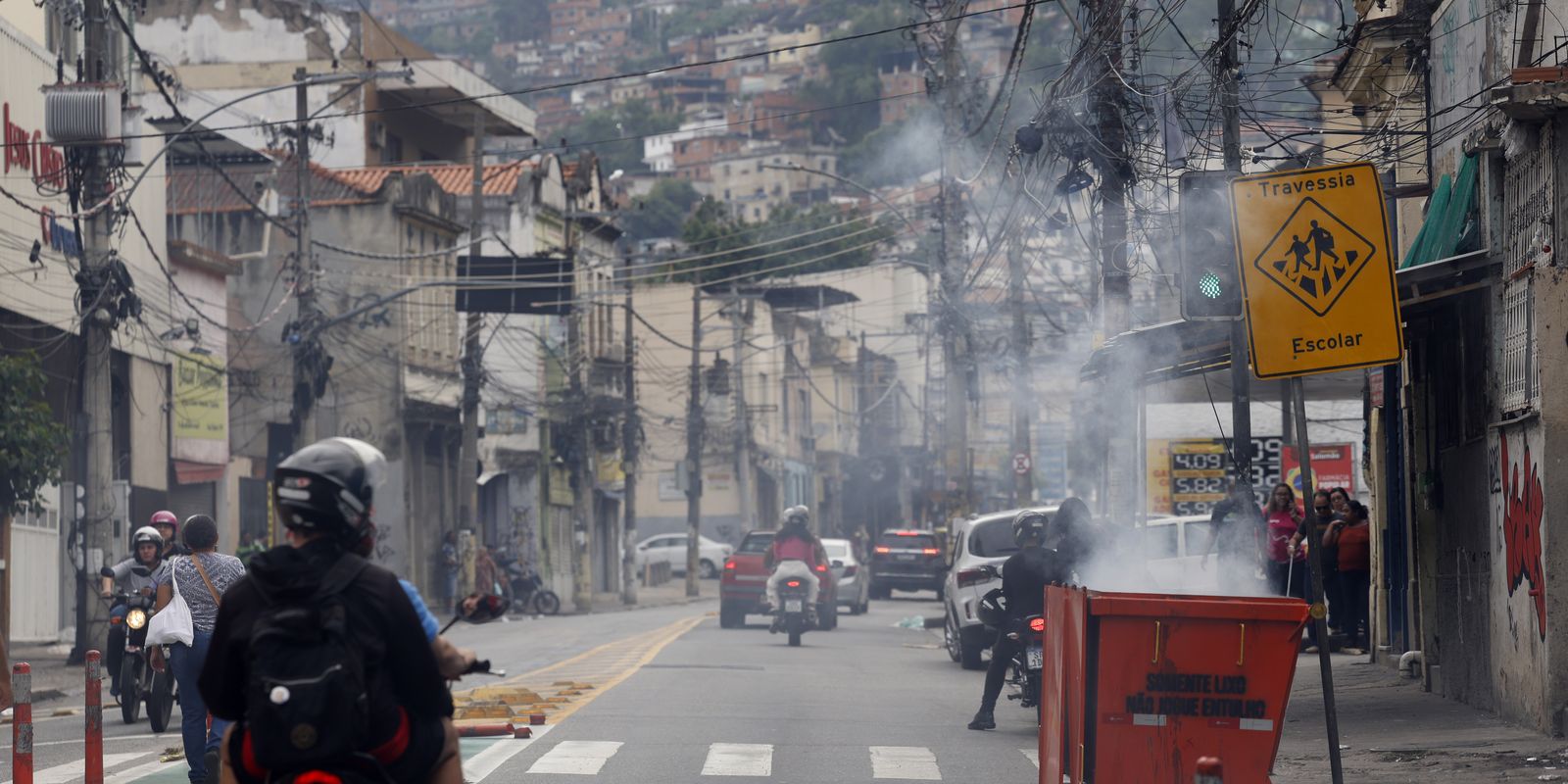
Barricades and fire in the streets. Blocked roads. Impacts on transport, schools, universities and health units. Rio de Janeiro has been experiencing a violent Tuesday (28) since the beginning of the Operation Containment which mobilizes 2,500 civil and military police officers in the Alemão and Penha complexes. According to the state government, the objective is to make arrests and contain the advance of the criminal faction Comando Vermelho.
>> MPF and DPU demand explanations from the Rio government about the operation
>> Castro calls for more federal support in the fight against criminal organizations
>> Lewandowski says he did not receive a request for support for the operation in Rio
Favela movements reinforce, however, that it is necessary to measure the unequal effects that police actions cause in peripheral territories. For the director of the Direct to Memory and Racial Justice Initiative and activist in the favela movement, Fransérgio Goulart, what we see is a war within black and poor territories.
“The handcuffed black bodies draw attention. The bodies thrown across the floor of the favela, as well as those missing around the forest. The police don’t act the same way in the South Zone. Just now, I went by bus through the region, and the beach was full. In black territories, the police historically act differently”, says Fransérgio.
In the early evening, the record was 64 people dead as a result of the police operation, between civilians and military – which makes the operation the deadliest ever carried out in the state. The number, however, could be much higher.
“What’s strangest to me is that the mainstream media itself goes into this discourse of giving a lot of weight to the fact that the dead were criminals or not, in this simplistic duality. We had, at least, 64 people killed as a result of a police operation. This would cause an impact throughout the world, a commotion, an awareness. And the governor is passing through unharmed. His public security policy executed 64 people”, he adds.
Fransérgio also criticizes the high amount of public budget allocated to confrontational police actions.
“The public budget planned for the police in the state of Rio de Janeiro in 2026 is R$ 19 billion. And these resources serve a policy of producing death. Not to think about an intelligence police, of fewer confrontations. What is the cost of this police operation for the public coffers, direct and indirect? What are the costs of a city at a standstill, of the chaos that was generated?”, he asks.
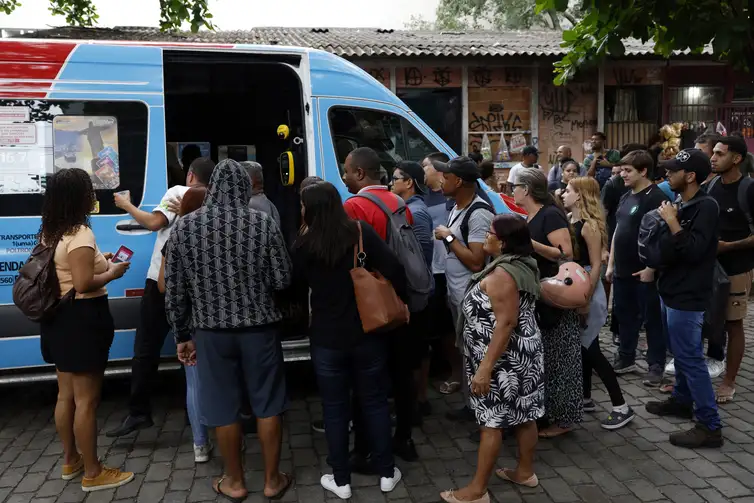
Passengers try to board to return home on a day of transport chaos. Photo: Fernando Frazão/Agência Brasil
Death as public policy
A joint note from 27 civil society organizations criticizes the operation, which is considered the most lethal in the history of Rio de Janeiro. Before that, the 2021 operation in Jacarezinho left 27 civilians dead.
According to the organizations, “public security is not achieved with blood” and the results of Tuesday’s operation expose “the failure and structural violence of security policy in the state”.
The text also says that, over the almost 40 years that the Federal Constitution has been in force, the favelas of Rio de Janeiro have seen the consolidation of a security policy based on the use of force and death, disguised as “war” or “resistance to crime”. The actions would be selective action, directed against black and impoverished populations.
In addition to there being no signs that the actions reduce the power of criminal factions, they generate insecurity and fear among the population and disrupt the daily lives of thousands of families. Death cannot be treated as public policy, the entities say.
“What we are witnessing today is the collapse of any commitment to legality and human rights: the State replaces rights-based public security with large-scale military actions. Under the pretext of the ‘war on drugs’, a state of permanent insecurity is installed, aimed against the black and poor population of the favelas. There is no justification for a state policy, supposedly aimed at protecting society, to continue to be conducted on the basis of bloodshed”, says an excerpt from the statement.
The entities signed the text are Amnesty International Brazil, Justiça Global, Center for Security and Citizenship Studies — CESeC, Conectas Human Rights, Center for Justice and International Law — CEJIL, Instituto Papo Reto do Complexo do Alemão, Redes da Maré, Institute for Religious Studies — ISER, Observatory of Favelas, Núcleo de Assessoria Jurídica Universitária Popular (NAJUP), Movimento Unidos dos Camelôs, Grupo Tortura Nunca Mais — RJ, Popular Public Security Forum of Rio de Janeiro, CITIES – Urban Research Center of the State University of Rio de Janeiro, Institute of Human Rights Defenders — DDH, Memory Law and Racial Justice Initiative, State Front for Exemption — RJ, Instituto Terra Trabalho e Cidadania — ITTC, Association of Friends and Family of Prisoners and Inmates of the Casa Foundation — Amparar, Legal Advisory Office Popular Organizations — GAJOP, Instituto Sou da Paz, Rede Justiça Criminal, Federation of Bodies for Social and Educational Assistance — FASE RJ, National Network of Popular Lawyers — RENAP RJ, Network of Communities and Movements against Violence, Casa Fluminense and Plataforma Justa.
The governor of Rio de Janeiro defended the operation stating that if necessary, it will exceed the limits and powers of the state government to maintain “our mission of serving and protecting our people”. When justifying the operation, the governor demanded more federal support in confronting criminal organizations operating in the state and in other parts of Brazilian territory. According to Castro, the state is acting “alone in this war”.