With the assistance of more than eight hundred people from ten municipalities of the Milkish basin in the south of the country, a superinstitutional fair was held in Cumbbal (Nariño) focused on strengthening the peasantry through training on key issues for their productive work.
During the event, organized by the Superintendence of Industry and Commerce (sic), Rusinque sky, superintendent of the entity, said: “It is required to have a fair recognition for each liter of milk that the peasants produce, and the purpose that this is a reality for this sector is what brings us together today.”
You can see: US tariffs. UU. Again
The fair, in its second version aimed at dairy producers, had as its axis the approach of the institutional offer of the National Government and of territorial entities to the peasantry, in order to promote the formalization, industrialization and access to regulations that regulate the sector.
One of the event attendees was Arelmo Cuazcu, indigenous from the shelter of the Great Cumbbal, of the Pasto people, who declared: “We are making a presence here on the issue of looking at the dairy chain in our territory. We want to do an analysis of what the national government institutions have done here. One of the points is to publicize all the regulations that apply to the dairy and economic issue that the community does not know. For example, there is the resolution created in 2012, resolution 017, which is the norm that demands the rights of communities on the dairy issue.”
Resolution 017 of 2012, issued by the Ministry of Agriculture and Rural Development, establishes the Raw milk payment system. According to this regulation, The price of milk should not be arbitrarily set by the buyer, but must be based on a formula that takes into account the quality and objective conditions of the product.
See also: They launch Agrobio Emprendimiento: How to participate?
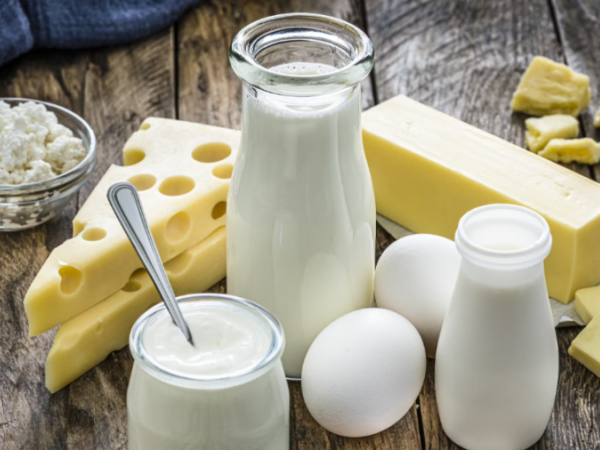
What are the milk contributions?
Istock
Another of the regulations treated during the day was that related to pre -employed products. This seeks to facilitate producers to access higher income through the transformation of milk and improve the presentation of products. In this regard, Rusinque said: “With spaces like this, national production is promoted and market confidence is strengthened.”
Entities such as the Colombian Agricultural Institute (ICA), El Invima, Agrosavia, the Agrarian Bank, the Rural Development Agency, the Ministry of Agriculture, the SENA, the Ipiales and Finagro Trade Agency. Topics such as the labeling of dairy products were also addressed and Canals were enabled for the reception of complaints for deceptive practices or normative breaches.
Within the framework of the fair, the SIC also explained aspects related to its role in legal metrology and competition. According to data presented by the entity, so far from the current government, 237 investigations openings have been carried out and 313 sanctions have been imposed for breaches related to the methodology for the payment of raw milk.
In 2024, Twelve companies were sanctioned for not applying this methodology properly, with fines that exceed 1.4 billion pesos. This methodology aims to encourage best practices in raw milk production, which has an impact, according to the SIC, an improvement in the quality of the products that reach the consumer.
It may interest you: ‘The bets we have are land and growth’: minegriciculture

Milk
Source: Istock
In February 2025, the SIC sanctioned through resolution No. 4168 of 2025 to Four milk producing companies – Gloria, Lactalis, San Mateo and Sabanalac Hacienda – for incurring anti -competitive practices. The fines imposed amounted to more than 21,000 million pesos. According to the entity, these companies added lactosueros to the entire milk, which contravenes the quality and competence standards of the sector.
The day concluded with the active participation of the producers, who insisted on the need for The application of current regulations is guaranteed and progress is made in the construction of equitable conditions for the dairy chain in rural territories.
Paula Galeano Balaguera
Portfolio journalist