Santo Domingo.– Dominican Republic is between the countries of Latin America and the Caribbean with greater advances in reducing hunger and malnutrition. If the current trend is maintained, the country could officially leave the Hunger map in 2026according to projections of the United Nations Food and Agriculture Organization (FAO).
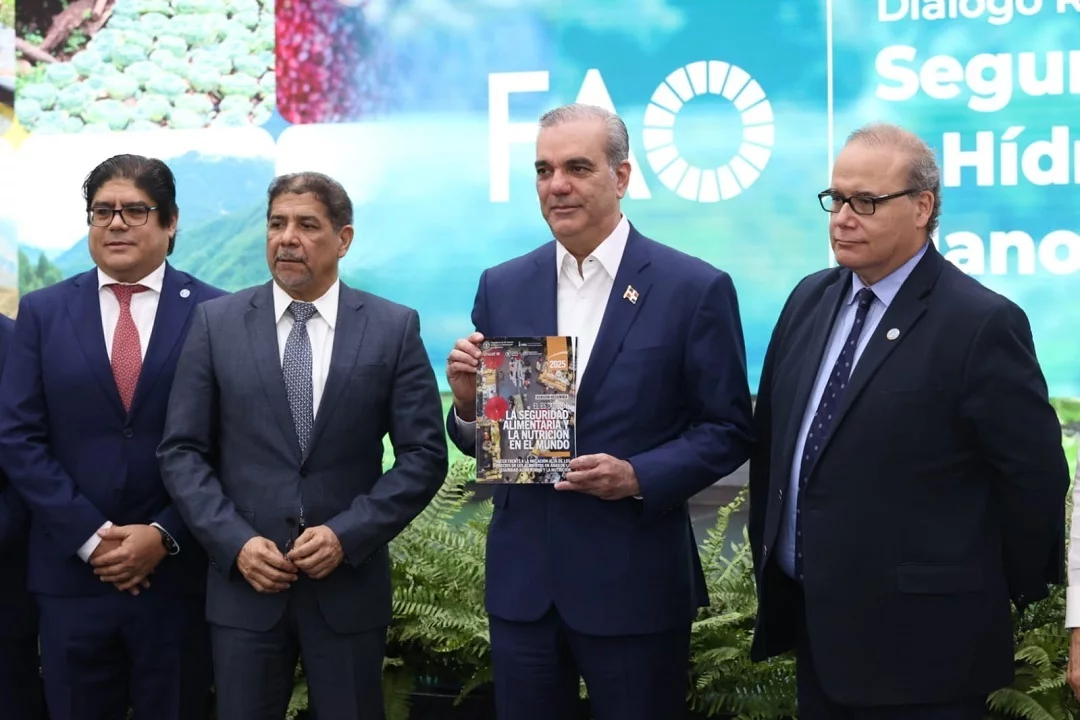
This was explained by the FAO chief economist, Maximum bullfighterduring the opening of Regional Dialog on Food and Water Safetyheaded by the president Luis Abinader.
The specialist stressed that, despite the increase in food prices worldwide in recent years, the percentage of people who could not pay a healthy diet in the Dominican Republic descended to the 23 % in 2024below the average of Latin America and the Caribbean, which is located in 27 %.
“In the Dominican Republic, food inflation has behaved better than in most countries in the region, even lowering general inflation in the last period. That, added to the increase in real labor income, reflects the positive impact of the policies applied,” said bullfighter during the event held in the Convention Center of the Ministry of Foreign Affairs.
We invite you to read: Abinader highlights hunger reduction and advances in employment, education and security
He said that in the Dominican Republic, the subordinate was reduced from 8.7% in 2019 to 3.6% in 2025, under the regional average.
Social and agricultural policies, keys in advance
Bullfighter cited as determining factors social programs, improvements in the coordination of agricultural policies, the linking of producers from different scales to dynamic markets, as well as the salary increases applied in recent years.
He also stressed that the prevalence of child growth in the Dominican Republic in 2024 was less than half of the regional averagewhich shows a significant advance in child nutrition.
Abinader: “This shows that coordinated policies work”
When reacting to the data presented by the FAO, the president Luis Abinader He affirmed that the achievements in the reduction of sub -hender are the result of an articulated strategy between different state institutions.
“We have a Zero hunger cabinet Where we met all institutions, not only the Ministry of Agriculture, but also INAVI, economic dining rooms and social cabinet to coordinate these actions. Lowering the subalimentation from 8 % to 3 % is an important achievement, ”said the president.
Abinader recalled that, during the pandemic, the global hunger figures increased, while in the Dominican Republic the combination of measures allowed to reverse that trend.
“We multiply by four economic dining rooms, we increase rations in schools and high schools through Inabie, and we achieve a significant increase in the real salary of workers. All this is reflected in a better quality of life and less hunger in the population,” he said.
The president also recognized the importance of attending other challenges such as obesity, which affects near the 30 % of the populationand thanked the accompaniment of FAO in the monitoring and supervision of the policies implemented.
“This is a good achievement, which shows that when policies are made in a coordinated and planned way they work. I congratulate the entire agricultural, social and economic cabinet, because these numbers may seem cold, but they mean better quality of life and less hunger in the country,” he concluded.
Commitment to SDGs and Water Safety
Abinader also stressed the importance of regional collaboration and reaffirmed the commitment of the Dominican Republic with the Sustainable Development Goals (SDGs).
“In the Dominican Republic we have made important advances, but we know that challenges require collective solutions. Food security and water management are fundamental axes for sustainable development and the well -being of the population.”
For his part, the Minister of Agriculture, Limber Cruzhighlighted the role of the agricultural sector in these achievements:
“The strengthening of the field has been key to reducing hunger in the Dominican Republic. We have promoted productivity, supported by small producers and promoted sustainable practices that today allow us to be a reference in the region.”
The agenda included two high -level panels: the first focused on the “hand hand” initiative to accelerate the transformation of agri -food systems, and the second into an exchange of experiences about the reduction of hunger and poverty.
The event was attended by Lucrecia Rodríguez, of the SICA; Manuel Torres, from BCIE; Francisco Bueso, from the World Bank; Mario González, of the IDB; Luis Felipe Barrantes, of the Social Assistance Institute of Costa Rica; Adriana Telles, of the CGSAN, among other important central government officials, the private sector and civil society.
The dialogue concluded with a call to strengthen regional cooperation and work together between governments, multilateral organizations and civil society, with the aim of guaranteeing the right to food and sustainable access to water in the region.