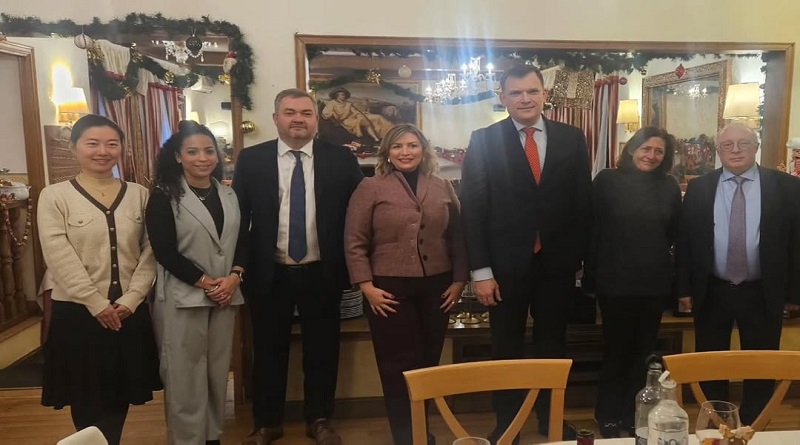
Ambassadors and diplomatic representatives of Russia, Belarus, Nicaragua, China, Cuba and Venezuela to the Food and Agriculture Organization of the United Nations (FAO) held a meeting to evaluate the actions developed during 2025, where they examined the progress in international coordination for the elimination of unilateral coercive measures and recognized their direct impact on food security, nutrition and the human right to food.
At the meeting, the Venezuelan ambassador to the FAO, Marilyn Di Luca Santaella, stressed the importance of sustained joint action, highlighting that unilateral coercive measures are contributing factors to food insecurity and structural obstacles that limit the fulfillment of the mandates of the organizations of the United Nations System linked to food and agriculture.
Likewise, those present emphasized that the relevant agencies of the United Nations System (FAO, WFP and IFAD) must address this line of work in a comprehensive manner because unilateral coercive measures restrict access to food, productive inputs, financing, technology and international cooperation; Furthermore, they directly and disproportionately affect the most vulnerable populations.
In this context, Santaella highlighted the need to systematically incorporate the initiative that Venezuela promotes as a strategic line of joint action. This proposal has the coordination of countries such as Russia, Belarus, Algeria, Zimbabwe, Cuba, Nicaragua, Sudan and Iran, nations that promote this debate in multilateral spaces to strengthen political impact and make visible, with a technical basis and evidence, the humanitarian impact of these measures.
The delegations agreed that economic coercion and the use of food as tools of political pressure or weapons of war constitute serious violations of the people’s right to food.
Likewise, they reiterated that these practices contravene the principles of multilateralism and hinder the achievement of the Sustainable Development Goals, in particular SDG 2: Zero Hunger, as well as international commitments on development and peace.
The meeting was registered as part of the Bolivarian Peace Diplomacy, promoted by the president of the Bolivarian Republic of Venezuela, Nicolás Maduro, which promotes solidarity cooperation, respect for international law and the defense of peoples against coercive mechanisms that violate fundamental rights.
Finally, participants reaffirmed the importance of deepening unity, coordinated action and multilateral political impact. These are essential ways to move towards the elimination of unilateral coercive measures and to guarantee the right of people to food, life and human dignity.
VTV/LAV/DS