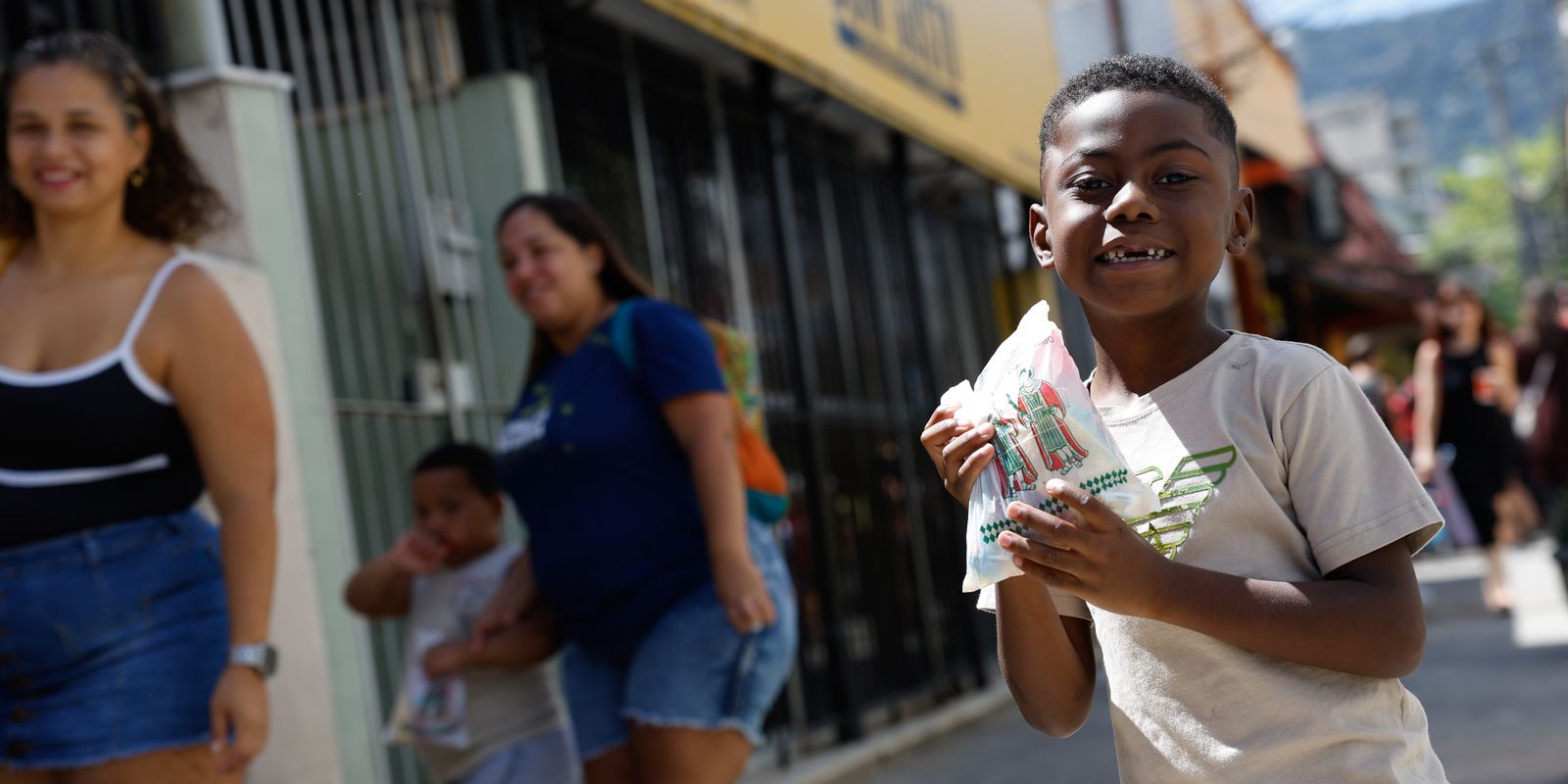
A car parks and horn. Soon dozens of children run to him, vying for the delivery of candy bags. Between rush, jumps of the little ones to reach the window and even Maria-Mole duel, many laughs. At the corner, a lady with a box begins another distribution. More rush. The streets of the Andaraí neighborhood in the north of Rio de Janeiro are full of children with backpacks and bags to gather as much as possible of treats. It’s Cosme and Damião Day.
“Promise pays,” says merchant José Henrique Nunes among smiles.

Rio de Janeiro (RJ), 09/27/2025 – The merchant José Henrique Nunes celebrates Cosme and Damião Day. Photo: Fernando Frazão/Agência Brasil
The boxes that carried sweets in the truck body was emptied in the blink of an eye, handed over to the hands around the car.
“This boy here, with 20 days of life had meningitis. Thanks to children, our greatest God and Jesus Christ, my son is there and has nothing more. I committed, for seven years, to come here with him to watch a mass and give the sweets.”
Nunes presents his son, Samuel, who is now 2 years old and had his life saved “for the children” Cosme and Damião.
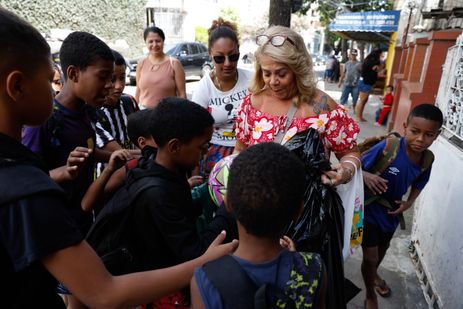
Rio de Janeiro (RJ), 09/27/2025 – Retired Tânia Ponciano distributes sweets and toys to children on Cosme and Damião. Photo:Fernando Frazão/Agência Brasil
The lady who distributes sweets on the corner is the retired Tânia Ponciano, 65 years old.
“My love, the aunt will take more in the car,” justifies one of the children who was sad that she couldn’t get a candy in time.
Ponciano’s sweets are special. She herself makes the chocolate -covered apples.
“I am very devout. My devotion is a lot of love. My mother was a Umbanda, had a terreiro. My whole family is Umbanda, so we continued Mom’s mission,” he says.
After securing the chocolate apple itself, Kennedy, 6, even asked to pose for a photo.
“I like it a lot, I get very sweet, about 20 bags. It joins mine with my brother’s and is very big,” says excited.
Ibejis: Cosme and Damião
THE Festa dos Santos Cosme and Damião It is a celebration of Christian origin, but which in Brazil was influenced by African array traditions, celebrated on September 27 by the population of these religions and on the 26th by the Catholic Church.
On September 27, the day of the Children’s Orixá, Ibejis, represented by two twinswhich refer to childhood, innocence and the will to live.
At the time of slavery, people brought to the force of Africa were not free to worship their deities. They had to associate them with some Catholic saints not to be persecuted.
Ibejis were then Associated with saints Cosme and Damiãotwo medical brothers who cured around the year 300 In Asia Minor, between the current territories of Syria and Türkiye.
Childhood and sweets came from this syncretism.
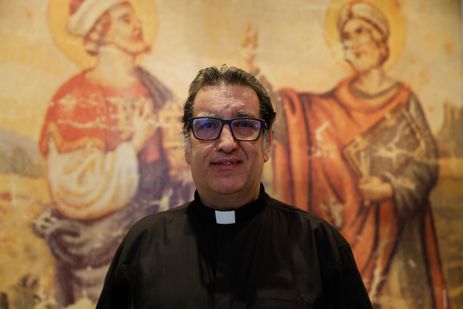
Rio de Janeiro (RJ), 27/09/2025 – Father Walter Almeida Peixoto at the celebration of Cosme and Damião, in the Parish of São Cosme and São Damião no Andara. Photo: Fernando Frazão/Agência Brasil
Father Walter Almeida Peixoto, from the Parish of St. Cosme and St. Damião, in the Andaraí neighborhood, explains that for Catholicism, the two are represented by grown men.
“In African matrix religions, they are identified as Ibejis, as children. What they are not, they are men, doctors,” he says.
“It is not our Catholic faith, but it does not fail to have any connection with the Catholic saints, so it is also an opportunity to evangelize.”
Just get out of the church, which in the courtyard itself, although not a tradition that comes from Catholicism, there are those who are distributing or running after candy. Amanda Gregório, 30, is one of them.
“It’s a very special, very important date. Children are very happy with sweets and Cosme and Damião are very important to me,” he says as he indicates to their daughter where to go to the most goodies.
In Rio de Janeiro, the Force of the Ibejis marks the meeting of Terreiro Peoples, which began this Friday (26) and continues until October 5th.
The program has distribution of sweets, children’s recreation and storytelling. The day is party.
“There’s coconut bullet and shuttlecock. Let the bejada play. Today is a party day. Bejada comes Saravá!”, As invites the song Bejadas point.