Between a possible intervention and more cooperation
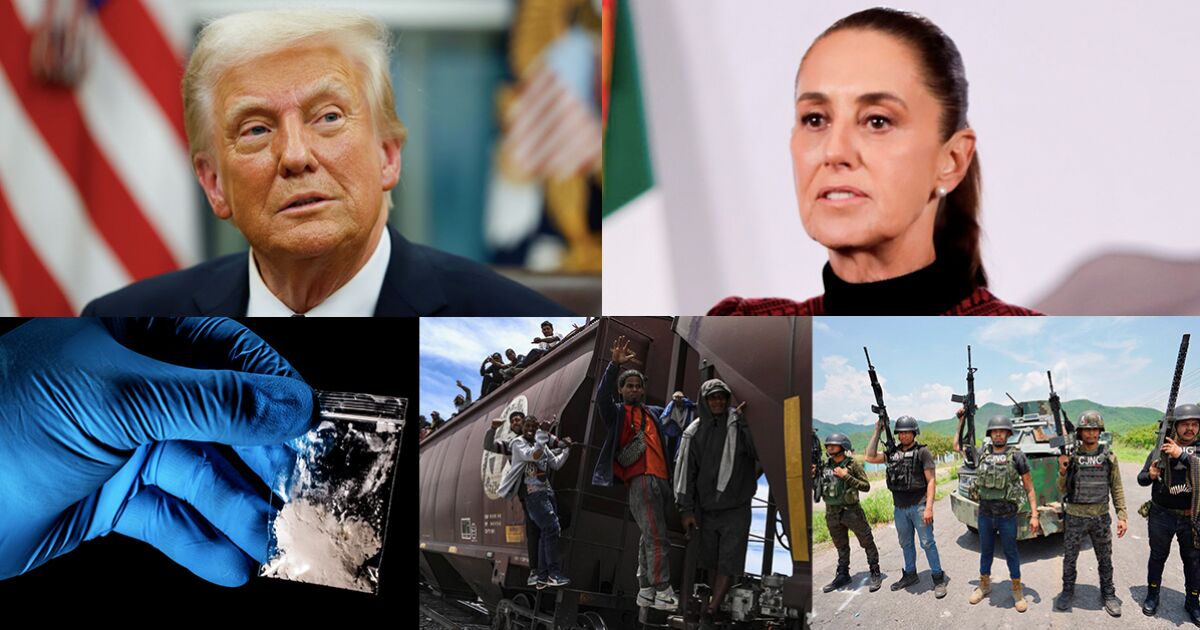
President Claudia Sheinbaum has expressed her rejection of the United States intervening in Mexico.
In the last call he had with his counterpart, he stated that he did not raise his intention to intervene in Mexico as he has repeatedly mentioned.
“No. And, on the contrary, we agree that it is going very well, we are making a lot of progress on the issue of security,” he said last Thursday at his press conference.
We had a productive and cordial conversation with the President of the United States, Donald Trump. We continue to advance on trade issues and the bilateral relationship.
We agree that both teams will continue working together. I also had the pleasure of greeting his wife… pic.twitter.com/5ZqT4BgPOI
— Claudia Sheinbaum Pardo (@Claudiashein)
January 29, 2026
Carlos Rodríguez, public security expert and member of the Collective for Analysis of Security with Democracy (Casede), explains that given Trump’s constant insistence, what can happen is that operations in which the United States participates increase.
“It is easier to do it jointly than to do it alone, operationally it is much simpler and it would be sold that way, ‘we did it jointly’, even though three-quarters of them did it themselves. It will have to be sold as another event of full, joint collaboration, as has happened with other operations,” he points out.
However, it is not easy for the president to accept it. A chapter of disagreement with the United States occurred a few days ago with the arrest of former Olympic snowboarder Ryan Wedding, while the director of the FBI, Kash Patel, stated that the Canadian was detained by elements of the FBI in collaboration with the Mexican authorities, Sheinbaum ruled out a joint operation.
“We are never going to accept joint operations from the United States, or from United States federal, state, or municipal forces in our territory. We collaborate, they give us information, we give them information, but the operations in our territory are from Mexican forces,” he commented.
(Photo: Moisés Pablo Nava/Cuartoscuro.)
However, Levien considers that the United States has already collaborated with other countries in their fight against drug trafficking, and one of them was Colombia.
“This happened very clearly in Colombia, in particular with the Medellín cartel with Pablo Escobar. At that time the president of Colombia together with the United States government collaborated. The United States provided them with intelligence, personnel, weapons, equipment, etc. And then between the two of them they solved the problem,” he highlights.