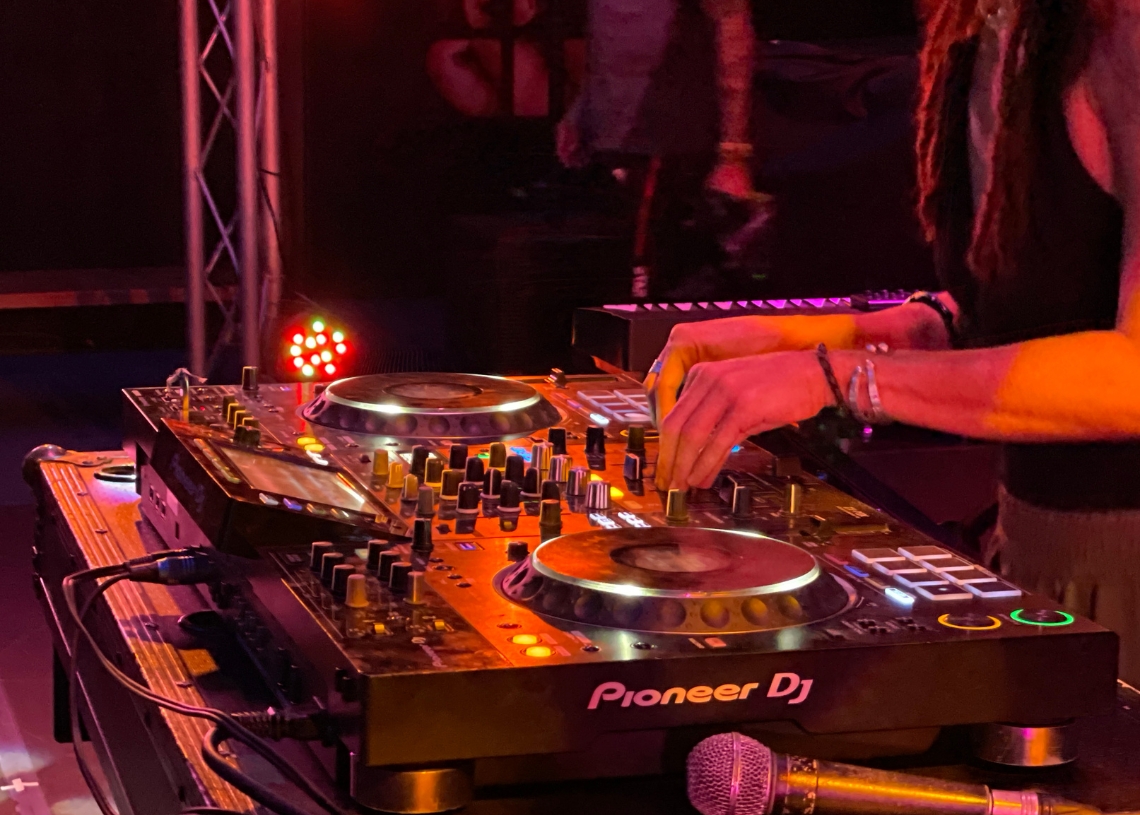
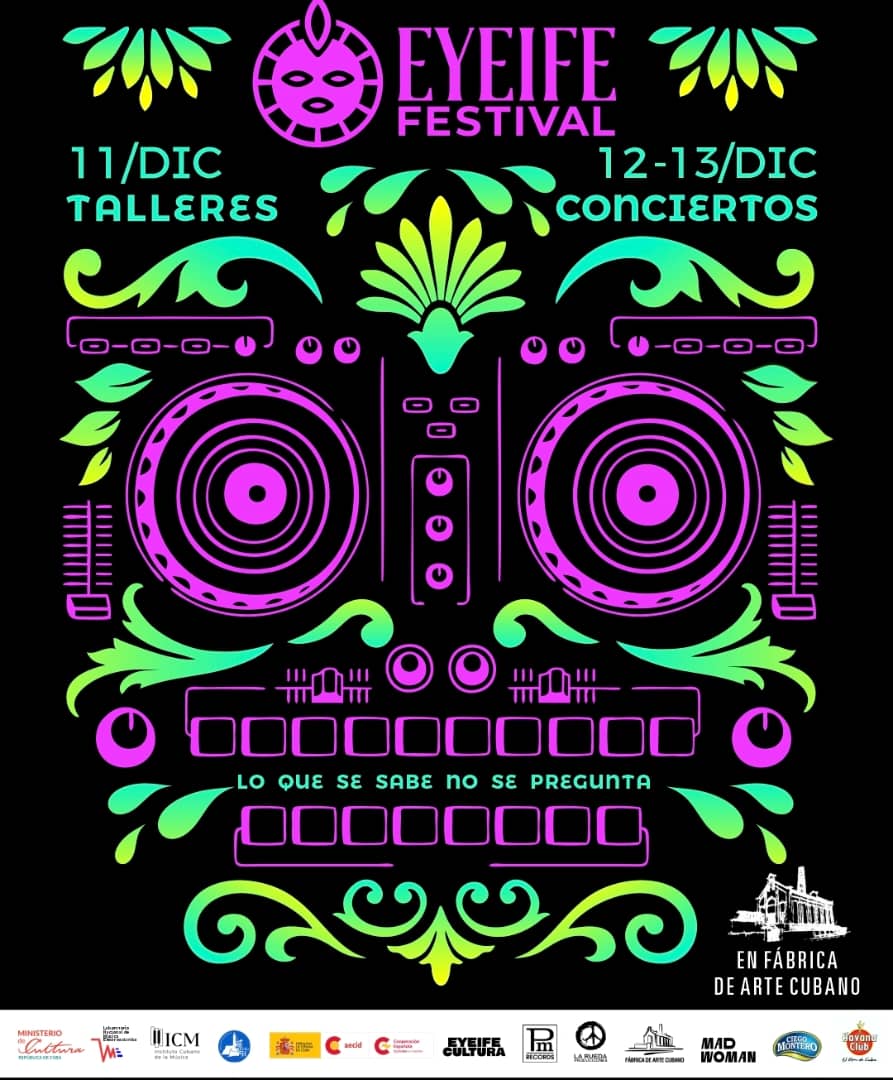
The Eyeife Festival is holding its ninth edition with Fábrica de Arte Cubano as the only venue for its program, which has taken over three warehouses of the Havana cultural center.
With almost a decade of existence, its organizers feel that the event is a consolidated event, and above all that at this point it has achieved the goals it set in 2016. Suylen Milanés founded it.
“We have fulfilled that objective, not only of providing a space, but of making it a beautiful space because in the end those artists and those people celebrate again,” he says. Rafa Fergomco-founder and marketing director of the Eyeife Festival.
This year’s program precisely has a lot of that, of the names that return, DJs who are certain that this festival is the home. Many have taken their first steps here and today are renowned professionals, others have come from various parts of the world and know that the mixtures that this event proposes are a source from which we must drink, and to which we must contribute.
Yongolailan, a Cuban DJ based in New York, winner of second place in the Eyeife contest last year, and mention in this edition, is one of those who returns to the island to participate in what he defines as “something key in the evolution of Cuban music.”
“He has mixed two things that I have been combining in my art for a long time; one is electroacoustic music and the other is our Afro-Cuban roots. They are two topics that make a lot of sense to me, so when I saw Eyeife for the first time, I couldn’t believe that this festival existed,” he explains the reasons for his interest in being part of it.
Make it possible
Providing opportunities to those who begin the path of electronic music is one of the constants of Eyeife, a task in which they work all year with the holding of their contest and which then materializes on stage with the visibility of these projects.
“We love having young talent, therefore, the winners of the DJ producer contest have a place as part of the line-up designed for this edition. Winners from previous editions are also part of this edition, that is, we wanted to legitimize the trajectory of the DJs who have started by winning the contest and who have also already had development from an artistic point of view,” details Gretel Garlobo, general producer of the Festival.
That’s why in their program we go from well-known names on the island such as Lejardi, Jigüey, Reitt, Thalai, Madame Butterfly, to those that perhaps we are hearing about for the first time, such as Afronamy from Santiago, winner of first place in the contest this year, or Dannis from Havana or the Arank project, deserving of second and third place respectively.
“It is the one that has opened the doors for there to be young talented DJs and producers in Cuba right now, it has been very important, if there is not this platform as part of connection and exploitation of the world it would be much more difficult, which it already is in Cuba itself, so it is very important that they launch and connect them, because the good thing about this festival is that you win the contest but then you are in programming with the DJs of the moment from Cuba and you are also in connection with other international DJs and this is wonderful,” Tropical tells us. Mystic, a Spanish DJ who participates in the festival for the second time, and who together with DJ Trapella, also from Spain, makes up the international proposal of this ninth edition.
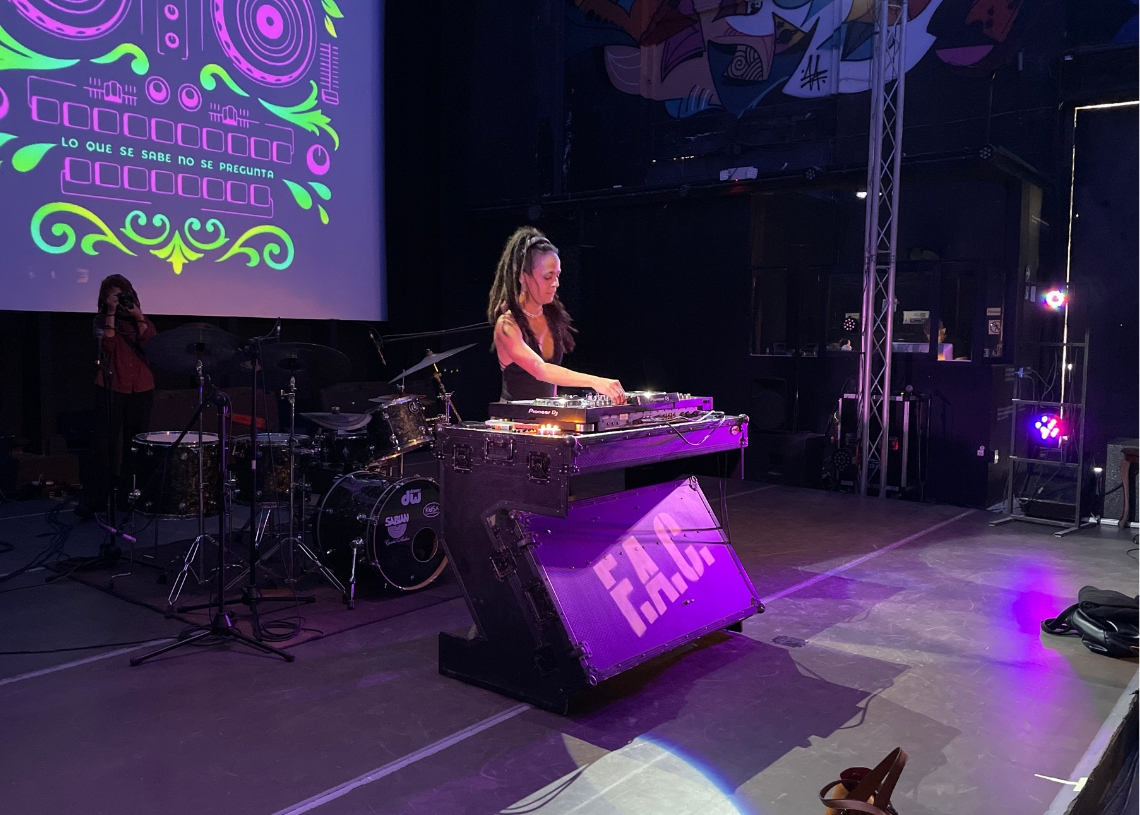
“We say that it is bigger, although it is not really because of extensions, but because it wants to cover the greatest amount of diversity of proposals within electronic music,” Garlobo summarizes.
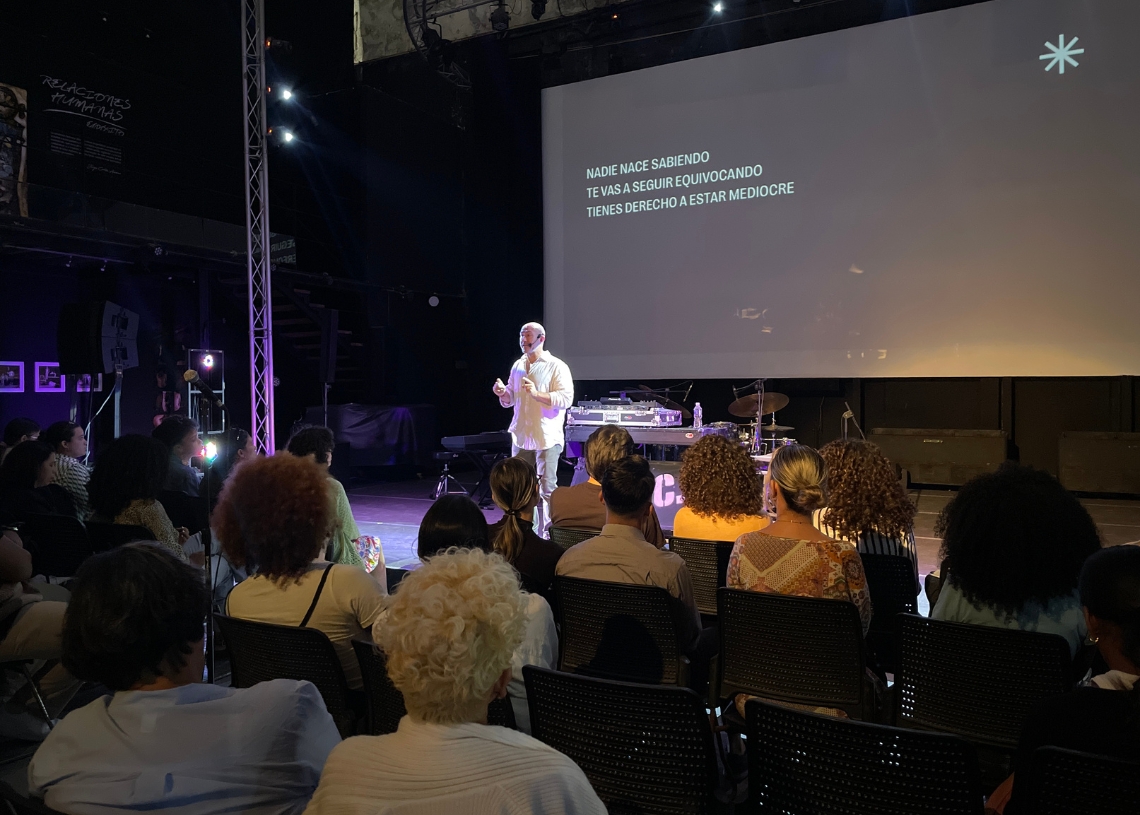
The first day of Eyeife was dedicated to its theoretical space. Four workshops and showcases of DJs formed the global view that the event tries to provide on musical creation, but also always addressing other topics that they consider essential for a successful artist in today’s world.
This year the most addressed topic was personal branding through the workshops of photographer Víctor Cervantes and Rafa Fergom. Although the Spanish Tropical Mystic also brought ecstatic dance, not very well known in the country, and Charlie Zuma spoke about sound.
“The reason for the conferences is to provide other tools that are not attractive, such as perhaps playing on stage, but in the end, if an artist wants to get closer to the public, he will inevitably need marketing tools, a lot of mentality with the context to understand certain aspects of how to work on his strategy to ultimately make his work visible, to connect it with the public,” Fergom tells us.
This is no longer a one-off event.
Eyeife has already surpassed the concept of a festival, and this year it has just been launched as a platform, which under the name of Eyeife Cultura, brings together the great artistic network that it has become, and at the same time marks the paths towards where it intends to grow.
The holding of the contest, which takes up practically the entire year between reception of works, jury work and awards, and the birth of Women, which every March provides a space for women in the sector, have meant that when saying the name Eyeife we can no longer think of just three days of electronic music in Havana.
“We realized that we really stay alive throughout the year through other initiatives, so in the end, for me and for us it is a platform that aims to support Cuban culture, include international artists who come with the best of intentions to collect everything they learn here and contribute their knowledge, but above all to collect and take it to their land to tell everything that is happening here, the talent that there is; I think that is Eyeife, a talent catalyst that does not have to last just one event, but for an entire year”, is the vision of Fergom, an essential figure who, together with Suylén Milanés, gave life to this project.
“Beyond an electronic music festival, it is a space of culture, where the interaction of manifestations, of ways of doing things, are welcome, are embraced under the brand and are also a form of growth. I think it will always grow towards more culture, that is, towards connection, towards a view of internationalization, not from music alone, but from human connections,” Garlobo conceptualizes.
This diversity is also visible in the program of these three days, in which names such as the pianist Issac Delgado Jr. with La Wawa, or the party project Warapo in special collaborations for the event, or the participation of dance groups such as the Ballet Rakatán or the Malpaso company.
What is known is not asked
Being an event that can be considered small within the framework of large musical events that exist in the country, taking into account its temporal extension and that it is dedicated to a specific musical genre, Eyeife, almost a decade in existence, has to be taken into account when talking about areas that have promoted Cuban music, and that will continue to do so.
“The scenario has changed a lot, as the country has changed, as life changes, and in that sense the Eyeife has had to transform and will continue to transform,” Gretel Garlobo contextualizes.
For those who are part of it artistically, the event also has an essential nuance. Yongolailan considers that “in recent years there has been great interest worldwide in these genres and this mix, with which Eyeife enters a great circuit of festivals that are promoting this movement.”
“You come thinking about Cuba and you think about salsa, about the traditional music that exists and is there, but then there are some super-powerful DJs with a lot of desire and a lot of passion,” Tropical Mystic defines his experience, showing us how Eyeife is updating or expanding the established international image of Cuban music.
“The truth is that Eyeife has evolved a lot, its mission was to give visibility to the local artistic fabric and DJs, who then was a figure that was hidden, because it only had access to certain small spaces, very niche, very club. In that sense we have evolved a lot together with the artists and now it is more of a place of union, and we will continue doing it as long as we can, and above all, as long as those artists continue to need Eyeife as a platform, and as long as the Cuban public continues to want to come and celebrate this movement that is music. electronics,” says Fergom.