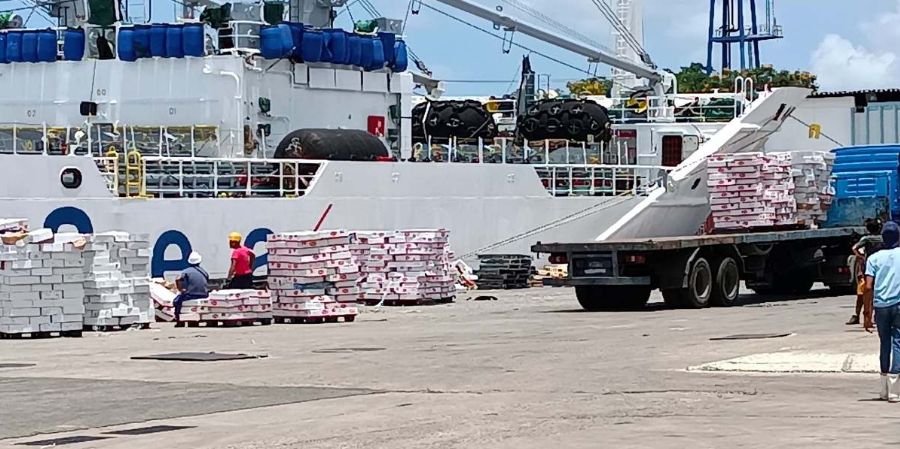
Statistics from the US Department of Agriculture indicate that exports to the Island amounted to 355 million dollars.
LIMA, Peru – Despite the embargo that Washington applies to Havana – which the authorities of the Cuban regime use as a pretext to justify their terrible management of the national economy -, exports from the United States to Cuba have increased by 15% during the first nine months of 2025.
Statistics Department of Agriculture of the United States (USDA) point out that that country sent 33.6 million dollars in pork to the Island between January and September 2025. This represents double the amount of 16.3 million dollars exported in the same period of 2024.
USDA figures reflect that in 2024, the sum of exports reached 309 million dollars in nine months, while in 2025 it rises to 355 million, for an overall increase of approximately 15%.
The Island is currently facing one of its worst economic crises after the triumph of the Cuban Revolution, marked by a significant decline in agricultural production, difficulties in accessing international financing, and a sustained decline in foreign trade.
The United States also exported three times as much grain and feed to Cuba during the period in question, the numbers growing from 6.8 to 23.8 million dollars. For its part, 11 million dollars of coffee were imported in 2025, almost three times more than in 2024, when about 8.4 million were reported.
In addition, sugar exports from the US increased by more than three million dollars in the current year. Once a flagship product of Cuba, the Castro regime received 11.1 million of the sweetener in 2024, while the recent report indicates 14.9 million.
Although the volumes of food that Washington sends to the Island increase, putting a plate of food on the table continues to be a challenge for a large part of Cubans every day. The national context is marked by serious food insecurity.
42% of households in Cuba spend their entire income on food and one in four Cubans is forced to skip dinner due to lack of resources, according to the report “There is hunger in Cuba” published in 2024 by Food Monitor Program.
Eight out of ten households are on the margins of survival and seven out of ten people admit to stopping breakfast, lunch or dinner due to lack of food or money.
At the same time, The Castro regime allocates barely 3% of its state budget to the agricultural sectorwhich has caused a dramatic drop in domestic production.
Today, Cuba depends more than 80% on imports to cover basic food needs. The country imports rice, milk, meat and oil in insufficient quantities, while maintaining rigid state controls that discourage private production and suffocate any independent initiative.