Civil society organizations and political actors warn that, despite the reconciliation discourse, the content of the amnesty bill has not been disclosed and they demand transparency and real debate in the National Assembly
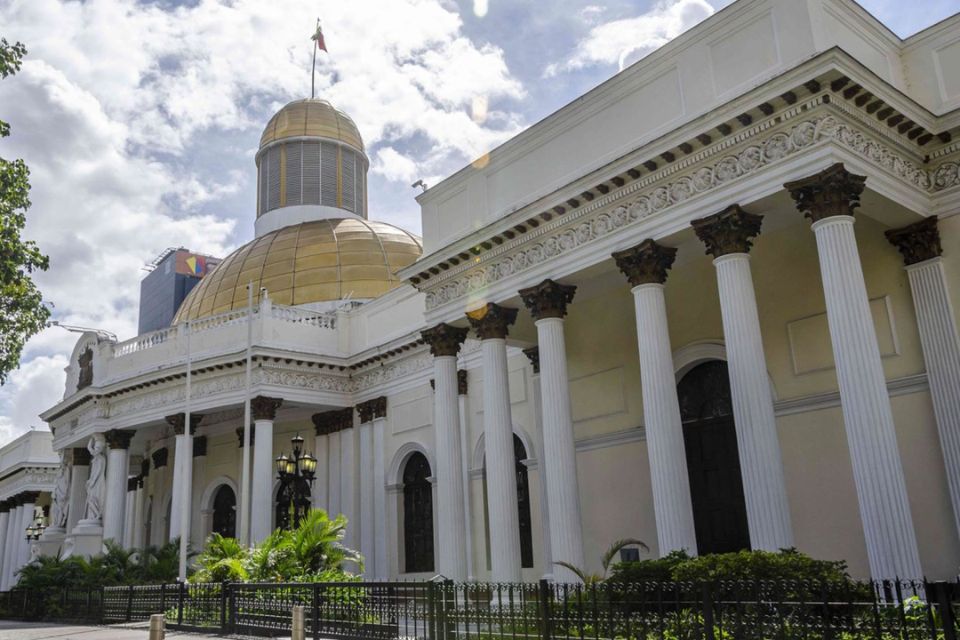
The amnesty bill for democratic coexistence presented to the National Assembly seeks to promote reconciliation between the various political actors that make life in the country and overcome confrontation, in accordance with the explanatory memorandum of this regulation, released this Thursday, February 5.
The proposal is based on the premise that political polarization has “left deep wounds” in Venezuelan society and proposes amnesty as a mechanism to move towards peace and coexistence, from respect for diversity and political pluralism.
“People from different political currents, as well as citizens without any militancy, have been involved in criminal proceedings, restrictive measures or situations of persecution linked to events of a political nature or the exercise of citizen rights,” the document admits in its Explanation of Reasons.
However, until a few minutes before the discussion of the regulations in Parliament, the full content of the document was unknown and the explanatory statement was published hours before the session. Faced with this situation, various civil society actors have asked for transparency in the management of information.
According to the document, the proposal is based on the constitutional competence of the National Assembly to enact amnesty laws and seeks to consolidate a comprehensive framework that specifies both the amnestiable facts and crimes and those that must be expressly excluded.
*Read also: Capriles asks for speed in the amnesty law and to eliminate laws that violate freedoms
The project reaffirms principles typical of a democratic and social State of law, including life, freedom, justice, equality, solidarity, social responsibility and the preeminence of human rights. Likewise, it states that the amnesty should not be understood as an act of revenge or revenge, but as a path towards national reconciliation.
Nevertheless, the text establishes clear limits. Crimes considered serious, such as human rights violations, crimes against humanity, war crimes, intentional homicide, corruption and drug trafficking, are excluded from the benefits of the law, in compliance with article 29 of the Constitution and the international commitments of the Venezuelan State, the document explains.
The proposed amnesty law consists of 13 articles, the Explanatory Memorandum announces. The first five define the object, purposes and principles of application and interpretation of the law, while the remaining articles develop the facts subject to amnesty, as well as the effects and procedures for its implementation, the document states.
Official turn and lack of transparency
Deputy Luis Florido pointed out that, although the project was drafted by the ruling party, the explanatory statement reflects a change in the position that Chavismo has held on the amnesty. “The project has been drafted by the ruling party, but beyond that, its explanatory statement shows a change in the position they have been holding on this matter”; However, he insists that there is room for exclusion.
The parliamentarian maintained that, despite the fact that this more moderate position of the ruling party responds to pressure, he hopes that the legislative debate will be conducted in accordance with the rules. We hope that arrogance is not repeated and that we open the discussion to citizens, as established by the Internal and Debating Regulations: take the law to the Internal Policy Commission, public consultation and then second discussion,” he said.
Likewise, Luis Florido denounced that numerous injustices derived from state arbitrariness persist, especially against people detained for exercising their right to freedom of expression.
“There is a lot of injustice along the way, left by arbitrariness: the injustice of putting innocent people in jail for a WhatsApp chain, for a message on
For Florido, an eventual approval of the amnesty law would open a new scenario for the country. «The amnesty law places the Republic before another scenario: an opportunity. The opportunity for a true reconciliation that prevents them from persecuting a citizen again for not paying a ‘bribe’ to Seniat or for refusing to blackmail an official,” he explained.
*Read also: Organizations ask to incorporate UN, IACHR and ICC mechanisms into the amnesty process
For his part, Oscar Murillo, general coordinator of Provea, made critical observations about the explanatory memorandum circulating about the bill.
He questioned the use of the term “extremism” in the preamble and said that “the spirit of a law of this nature is not to attribute blame to one sector.”
He also objected to the characterization of the amnesty as an act of sovereign clemency: “In the end it says a ‘sovereign act of clemency’ which should rather say an act of reconciliation,” explained the human rights defender in his account of
From Provea they expect more information and demanded transparency from Parliament: “We wait for more information and in that sense we demand transparency from the National Assembly.”
The NGO Justicia, Encuentro y Perdón also condemns that the day for discussion of the project for the amnesty law has arrived and that its “content has not yet been made public.” It considers that the omission is “incompatible” with the principles of transparency, democratic participation and international standards on human rights.
“The secrecy surrounding this project prevents a serious analysis of its scope, its inclusion and exclusion criteria, and its possible legal effects, which compromises its legitimacy,” he stated. JEP in X and urged the authorities to include the victims, their families and human rights organizations in the debate.
“We demand, therefore, that the full text of the bill be published immediately, so that victims, human rights defenders, independent experts and civil society can review it, formulate observations and warn about possible violations of international standards, particularly in matters of due process, equality before the law and prohibition of arbitrary exclusions,” insisted Justicia, Encuentro y Perdón.
*Journalism in Venezuela is carried out in a hostile environment for the press with dozens of legal instruments in place to punish the word, especially the laws “against hate”, “against fascism” and “against the blockade.” This content was written taking into consideration the threats and limits that, consequently, have been imposed on the dissemination of information from within the country.
Post Views: 524