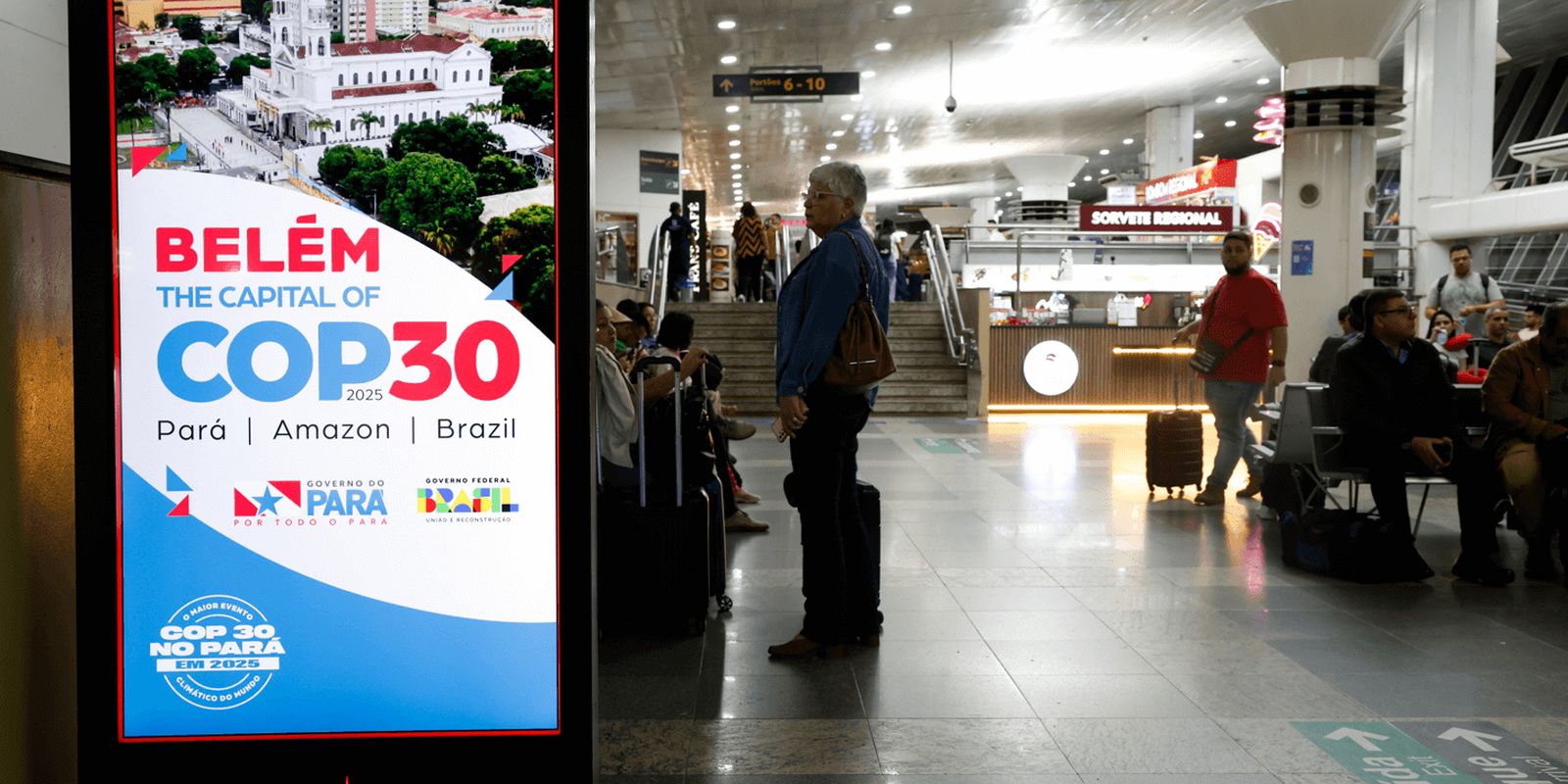
Representatives of civil society and government agencies made an appeal, this Friday (3), for more protagonism and decision-making power of scientific knowledge in the 30th United Nations Conference on Climate Change (COP30)which will happen in Belém, from 10 to 21 November.
A meeting to outline strategies for how science will be represented at COP30 gathered members of non -governmental entities – such as the Brazilian Academy of Sciences (ABC) and Brazilian Society for the Progress of Science (SBPC) – and the government organ, such as the Ministry of Science, Technology, Innovations and Communications (MCTI) and the Financier of Studies and Projects (Finep), linked to MCTI.
The meeting was at Finep headquarters in Rio de Janeiro. In COP30, government delegations and civil society organizations from all over the planet are expected to seek solutions to global warming and climate change.

The president of the Brazilian Academy of Sciences, Helena Nader, called for the Union of Forces for Science Photo: Fernando Frazão/Agency Brazil Archive
In defending scientific knowledge, ABC President Helena Nader said he hoped at the Belém Conference, the scenario will be different from Rio+20, the United Nations Conference (UN) on Sustainable Development, which took place in 2012 in Rio de Janeiro.
“In Rio+20, we are anxiously waiting for the final document, more than 100 pages, and found that the word science was not said once,” he said.
Nader considers that now the times are different and called for the union of forces for science. “Civil society is up to the government to be in this struggle for the integration and strengthening of science into the Brazilian climate agenda.”
Sovereignty and Identity
The president of SBPC, Francilene Garcia, considers that the presence of science on the climate agenda must also present a “Brazilian identity”.
“Our science has to be a protagonist, bring sovereignty and its own identity. We have science in Brazil, we need to integrate and strengthen it,” he explained.
In participation through a recorded video message, MCTI’s holder Luciana Santos pointed out that the world is experiencing a climate emergency scenario and reinforced the portfolio’s commitment to support research that promotes climate resilience and strengthen science networks.
Luciana Santos encouraged that Brazilian science has an active voice in global forums. “Science, technology and innovation are pillars of sovereignty and, in the climate crisis, are also instruments of planetary solidarity.”
COP30 Executive Director Ana Toni also sent a message in which she says the country uses science to guide public policies.
“We will raise the role of science in COP30, he said.
Climate urgency
Climate urgency was emphasized by researcher Carlos Nobre, from the Institute of Advanced Studies at the University of São Paulo (IEA-USP). According to him, the planet approaches a “non -return point” caused by global warming. He cited deforestation of the Amazon as one of the factors that cause more carbon dioxide to be thrown into the atmosphere, contributing to climate change.
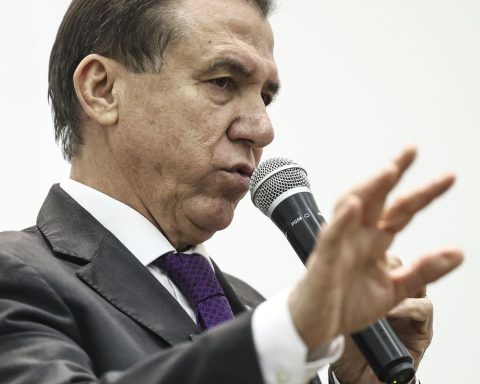
Finep President Luiz Antonio Elias defended Brazil’s leadership in coping with global warming and boldned on the climate schedule.
“The last IPCC report [Painel Intergovernamental sobre Mudanças Climáticas, na sigla em inglês, um órgão da ONU] confirmed that the average global temperature has already increased by 1.1 ° Celsiusthis is significant. Since pre-industry we have nothing similar. Each fraction of education matters for food safety, water availability, public health and economy, ”he said.
Antonio Elias adds that there is no effective climate policy without solid scientific base and without investment in knowledge.
“Finep has actively supported this agenda through funding and renewable energy projects, smart networks, energy storage, green hydrogen and energy efficiency,” he said.
Basic knowledge
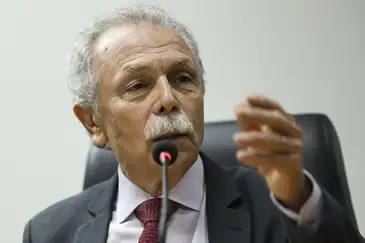
The president of CNPq, Ricardo Galvão, charged that scientific institutes are more heard in the elaboration of public policies. Photo: MARCELO CAMARGO/AGENCY BRAZIL AGENCY
The president of the National Council for Scientific and Technological Development (CNPq), Ricardo Galvão, charged that institutes that produce science, such as the National Institute for Space Research (INPE) and National Observatory, among others, are more heard in the elaboration of public policies.
“One thing that has gotten lost now we are recovering,” he said. “The knowledge of MCTI is in research units, and research units are not heard in the formulation of public policies. They have to leave the policies of the ministry,” added the representative of the body linked to the portfolio.
Renowned physicist, Galvão He gained more notoriety in 2019, in the government of Jair Bolsonaro (2019-2022), when he was dismissed from the position of director of INPE (responsible for the Amazon monitoring systems), after the then president questioned deforestation data, which showed negative records.
Galvão also asked that more affordable disclosure of climate change studies be done. According to him, sometimes even engineers understand some terms, and the population needs to know how this is reflected in one’s life.
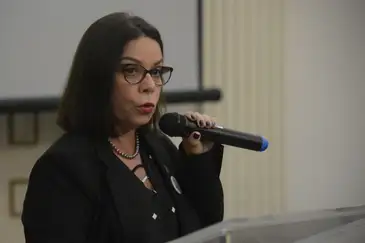
Capes President Denise Carvalho argued that the climate schedule is increasingly linked to the educational content passed to students – Fernando Frazão/Agency Brazil Archive
The president of the Higher Education Personnel Improvement Coordination (Capes), Denise Carvalho, argued that the climate schedule is increasingly linked to the educational content passed to students.
According to her, the theme must be part of teacher education.
“There is a transversality of the environmental agenda in educational policies since the curriculum of teacher education, infrastructure of schools and territories, which needs to be discussed from the bottom up,” said the president of the body linked to the Ministry of Education.