“I don’t see who can come (…) and save Cuba from a situation like this if it loses the Venezuelan supply,” said Jorge Piñón.
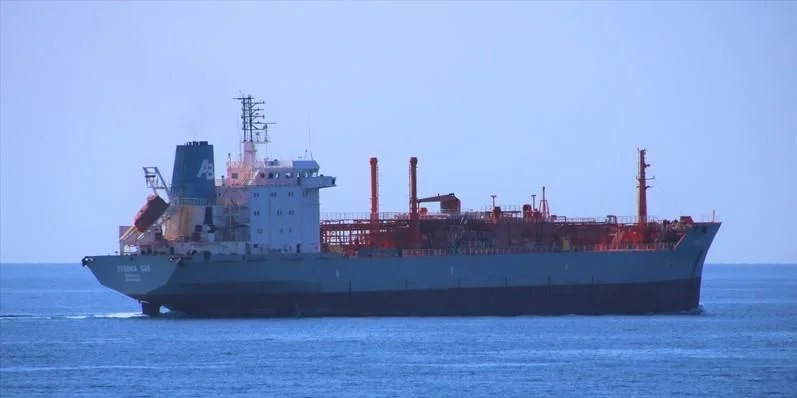
MIAMI, United States. – Jorge Piñón, the principal researcher at the Energy Institute at the University of Texas, warned that Cuba currently depends on crude oil shipments from Venezuela and that a cut in that supply could precipitate “the great collapse” of the Cuban economy. “In recent quarters, Cuba has been receiving between 32 and 35,000 barrels a day of Venezuelawhich represent almost 50% of the Cuban oil deficit,” he stated during an interview in the program “The news as they are”, Martí News.
According to Piñón, Washington and Caracas could try to sustain this flow of crude oil towards the Island at least for a while to avoid an abrupt collapse. “I do not doubt that among the conversations that are being held today between Washington and Caracas, is that at least for the next few months they maintain the supply of 35,000 barrels of oil per day to Cuba to avoid a collapse,” he said.
Piñón maintained that Havana has little room for maneuver due to lack of liquidity to buy fuels in the international market. “They don’t have cash, they don’t have money, so they can’t go out to the European international markets and buy diesel and buy liquefied gas. So, Cuba is basically bankrupt,” he said.
In his analysis, the reduction in Mexican shipments aggravates the situation: “Mexico has reduced imports from 22,000 barrels a day to only 7,000. Cuba now depends much more on the 35,000 barrels it is receiving from Venezuela.”
The specialist linked this scenario with the internal crisis on the Island and the risk of social outbreaks. “We are then concerned about the situation, not only economically, (…) but also that Cubans can no longer take it anymore and really take to the streets as they did in 2021,” he said.
Piñón also explained that the return of large oil companies to Venezuela would depend on legal and political guarantees, in addition to million-dollar investments and time. He estimated that “it will take between three to five years and billions of dollars for Venezuela’s production to reach the 3.4 million barrels per day again, which was what the country was producing in 1998.”
The researcher highlighted the uncertainty about the future framework of rules, with the presence of Russian and Chinese interests on the ground. “Today there are Chinese assets and Russian assets that are drilling and producing oil in Venezuela. Will China be respected and Russia will be respected for the investment they have made?” he asked. He also highlighted the deterioration of infrastructure, with fields and pipelines requiring capital and maintenance.
Although he acknowledged that the United States maintains high production and that Canada has replaced part of the Venezuelan crude oil, Piñón defended that the interest in Venezuela responds to a long-term strategy due to geographical proximity and the type of crude oil. “The United States needs to have a participation, a role within Venezuela, the largest country with strategic reserves just a week away from here. We cannot let them go,” he stated.
Regarding the composition of those reserves, he compared Venezuela to Saudi Arabia and described the extra-heavy nature of Venezuelan crude oil and the US refining capacity. “Venezuela has 300,000 million, the difference is that Venezuelan crude oil is a super-heavy crude oil, with high viscosity,” he explained.
Piñón also mentioned the case of Chevron, which he referred to as the only company with a current license under sanctions, and said that the participation ratio of 40% for the company and 60% for PDVSA continued to operate.
Regarding Cuba, the researcher did not identify, within his analysis, an alternative supplier with the capacity and immediate political will to replace a possible Venezuelan cut. “I don’t see who can come (…) and save Cuba from a situation like this if it loses the Venezuelan supply,” he concluded.