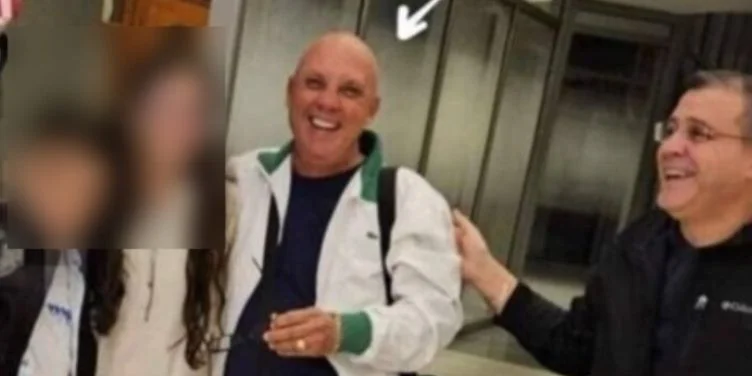
Jorge Luis Vega García, former Lieutenant Colonel of the Minint, was in charge of the prisons of Agüica and Gutleta, in Matanzas.
Miami, United States. – Jorge Luis Vega García, identified by Political Expritory as one of the most feared officers of the Cuban prison system, managed to legally enter the United States on January 20, 2024 by the Tampa International Airport, Florida, welcomed by the program of parole humanitarian, as confirmed to Martí News Several sources close to the case, which requested anonymity.
In Cuba, Vega García held the rank of Lieutenant Colonel of the Ministry of Interior (Minint) and was in charge of two of the most feared prisons in the country: Agüica and Gutleta, both located in the province of Matanzas. According to multiple testimonies, his history is marked by complaints of physical abuse, psychological torture and extreme punishments against political prisoners.
The first means to denounce his arrival was Cubans around the world. Subsequently, in March of this year, Republican congressman Carlos Giménez sent his name to the Secretary of National Security, Kristi Noem, formally requesting his deportation.
Documents and testimonies link him with prison repression
Martí News He obtained two documents signed by Jorge Luis Vega García, with almost identical rubrics: one, dated in 2010 in Cuba, corresponds to the release of the political prisoner Benito Ortega Suárez; The other was signed in 2024 already on American soil. Both papers support their direct link with the island’s prison system and the recent immigration process.
In addition, two sources with access to classified information in Cuba assured Martí Newsunder condition of anonymity, that Vega’s personal file had been “erased” of the system of the Identification, Immigration and Foreigners Directorate, a usual tactic of the regime to allow the discreet exit of ex -officials considered “trustworthy.”
Captain Lainersy Ávila Castro, who served as head of the Legal Registry in the prison of Gutleta, confirmed by telephone to Martí News That Vega García remained active in the system for years, was promoted and finally retired from the minint before emigrating.
However, during a brief telephone conversation with the writing of Martí NewsVega García himself denied having worked in the Cuban prison system. The call was abruptly interrupted and, despite multiple subsequent attempts, did not answer messages or calls again. Shortly after arriving in the United States, he also eliminated his Facebook profile.
A past marked by violence
Numerous political expressions without a doubt recognize Jorge Luis Vega García as “Veguita”, the nickname with which they knew him within the prisons.
“He was trained by Emilio Cruz, the greatest hitman of the Agüica prison. It was cold, methodical, repressive. He commanded detachments with common prisoners to provoke us, steal our things and lock us for any reason,” said Benito Ortega Suárez.
Pablo Pacheco Ávila, independent journalist and one of the members of the Group of 75 Incarcerated during black spring, he described it with crudeness: “There are faces that tattoo in your soul. Veguita is one of them.” Pacheco also recalled the case of a young inmate who, upon learning that he would be beaten by Vega García and Emilio Cruz, threw himself from a third floor in Agüica to avoid the beating.
“Veguita was the second chief of prison. They kept us in isolation, without seeing the sun for months. They took political prisoners to visit once every three months. That was pure torture,” Pacheco added.
Another expreasing, Fidel Suárez Cruz, who was sentenced to 20 years in prison, denounced that he suffered physical aggressions that left permanent sequelae. “Veguita told me in the face: ‘You are never going out of here,” he recalled.
Blas Giraldo Reyes, also sentenced to 25 years in prison for political reasons, said that Vega’s repressive actions were not limited to inmates. “He made his life impossible for everyone to think differently,” he said, including relatives during visits.
Entry without review to the United States
Despite the volume of complaints, the ex -official managed parole humanitarian.
Tricia McLaughlin, deputy secretary of the Department of National Security, acknowledged in a statement published in June that said program allowed “the entry of more than half a million badly investigated foreigners.”
In the United States, Vega and his family requested residence under the Cuban adjustment law. To date, they have not received a response from the immigration authorities, according to sources close to the process.