The detained Colombians and their families have only been able to communicate twice in just over a year, in calls lasting five minutes each. They have also not been able to swear in a private lawyer, obtain access to the judicial file or consular assistance.
At least 20 Colombians remain detained in Venezuela for political reasons. That is the number that relatives have, since neither the Colombian Foreign Ministry nor the Venezuelan authorities have given a precise number. But they cling to the hope that “soon” more releases will be granted and they can return to their homes.
Nicolás Maduro’s administration has arrested dozens of foreigners, especially after the 2024 presidential elections, under accusations of alleged terrorism and conspiracy. However, the detained Colombians and their families have only been able to communicate twice in just over a year, in calls lasting five minutes each. They have also not been able to swear in a private lawyer, obtain access to the judicial file or consular assistance.
International organizations consider it arbitrary detentions. Family members call it “kidnapping.” This is what Doris Barajas, aunt of Danner Gonzalo Barajas Luque. The 23-year-old construction worker was detained on November 7, 2024 by the National Guard in the town of El Amparo, Apure state, when he was going to seal entry into the country. He came to Venezuela to visit his mother as a surprise, since he had not seen her for five years.
«We didn’t hear from him again until after five months when they allowed him a call for about five minutes. He said that they were holding him, imprisoned in El Rodeo I,” says Doris.
In those calls, Danner has told them that he is fine and asks about the family. «He tells us that they find out when we do the sit-ins in Bogotá and Cucuta. It doesn’t give much information about how it is there. There the information they leave him is for him to say that everything is fine, that they treat him well.
Barajas’ mother went to the El Rodeo I prison to try to see her son on several occasions, but she was denied. On one visit they even told her not to come any closer because she was going to be the next detainee. On October 24, 18 Colombians who were detained in that prison were released after talks between the Petro and Maduro administrations. Some of those released told the family that the young man is fine.
«Thank God they gave us an encouraging message that the boy is fine, that despite the depressing situation there, despite that he feels strong, he felt good. Even his classmates thought Danner was going to be one of them,” says Doris.
Barajas’ aunt insists that the young man is innocent like those who were released. “They have no history in any country, neither there in Venezuela nor here in Colombia.”
Like other families, they express their frustration at the little progress in new releases. On November 20, they had a meeting with Vice Chancellor Mauricio Jaramillo, who told them that efforts were continuing to, through diplomatic channels, achieve the freedom of the entire group.
“They told us that everything depends on President Maduro,” says Doris Barajas.
However, the woman sees as a good sign the announcement made by the Colombian consul in Táchira, David Haddad Clavijo, on November 25, where he reported that approximately 60 Colombians detained in prisons in the interior were transferred to detention centers on the border so that they can be closer to their families.
“I trust in God that my Danner is one of them,” he says.
Colombians detained for years
Within the group of detained Colombians there are men like Brandon Josué Castaño Ocampo, 28, who has been under arrest in Venezuela for years.
Castaño Ocampo was detained by security officials on June 29, 2019 in the town of Ureña, Táchira state, while he was visiting his grandmother. The young man was accused and sentenced to six years in prison for terrorism and vandalism, after being accused of being a paramilitary. On June 29 of this year, his sentence was completed, but to date the corresponding execution court has not issued the release ticket.
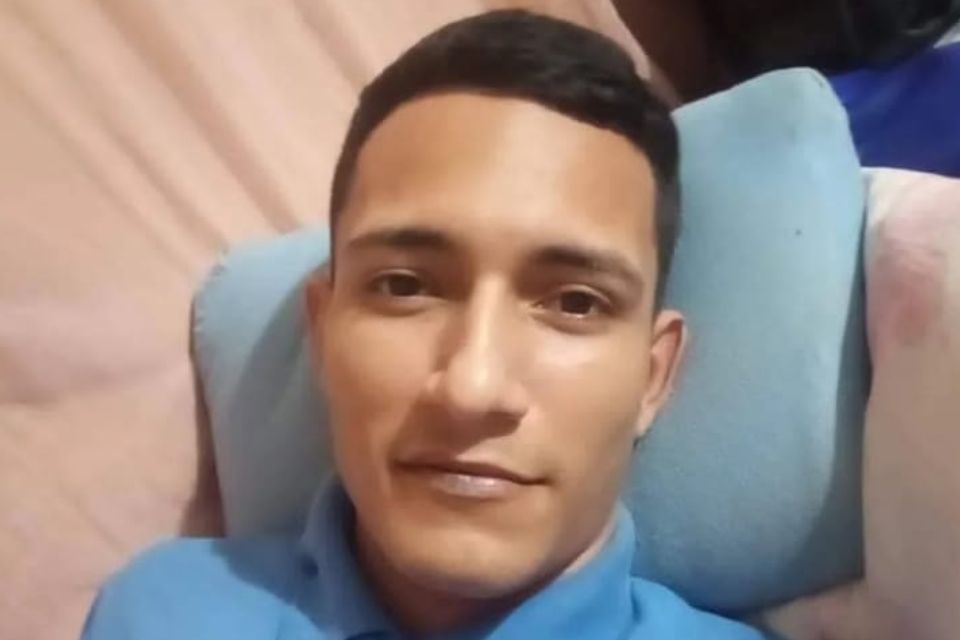
He went through several police commands, the Yare prison and is currently detained in the El Rodeo II prison, Miranda state. In this place he was infected with tuberculosis, which he overcame thanks to the treatment they gave him.
His mother has not been able to visit him in six and a half years for fear of the situation. Brandon’s daughters, ages nine and seven, haven’t seen him in all that time either. His youngest daughter does not know him, because when he was captured he was barely three months old.
In the midst of the Consulate’s communications to various families of detainees, Brandon Castaño’s family was informed that he will not be included in the releases, for the moment, because his release ticket has not been properly delivered to the prison. The young man commented that he plans a hunger strike to pressure for his freedom.
New protests
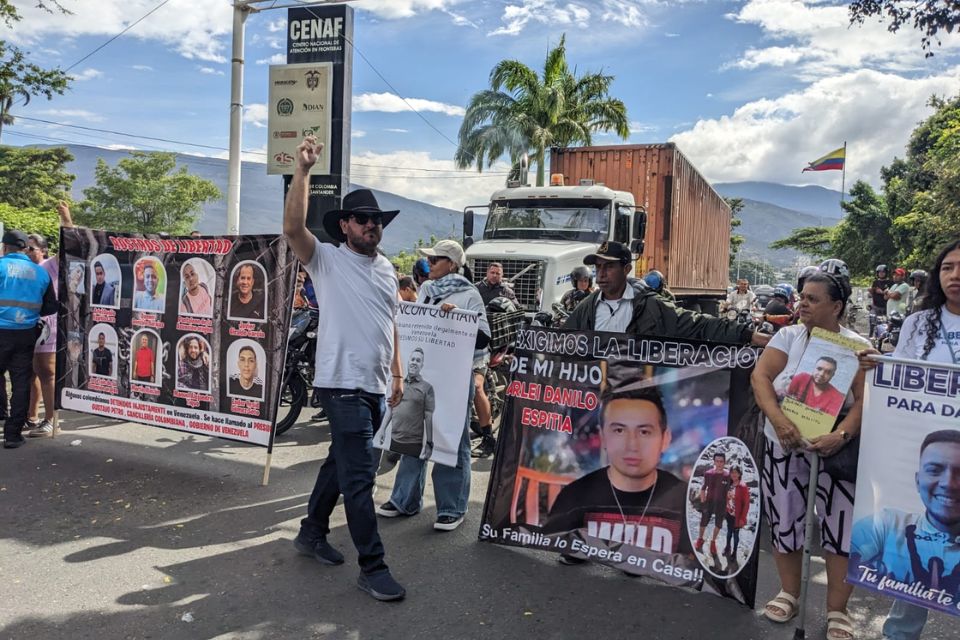
Danner Barajas’ aunt points out that in the last meeting they reached an agreement with Vice Chancellor Mauricio Jaramillo. The deal is that they would wait until November 29 for new releases. Otherwise, they plan to make new sit-ins on the binational bridge Simón Bolívar, which unites the towns of Cúcuta and San Antonio del Táchira.
“If there are no releases soon, we are going to close again because we have seen that the only thing that really gives results is the blockade of the international bridge, because not even with the Government entities does it give results,” says Barajas.
Vicky Latorre also confirmed that they are willing to hold new sit-ins until more releases are made. «Everything remains the same. Since the closure in Villa del Rosario they have not made any progress, the government is silent,” he says.
Latorre is the wife of Martín Emilio Rincón, a palm farmer and father of a family who was “kidnapped by the Government of Venezuela” since September 30, 2024 when he was arrested in Guasdualito, Apure state, “just for being Colombian” after having entered the country legally.
Like the Barajas family, they have barely been able to communicate for five minutes, at which point Rincón asks “how the family is doing, and they say it’s fine, but they can’t talk about anything there because otherwise they’ll cut off the call.”
Latorre also hired private lawyers, but “they don’t even say anything to them.” In addition, five constitutional protections have been filed before Venezuelan courts but they have not been answered. As she learned, her husband was accused of treason “but how can they accuse him of that if he is Colombian?”
In the case of Carlos Alberto Cañas, a 56-year-old merchant, he was identified as a terrorist but “there is no open folder that we know of. The Foreign Ministry has asked for it, the UN asked for it but they have never been shown what the process is. In fact, in June, the UN released a document stating that they were arbitrary detentions for that reason, because there was no open process that they could review,” says Jorge Cañas, one of his five brothers.
The merchant was detained in Guasdualito, after having stamped his passport as he normally did when he entered the country for work reasons. “He was missing for five months, until we were able to find out about him through other foreigners who were released and who told us that he was in El Rodeo I prison.”
Since then they have only been able to communicate on May 15 and 45 days ago. “They always tell us that they have the director next to them and they only talk about family things.”
The Cañas family has been affected by the imprisonment of what they consider a “born leader.” «For our family the events have been very serious because he was attentive to everything, to our father’s things, he is a very provider. “We have felt his absence.”
Even Carlos’s son, who was studying his first semester of university, paused his studies due to the situation.
At the moment, they are waiting for information from the Colombian authorities. “At the Celac summit the issue was discussed directly… The information from the Foreign Ministry and Embassy is that they have been in talks, but they do not tell us more.”
*Journalism in Venezuela is carried out in a hostile environment for the press with dozens of legal instruments in place to punish the word, especially the laws “against hate”, “against fascism” and “against the blockade.” This content was written taking into consideration the threats and limits that, consequently, have been imposed on the dissemination of information from within the country.
Post Views: 129