It was over 32 hours on a bus on a bus to 60-year-old Pangroti Kayapo matriarch and granddaughter Nhaikapep, 22, traveling from São Félix do Xingu (AM) to Brasilia (DF) to participate in the 1st National Conference of Indigenous Women, an event that began on Monday night (4). 
For both, the conference can be a denunciation space. An opportunity to show the whole country how the community is still shaken by the activities of illegal mining, in the region where their ancestors were born and were created to defend nature and their way of life.
The granddaughter, who studied in a non -indigenous school, translates to Portuguese the emotional feeling of his grandmother, who communicates only in her original language:
“For us to protect nature, we ask for protection for us, our environment and our culture,” says Pangroti.
Nhaikapep says that the fresh, Iriri and Xingu rivers, which cross the regions of Kayapó communities, are contaminated by metals.
“We feel threatened and affected even in our community, which had the territory marked.”
Minister
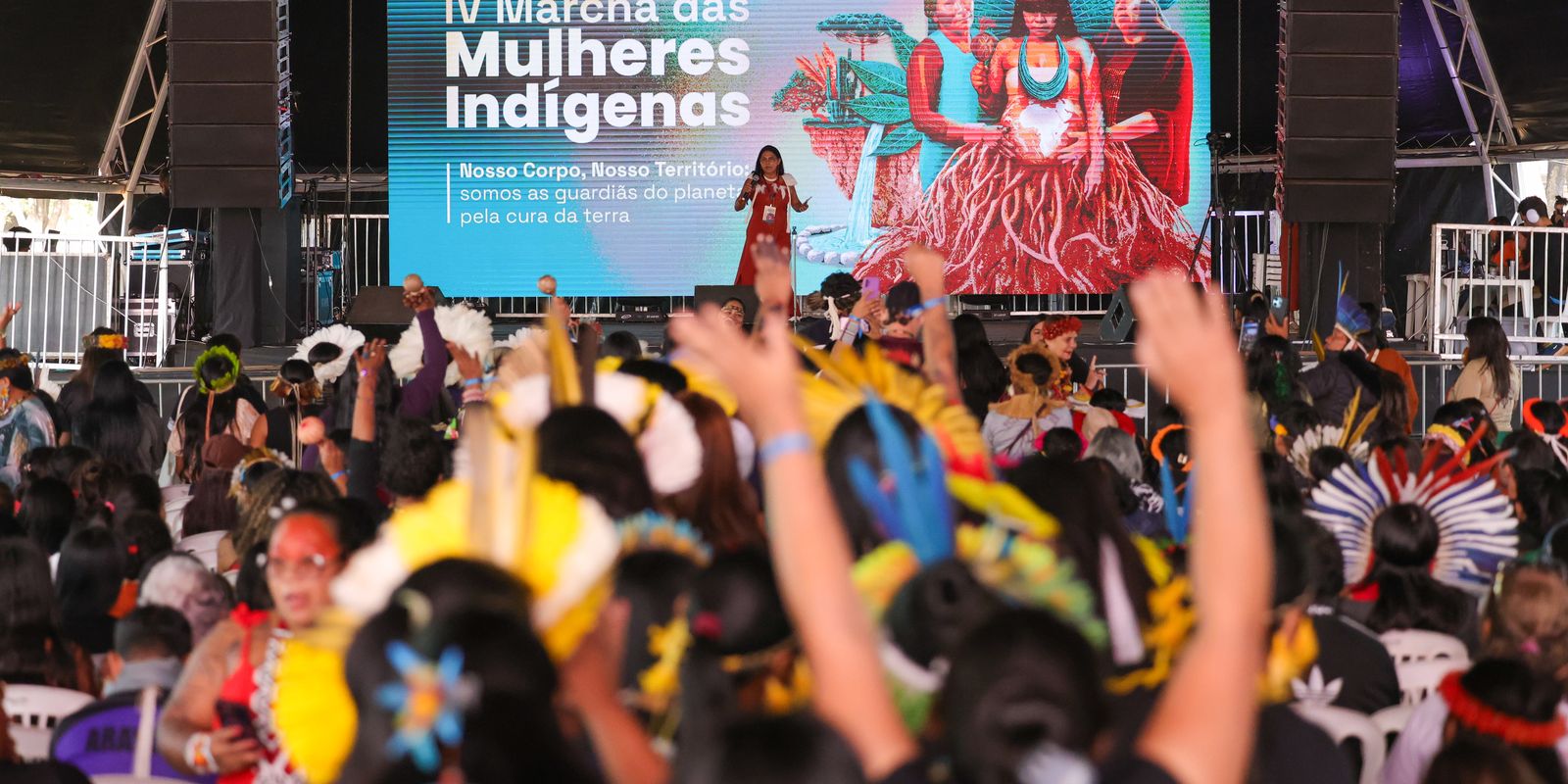
It is estimated that the event has the participation of five thousand indigenous women who, like Pangroti and Nhaikapep, must share the challenges they face in all Brazilian biomes.
Five state ministers participated in the opening of the conference, which precedes the IV march of indigenous women on Thursday (7).
Ministers Sônia Guajajara (indigenous peoples), Marina Silva (environment and climate change), Márcia Lopes (women), Margareth Menezes (culture) and Macaé Evaristo (human rights and citizenship) spoke on Monday night about the efforts and policies of protection for indigenous women.
Another theme addressed was the Bill (PL) 2.159/21, called PL of licensing by some and PL of devastation by critics and environmentalists. PL flexes and simplifies the obtaining of environmental licensing in Brazil.
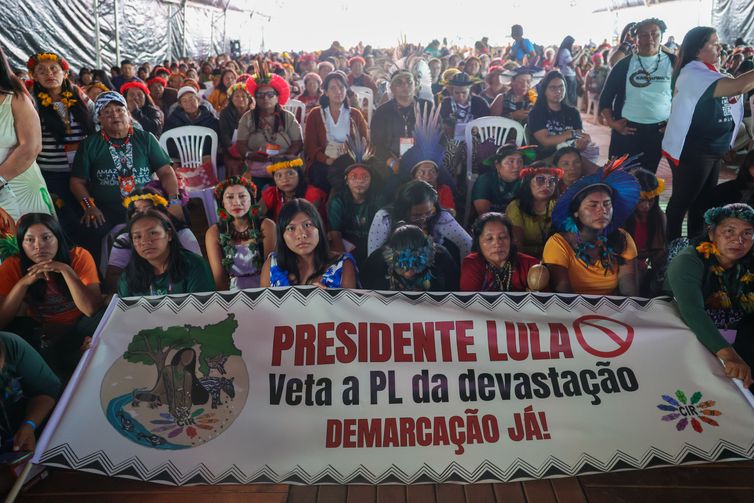
IV March of Indigenous Women brings together 5,000 indigenous people in Brasilia – Fabio Rodrigues-Pozzebom/ Agency
Approved by Congress National on July 17, the project is waiting for the sanction of President Luiz Inacio Lula da Silva. Researchers and Forest Peoples ask the veto to the project.
For Sônia Guajajara, the text will weaken the indigenous struggle in defense of the forest. In addition, she argued that women have been victims of racism and machismo.
“We have here the presence of women from all biomes (…) Today we are here to resist,” he said. For Sonia, women will not feel free as long as they continue to be killed and raped in their lands:
“They have not accepted our presence yet. We face setbacks and attacks every day. It is the state’s duty to develop public policies to protect indigenous women.”
According to the Minister of Indigenous Peoples, the event will propose the formation of an interministerial working group with the mission of elaborating strategies to strengthen the protection of indigenous women
Also at the event, the president of the National Foundation of Indigenous Peoples (Funai), Joênia Wapichana, argued that policies to protect indigenous women need to be strengthened in budget planning in Brazil.
“We have the actions of confrontations against violence. We need to stop.”
Most impaired
Minister Marina Silva added that the federal government promoted the disintrusion of invaders of eight indigenous lands in the last two years.
She also acknowledged that the challenge is “very large” from an environmental point of view. “Those who have destroyed the least are the most impaired,” he said when referring to indigenous women.
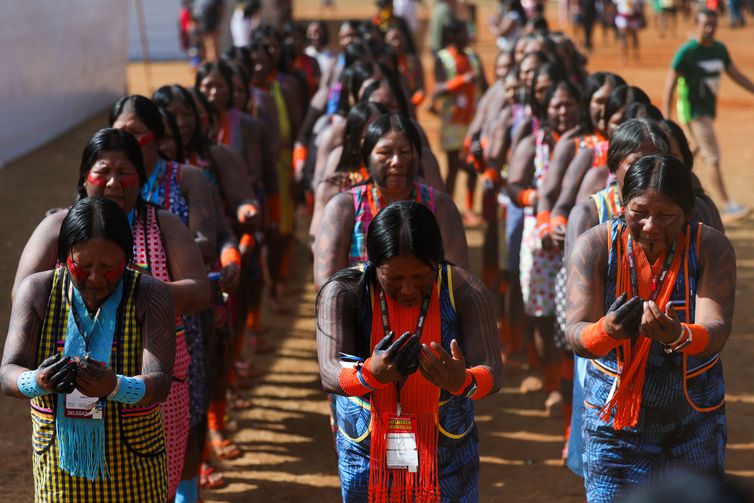
Indians from all over the country are gathered in Brasilia – Fabio Rodrigues-Pozzebom/ Agency
Therefore, she advocated public policies to ensure the indigenous lifestyle of preservation and use of nature resources with wisdom. Marina pondered that climate change lead the world to the “edge of the abyss” and criticized foreign leaders who do not support Brazilian environmental actions.
“Instead of getting war against the climate, they make tariff war,” he said in a reference to US President Donald Trump.
Marina also took the opportunity to criticize former President Jair Bolsonaro for being contrary to the demarcations of indigenous lands in Brazil, During your term. Bolsonaro had house arrest decreed last night.
Pesticide
The authorities’ speeches were heard carefully by the women present at the conference, set up in central Brasilia.
Soraya Kaingang, 44, was one of the gifts with her four children – one of them in her lap sleeping. It was over 10 pm, but she said she had not tired even after more than 20 hours of travel from Londrina (PR) to Brasilia.
A resident of the Apucaraninha village, Soraya lamented that, unlike the time she was a child, the minors today are exposed to pesticides scattered by white farmers who were invading the territory in which she was born and raised.
“We produce corn, cassava and beans, but it’s hard. Come here is a way for us to tell our stories, right?”