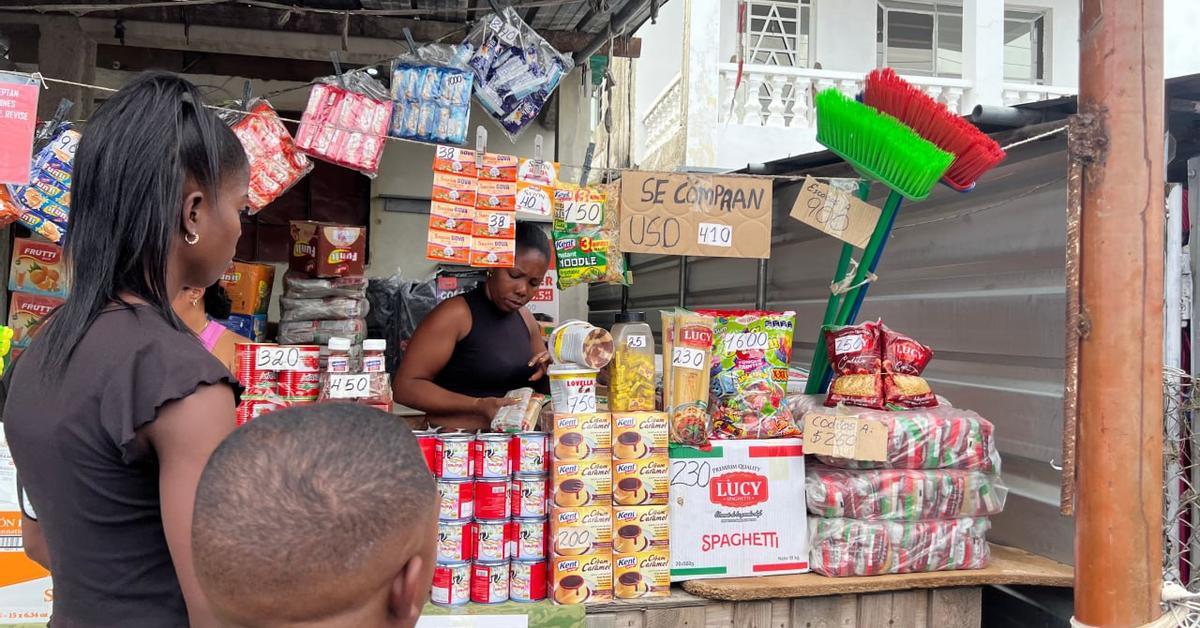
Havana/Confusion has been a constant in the first day of life of the floating rate for the Cuban peso. “The banks in Regla are without power, therefore, closed. But they did tell me that they are already buying dollars,” says Alfredo, a Havana resident who came from asking about the service, without success, at an exchange house. The Cadecas are not, for now, buying foreign currency and bank branches are the only option to sell the US currency, which in its first two days is at 410 pesos.
“In the morning it was packed, but it is to extract the 3,000 pesos a day that they allow from the card,” laments Alfredo, who had to continue walking in search of an official buyer of dollars.
It was to be expected that the value of the new rate would initially be set at a high value, although perhaps not so close to that of The Touchafter the demonization to which the medium has been subjected, which is at 440 both yesterday and this Friday, that is, only 7% more than the exchange rate of the Central Bank of Cuba (BCC).
“We recognize that the new announced rate will not be low; perhaps it is not what many expected, but it is what will allow the exchange market to function”
“We recognize that the new announced rate will not be low; perhaps it is not what many expected, but it is what will allow the exchange market to function,” the director of Macroeconomic Policies of the BCC, Ian Pedro, told the official press, statements that coincided with comments made weeks from the ruling party. Although the official has made an effort to explain the multiple benefits that the novelty will bring, both for the population and for private individuals and, ultimately, for the State, few economists agree with him.
It is not necessary to resort to the most critical, such as Pedro Monreal, Mauricio de Miranda Parrondo or Pavel Vidal, who have already left eloquent analyses. The sticks come from closer, starting with Omar Everleny Pérez Villanueva, who has given his opinion for The Young Cuba with unusual forcefulness. “It is a very serious error in economic policy, which is the existence of multiple rates, because segmented markets will remain and that is the same distortion that is intended to be eliminated. It has been announced that it is gradual, but in Cuba that term is terrifying, because the experiences have not been successful,” he considers.
One of the problems, he points out, is linked to the purchase limit of $100 per person “which will necessarily lead to the informal market being maintained and the rate is likely to increase.” Pérez Villanueva, who regrets the lack of transparency in how 410 pesos per dollar has been reached as a starting point, is exhaustive: “The real economy will be in charge of demonstrating that these intentions of a third rate will not lead to the results that the Government expects. The measures that do not appear should be in removing obstacles to the production of goods and services, and in especially resolving the issue of food production.”
It is something “extremely complicated in an economy with degrowth and important macroeconomic imbalances”
Carlos Enrique González elaborates on the idea and emphasizes that this implementation is something “extremely complicated in an economy with degrowth and important macroeconomic imbalances.” Among the defects, he blames it for leaving below the informal rate: “It is, to say the least, reckless, and it limits the capacity to capture these flows.”
Another element that the expert introduces is the lack of confidence that Cubans have in the BCC, although he does see something positive: “The possibility that exporting companies sell part of the foreign currency they retain through closed financing schemes at the new exchange rate. It is very beneficial for them, and we can begin to talk about import substitution as a serious possibility and not an exhortation.”
He has also spoken with the media, close to the ruling party but slightly critical, Ricardo González Águila, who considers that allowing exporters to sell foreign currency at a higher exchange rate is “bold and necessary”, although it has great risks, among them the one entailed by the fact that the BCC buys expensive dollars and sells them cheap to state companies, “with implications for macroeconomic balances.” The expert believes that if this announcement is not accompanied by a microeconomic reform that gives companies autonomy to set prices, salaries and investments, the failure will continue.
Arturo López-Levy, for his part, sees it as good that there has finally been a recognition of the real value of the currency compared to the “administrative fiction” maintained until now, but he believes that a floating rate requires productive capacity and reserves that Cuba does not have today. “Without a truly mixed economy, where the private and the state are integrated, without clear property rights, without a modern, redistributing, regulatory and developmental State, without orderly privatizations and without credible competitive rules, Cuba will continue to be trapped in precariousness,” he points out.
The list includes the coexistence of multiple exchange rates, which generates a lack of transparency and makes it difficult to measure the real profitability of companies.
These considerations do not differ too much from those made Pavel Vidalwhich signs a new bulletin from the Observatory of Currencies and Finance of Cuba (OMFi), in which it boasts – right off the bat – because of how close the BCC rate is to what its team of experts has calculated. In the document there are positive assessments, among which the inclusion of private individuals and individuals in this new market stands out, the exclusion of state companies – which limits the risk of imbalances – and that the rate applies to current accounts and not only to cash.
However, it also has numerous criticisms. The list includes the coexistence of multiple exchange rates, which generates a lack of transparency and makes it difficult to measure the real profitability of companies. Furthermore, the BCC recognizes a “managed float” based on discretionary criteria and not on supply and demand, something that is aggravated considering that it is the military conglomerate Gaesa that holds the international reserves in secret accounts outside the country. The limits on operations – added to the inability of branches to operate well due to technical and energy problems – or the lack of trust in the banking system do not help either.
“To the extent that the population and the private sector cannot fully satisfy their demand for foreign currency in the official floating market, a willingness to pay a premium could be observed. spread or overpricing in the informal market in exchange for immediate and unrestricted access to foreign currency. As a result, it is anticipated that the informal market exchange rate will remain above the official floating rate, at least during the initial phase,” the document concludes.
Miranda Parrondo, for her part, has exploded on her social networks with a long hypercritical post about the measure that, in short, she calls “new nonsense.” –he insists– “it will not improve the living conditions of the people and will deepen social differences.”