The Asian giant does not rush in large capital disbursements, consolidates its presence in trade. In 2024, its exports to Latin America and the Caribbean reached almost 245,000 million dollars, according to the General Chinese Customs Administration.
The figure reveals more than a conjunctural increase. Gradually, China already exceeded the United States as the main supplier of several South American countries: Brazil, Argentina, Chile, Peru, Bolivia, Uruguay and Venezuela. Steel, electric vehicles, chemicals, plastics and machinery gain space in Latin American ports.
The United States retains regional leadership in absolute terms. In 2024, its exports to the Western hemisphere added 540,000 million dollars, according to the commercial representative’s office. But the real weight is concentrated in Mexico. Six out of 10 dollars exported to the region went to the neighboring country, which places it as a strategic tension point.
Although Washington retains the front, the growing flow of Chinese products already ignited the alerts.
The concern does not revolve only around the T-Mec or the origins of the inputs. It goes further. The United States fears that the commercial logic of the South cross to the north. That the roads that China opened with infrastructure and machinery in South America advance on the Mexican terrain. And, with this, that the regional balance changes axis.
An analysis of the Foreign Relations Council draws that line. The presence of China in Latin America grew since the beginning of the century. The red dragon not only sells. It also lends, builds and extends its diplomatic network.
His state companies became protagonists in sectors such as energy, infrastructure, telecommunications and space exploration. In 2025, Beijing organized a summit with leaders in Latin America and the Caribbean. There, President Xi Jinping announced a credit line for $ 9,000 million for new projects in the region.
For Washington and its allies, such gestures not only respond to economic interests. They also point to geopolitical objectives. The United States suspects that China seeks to isolate Taiwan, underpin authoritarian regimes in Cuba or Venezuela and consolidate a base of allies in front of the western blocks.
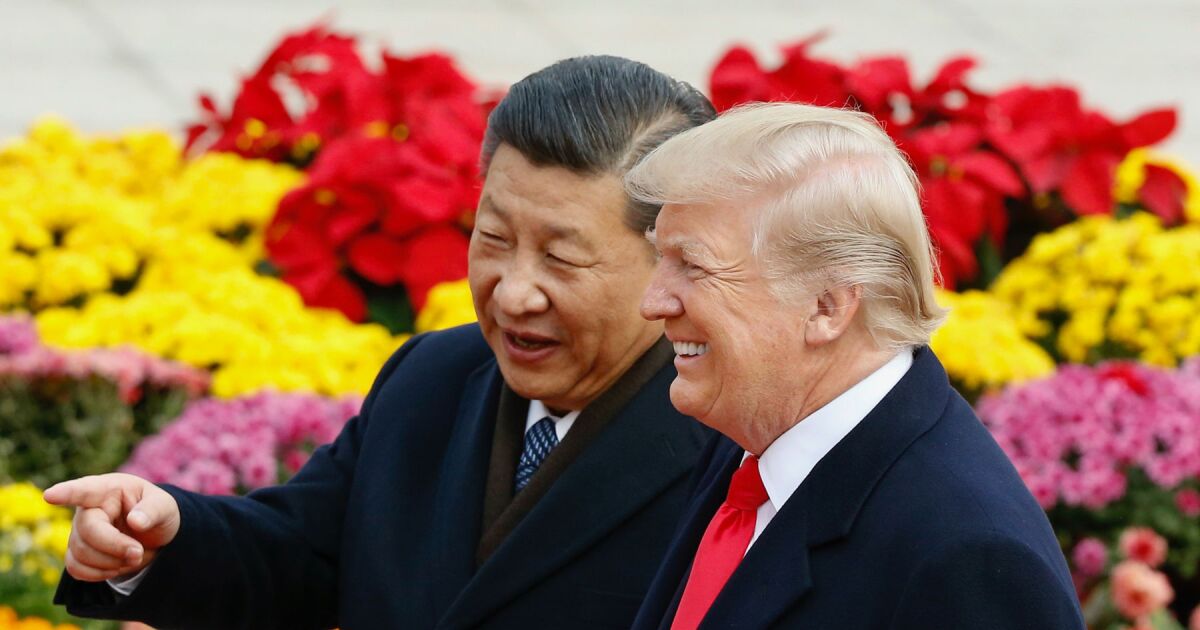
Donald Trump’s return to the White House comforted the tone. If Joe Biden spoke of “strategic competition”, the new administration rehearsed a more direct way: tariffs, sanctions and warnings, not only for China, but for everyone. The tensions climbed.
Trump pushes China’s progress
That new tone can play against. According to the consultant Americas Market Intelligence, US pressure measures do not slow the advance of the Asian country. On the contrary, in several Latin American countries, Chinese exporters gain market share. Between January and May 2025, its shipments grew accelerated, especially in key economies of the Southern Cone. Analysts foresee a deeper expansion in the coming years.
As Chinese vehicles gain acceptance and their technological products are cheaper, China’s competitiveness is strengthened. Beijing points to more joint companies, new bilateral agreements and strategic infrastructure projects. The Silk route now crosses Latin American ports, with less pomp than in Asia, but with equally ambitious results.
A projection of the Atlantic Council, based on models of the PARDEE Center of the University of Denver, offers scenarios. In the first, the United States retains regional commercial leadership until 2035. However, even in that case, trade between Latin America and China will grow almost double that world trade in that same period. It will exceed 700,000 million dollars.
In a second scenario, more likely if current trends are consolidated, China unbalances the United States as the main commercial partner of goods in the region. The projections place Washington 1.2% below Beijing in estimated participation for that year.
That turn would imply structural changes. The products that are exported today could be transformed. Latin America would sell more critical minerals, more industrialized foods and more energy east. The commercial agency, until now marked by the dollar and those treated with the United States, would take new codes, new currencies and new rules.
China does not need to invest so much to win presence. He prefers to settle in customs. Each container, each truck, each piece of machinery that enters Latin America reinforces its footprint. And with each contract, the regional economic map is redrawn.
Meanwhile, the United States strives to maintain control.
But the red spot extends without brake not only in the region. According to the Lowy Institute, almost 80% of the countries of the world import more products from China than from the United States. The Australian Research Center drew a map that shows how the Asian giant becomes the main global supplier, displacing Washington.