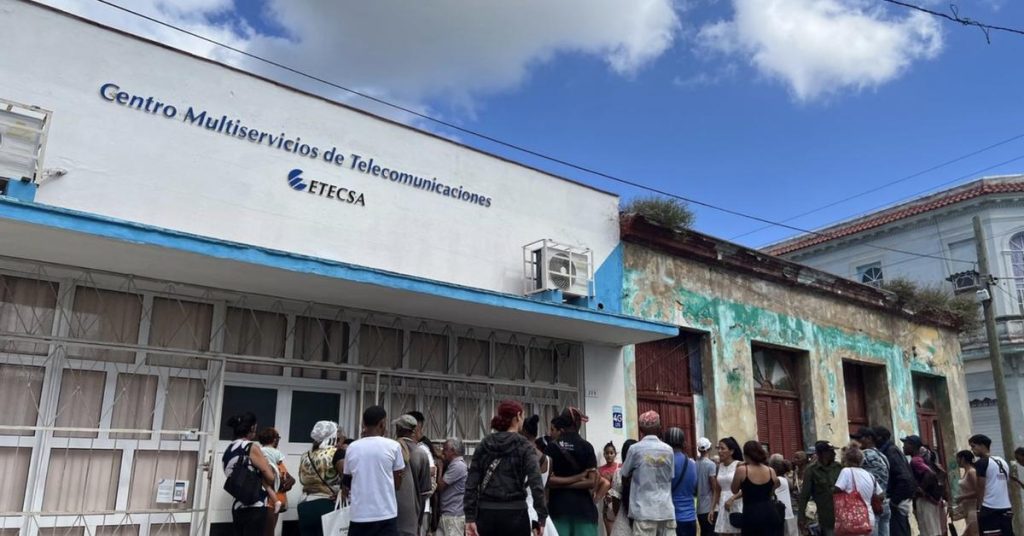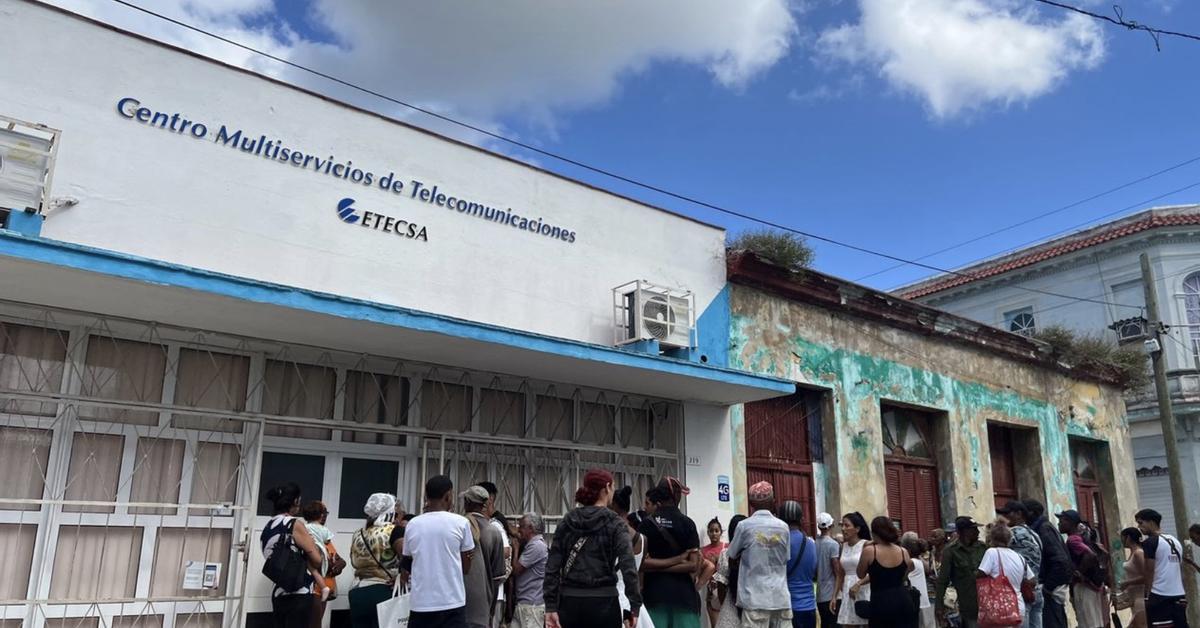
Havana/This Monday, Etecsa offices in different areas of Havana woke up packed after the start of the sale of new mobile lines and replacement SIM cards, a service that had been absent for months. The prolonged shortage turned the loss of a telephone into a secondary problem compared to the impossibility of recovering the number, essential for communicating, accessing the internet or carrying out basic tasks. The reopening of the service caused long queues, tensions and uneven scenes of organization in a context marked by the precariousness of telecommunications.
From early on, 14ymedio He was in several of these branches and saw how the news had spread quickly among customers. In the office located under the Focsa building, in El Vedado, an attempt was made to maintain some control by delivering 100 daily shifts. The wait was long and the atmosphere tense, but relatively orderly. Similar stories were repeated among attendees: stolen or lost phones and months of fruitless visits to Etecsa. “What hurts the most is losing the line,” several commented while they waited.
“What hurts the most is losing the line”
In Regla, the lack of a clear shift system generated constant discussions. There was no shortage of those who, despite arriving later, tried to sneak in, an attitude that fueled the unrest among those who got up early in front of the office. The shouts and reproaches increased as rumor spread that stocks could run out at any moment, a possibility that many took for granted after previous experiences of shortages and sudden suspensions of sales.
For months, the lack of SIM cards left many users incommunicado. Some reported that the only alternative offered was to manage the line from abroad or pay in foreign currency, options out of reach for a large part of the population. Added to this situation were frequent blackouts and interruptions in mobile service, which affect the quality of the connection.
This crisis is inserted in a broader scenario marked by the so-called “high rate” of Etecsa, which last May raised the costs of data and telephone services in relation to salaries in pesos. The increase in prices, together with the shortage of lines and the dependence on recharges from abroad, has deepened inequality in access to communication. This Monday’s queues reflect the accumulated impact of a trade policy that has turned connectivity into an increasingly difficult commodity to achieve.